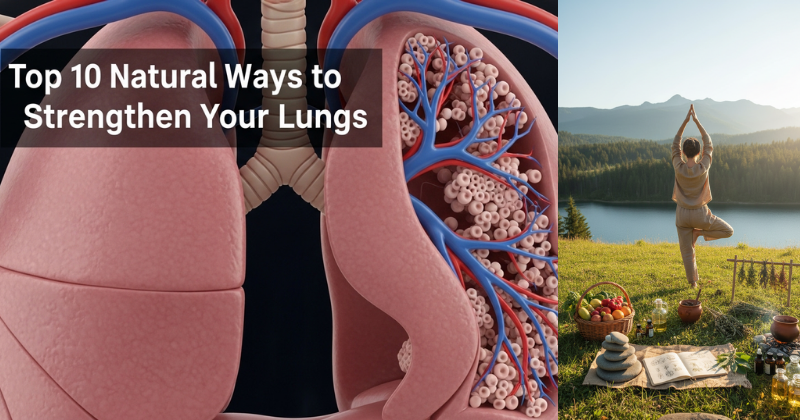
Your lungs perform approximately 20,000 breaths daily, extracting oxygen from air and expelling carbon dioxide through a remarkable system of airways, alveoli, and pulmonary circulation that most people take entirely for granted until respiratory function declines. Lung capacity naturally decreases approximately 1-2% annually after age 35 through changes in chest wall compliance, respiratory muscle strength, and alveolar elasticity — but this decline is not inevitable or irreversible. Research in pulmonary medicine demonstrates that specific interventions measurably improve lung function through mechanisms including respiratory muscle strengthening, alveolar recruitment, mucus clearance enhancement, and reduction of inflammatory burden. These natural lung-strengthening methods don’t require expensive equipment or medical interventions — they leverage respiratory physiology, strategic physical activity, environmental modifications, and nutritional support to enhance the capacity, efficiency, and resilience of your respiratory system regardless of current fitness level or age.
Understanding Lung Function and What “Strengthening” Actually Means
Before implementing specific techniques, understanding respiratory physiology clarifies what lung strengthening achieves and why these particular interventions work.
The Components of Respiratory Capacity
Lung function encompasses several measurable parameters that collectively determine respiratory health. Vital capacity (VC) represents the maximum volume of air you can exhale after a maximum inhalation — typically 4-6 liters in healthy adults. Forced expiratory volume (FEV₁) measures how much air you can forcefully exhale in one second, indicating airway patency. Diffusion capacity quantifies how effectively oxygen transfers from alveoli into pulmonary capillaries. Respiratory muscle strength — particularly diaphragm and intercostal muscle force generation — determines breathing efficiency and endurance.
“Strengthening” lungs means improving these measurable parameters through interventions that: (1) increase respiratory muscle force generation through resistance training, (2) enhance alveolar recruitment by promoting deep breathing that opens collapsed or underutilized alveoli, (3) improve mucociliary clearance that maintains airway patency, and (4) reduce inflammatory burden that impairs gas exchange. The methods presented here target these mechanisms through evidence-based protocols.
The Breathing Efficiency Concept
Respiratory efficiency — the work required to achieve adequate ventilation — matters as much as raw capacity. Shallow, rapid breathing (common during stress or sedentary periods) underutilizes lung capacity, promotes upper chest breathing that poorly ventilates lower lobes, and increases the work of breathing relative to oxygen delivery. Deep, diaphragmatic breathing maximizes ventilation-perfusion matching (the alignment between ventilated alveoli and perfused capillaries), improves oxygen extraction, and reduces respiratory muscle fatigue. Many lung-strengthening interventions work by retraining breathing patterns toward greater efficiency.
Methods 1-3: Breathing Techniques and Respiratory Muscle Training
Method 1: Diaphragmatic Breathing Practice
The diaphragm — the dome-shaped muscle separating the thoracic and abdominal cavities — performs 70-80% of the work of breathing when functioning optimally. Many people develop dysfunctional breathing patterns that underutilize the diaphragm, relying excessively on accessory muscles (intercostals, scalenes, sternocleidomastoid). Retraining diaphragmatic breathing improves efficiency and strengthens the primary respiratory muscle.
The technique: Lie on your back with knees bent or sit in a chair with good posture. Place one hand on your chest and the other on your abdomen. Inhale slowly and deeply through your nose, focusing on expanding your abdomen (pushing the lower hand upward) while keeping your chest relatively still (upper hand should move minimally). Your belly should rise more than your chest. Exhale slowly through pursed lips, feeling your abdomen fall. The exhalation should take approximately twice as long as the inhalation. Practice for 5-10 minutes, 2-3 times daily.
The mechanism: This practice recruits the diaphragm through conscious control, strengthening it through repeated contractions while establishing neural pathways that make diaphragmatic breathing more automatic. The extended exhalation improves carbon dioxide elimination and promotes parasympathetic nervous system activation. Research in patients with COPD demonstrates that diaphragmatic breathing training improves respiratory muscle strength, reduces breathlessness, and enhances exercise tolerance.
Method 2: Pursed-Lip Breathing for Airway Pressure
Pursed-lip breathing — exhaling against mild resistance through nearly-closed lips — generates modest positive airway pressure that provides multiple respiratory benefits.
The technique: Inhale slowly through your nose for 2 counts. Purse your lips as if about to whistle or blow out a candle. Exhale slowly and steadily through pursed lips for 4-6 counts (twice as long as inhalation). The exhalation should feel effortless, not forced. Repeat for 5-10 breath cycles whenever you feel breathless or want to practice controlled breathing.
The mechanism: The resistance created by pursed lips generates 5-10 cm H₂O of positive end-expiratory pressure (PEEP) that keeps small airways open during exhalation. This prevents premature airway collapse (dynamic airway compression) that traps air in distal lung units and impairs ventilation. The technique particularly benefits individuals with obstructive lung diseases but improves breathing mechanics in healthy individuals by promoting complete exhalation and reducing air trapping. Studies document improvements in blood oxygen saturation and reduced respiratory rate with regular practice.
Method 3: Inspiratory Muscle Training With Resistance
Just as skeletal muscles strengthen through resistance training, respiratory muscles respond to progressive overload through inspiratory muscle training (IMT) devices or techniques.
The technique (device-free version): Perform breathing against resistance by inhaling through a straw or through tightly pursed lips. The goal is to create noticeable resistance to inhalation while maintaining steady, controlled breathing. Inhale for 5-6 seconds against resistance, then exhale normally. Perform 10-15 breaths, 2-3 times daily. For progression, use narrower straws or increase the number of repetitions.
The mechanism: Inspiratory resistance increases the workload on the diaphragm and intercostal muscles, producing a training stimulus that increases their force-generating capacity through muscle fiber hypertrophy and enhanced neural recruitment. Research documents that IMT improves inspiratory muscle strength by 20-40% over 6-8 weeks of consistent training, with corresponding improvements in exercise tolerance and breathlessness perception. Meta-analyses confirm IMT effectiveness for both healthy individuals and those with respiratory conditions.
Methods 4-6: Physical Activity and Exercise
Method 4: Aerobic Exercise for Cardiovascular-Respiratory Integration
Regular aerobic exercise provides the most powerful single intervention for improving overall respiratory function through multiple complementary mechanisms.
The protocol: Engage in moderate-intensity aerobic activity (brisk walking, cycling, swimming, jogging) for 30-45 minutes, 4-5 days weekly. Moderate intensity means you can talk in short sentences but not carry on extended conversation — approximately 60-70% of maximum heart rate. Gradually progress duration and intensity over weeks and months.
The mechanism: Aerobic exercise increases ventilatory demands, forcing the respiratory system to work harder and adapt through: (1) respiratory muscle conditioning from sustained elevated breathing rates, (2) improved cardiovascular efficiency that enhances oxygen delivery to tissues, (3) increased capillary density in muscles that improves oxygen extraction, and (4) enhanced pulmonary capillary blood flow that maximizes gas exchange surface area utilization. Regular aerobic exercise is documented to improve VO₂ max (maximum oxygen consumption capacity), slow age-related decline in lung function, and reduce respiratory disease risk.
Method 5: Swimming for Breathing Control and Capacity
Swimming uniquely challenges respiratory function through horizontal body position, breath-holding requirements, and the resistance of water against chest wall expansion.
The protocol: Swim laps using any stroke for 20-30 minutes, 2-3 times weekly. Focus on controlled breathing patterns coordinated with stroke mechanics — the rhythmic breathing required in swimming (bilateral breathing every 3-5 strokes in freestyle, for example) trains respiratory control.
The mechanism: Swimming’s horizontal position redistributes blood volume, increasing central blood volume and potentially improving pulmonary circulation efficiency. The hydrostatic pressure of water surrounding the torso creates resistance to chest expansion, providing strength training for inspiratory muscles. Breath-holding between breaths challenges CO₂ tolerance and may promote adaptations in chemoreceptor sensitivity. Research shows swimmers develop superior lung capacity, respiratory muscle strength, and breathing efficiency compared to non-swimmers.
Method 6: Interval Training for Maximum Ventilatory Challenge
High-intensity interval training (HIIT) provides maximal respiratory system stimulus through alternating periods of intense exertion and recovery.
The protocol: Alternate 30-60 seconds of vigorous activity (sprinting, cycling at high resistance, burpees, jump rope) with 60-90 seconds of active recovery (walking, easy cycling). Repeat for 6-10 cycles (total time: 10-20 minutes including warm-up and cool-down). Perform 2-3 times weekly on non-consecutive days.
The mechanism: The intense intervals push ventilation to near-maximum rates (potentially 60-80 liters per minute compared to resting 6-8 liters per minute), providing powerful training stimulus for respiratory muscles. The recovery intervals train the body’s capacity to recover while maintaining controlled breathing. HIIT improves both aerobic and anaerobic capacity, enhances mitochondrial density in respiratory muscles, and produces superior fitness improvements in less time than moderate continuous exercise.
Methods 7-8: Environmental and Lifestyle Factors
Method 7: Air Quality Optimization and Pollution Avoidance
Chronic exposure to air pollutants — particulate matter, ozone, nitrogen dioxide, volatile organic compounds — produces inflammatory damage to airways and alveoli that progressively impairs lung function.
The interventions: Avoid outdoor exercise during high pollution days (check air quality index/AQI before outdoor activity — values above 100 warrant indoor exercise). Use HEPA air purifiers in bedroom and main living spaces, particularly if living in urban areas or near traffic corridors. Avoid smoking and secondhand smoke exposure completely. Minimize exposure to household air pollutants including harsh cleaning chemicals, aerosol sprays, and volatile compounds from paints and adhesives. Consider wearing N95 masks during activities in dusty or polluted environments.
The mechanism: Particulate matter and gaseous pollutants generate oxidative stress and inflammatory cascades in respiratory epithelium, producing chronic low-grade inflammation that impairs ciliary function, increases mucus production, and damages alveolar-capillary interfaces. Long-term exposure correlates with accelerated lung function decline and increased respiratory disease risk. Reducing exposure prevents this cumulative damage, preserving lung function over decades.
Method 8: Optimal Hydration for Mucociliary Function
The airways are lined with mucus and cilia — hair-like projections that beat rhythmically to transport mucus and trapped particles upward for expectoration or swallowing. This mucociliary clearance system requires adequate hydration to function properly.
The protocol: Maintain consistent hydration by drinking water throughout the day, targeting 2-3 liters total fluid intake for most adults (adjusted for activity level, climate, and individual factors). The “divide body weight in pounds by two, drink that many ounces” formula provides a reasonable personalized estimate.
The mechanism: Adequate systemic hydration maintains optimal mucus viscosity — thick enough to trap particles but fluid enough for ciliary transport. Dehydration increases mucus viscosity, impairing clearance and creating environments where retained secretions can obstruct airways and harbor pathogens. Research demonstrates that increased fluid intake improves perceived mucus clearance in individuals with respiratory conditions and may reduce upper respiratory infection frequency.
Methods 9-10: Nutritional and Supplemental Support
Method 9: Anti-Inflammatory Nutrition for Respiratory Health
Dietary patterns influence systemic inflammation that affects respiratory function. Anti-inflammatory diets measurably improve lung function parameters over time.
The nutritional strategy: Emphasize foods rich in antioxidants and anti-inflammatory compounds: colorful fruits and vegetables (providing polyphenols, carotenoids, vitamin C), fatty fish (EPA/DHA omega-3 fatty acids), nuts and seeds (vitamin E, magnesium), and whole grains (fiber supporting gut microbiome diversity that modulates systemic inflammation). Minimize processed foods, refined carbohydrates, and excessive omega-6 fatty acids (in seed oils, fried foods) that promote inflammatory prostaglandin production.
The mechanism: Antioxidant vitamins (C, E) and polyphenols neutralize reactive oxygen species that damage respiratory epithelium. Omega-3 fatty acids compete with omega-6 fatty acids for eicosanoid synthesis pathways, producing anti-inflammatory resolvins and protectins rather than pro-inflammatory prostaglandins and leukotrienes. Research from the Nurses’ Health Study documented associations between Mediterranean-style dietary patterns and preserved lung function with aging.
Method 10: Targeted Micronutrient Adequacy
Specific micronutrients play documented roles in respiratory health through their involvement in antioxidant systems, immune function, and tissue repair.
The priority micronutrients: Vitamin D (immune modulation, anti-inflammatory signaling — maintain serum levels above 30 ng/mL through supplementation if sun exposure is inadequate), magnesium (bronchodilation, respiratory muscle function — 400-450mg daily from diet or supplements), vitamin C (antioxidant protection, immune support — 200-500mg daily), and zinc (immune function, wound healing — 15-30mg daily). Additionally, ensuring adequate iron prevents the anemia that impairs oxygen transport despite healthy lungs.
The mechanism: Vitamin D receptors throughout the respiratory tract influence immune responses to pathogens and inflammatory regulation. Magnesium relaxes bronchial smooth muscle through calcium channel antagonism and is a cofactor in respiratory muscle energy metabolism. Vitamin C concentrates in airway lining fluid, providing antioxidant protection against inhaled oxidants. Deficiencies in these nutrients impair respiratory health even when other factors are optimized.
Troubleshooting Common Challenges
Breathlessness During Practice
If breathing exercises or physical activity produces excessive breathlessness, dizziness, or anxiety, you’re likely pushing too hard too fast. Reduce intensity, duration, or resistance and progress more gradually. For exercises like diaphragmatic breathing, some people initially feel air hunger because they’re accustomed to rapid shallow breathing — persist gently, the sensation diminishes with practice.
Coughing During Breathing Exercises
Initial coughing when practicing deeper breathing often reflects mobilization of retained secretions as airways that were previously underventilated begin opening. This is generally beneficial — the cough clears the mobilized mucus. However, persistent coughing, wheezing, or chest tightness warrants medical evaluation to rule out underlying conditions.
Integrating Methods for Maximum Benefit
The most powerful approach combines multiple methods targeting different aspects of respiratory health. A comprehensive lung-strengthening program might include: daily diaphragmatic breathing practice (5 minutes), aerobic exercise 4-5 days weekly (30-45 minutes), inspiratory muscle training (5 minutes daily), anti-inflammatory dietary pattern, adequate hydration, and environmental air quality optimization. Each component provides distinct benefits; together they produce synergistic improvements exceeding any single intervention.
Conclusion
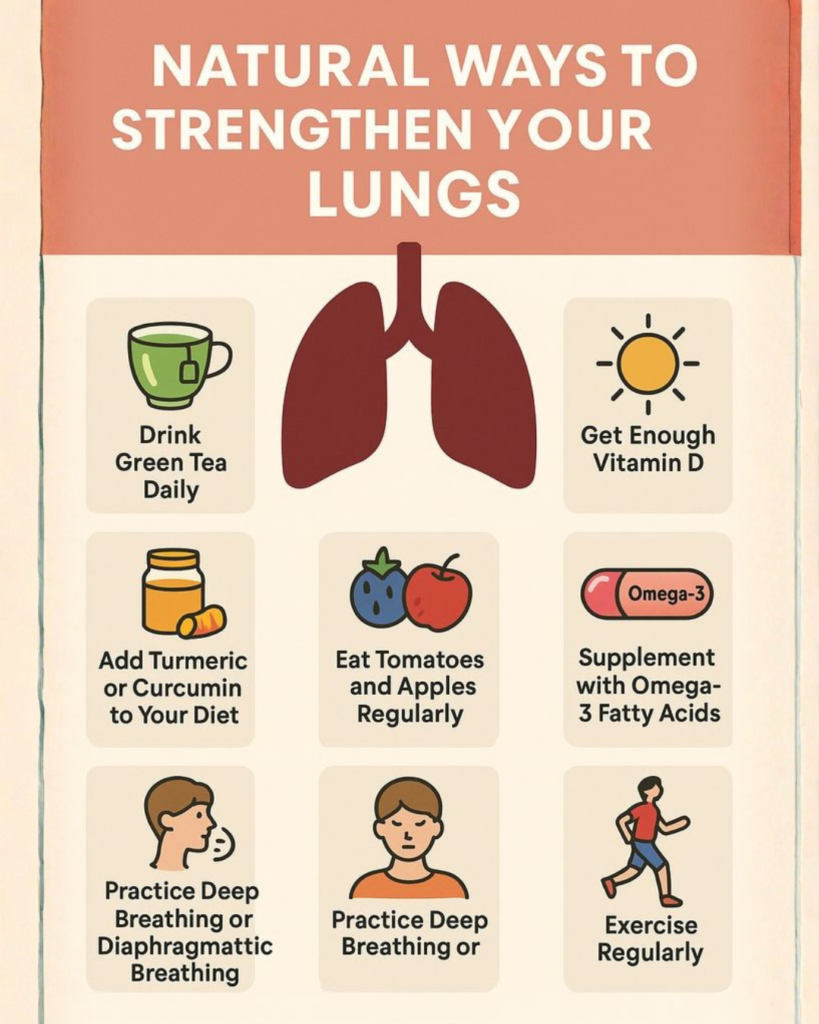
Strengthening your lungs naturally leverages respiratory physiology through evidence-based interventions that improve measurable function parameters. Diaphragmatic and pursed-lip breathing retrain breathing mechanics and enhance efficiency. Inspiratory muscle training builds respiratory muscle strength through progressive overload. Aerobic exercise, swimming, and interval training provide varying stimuli that condition the entire cardiovascular-respiratory system. Air quality optimization and hydration support the lungs’ natural defense and clearance mechanisms. Anti-inflammatory nutrition and targeted micronutrients address the biochemical factors influencing respiratory health. Begin with the techniques most accessible to your current situation — even 5 minutes of daily diaphragmatic breathing produces measurable benefits — then gradually integrate additional methods as they become sustainable habits. Your respiratory system possesses remarkable adaptive capacity at any age; these natural interventions unlock that capacity through consistent, intelligent application of respiratory science.
Important Disclaimer: This article is for informational purposes only and should not replace professional medical advice. Individuals with existing respiratory conditions (asthma, COPD, pulmonary fibrosis, etc.) should consult healthcare providers before beginning new exercise or breathing programs. If you experience persistent breathlessness, chest pain, or other concerning respiratory symptoms, seek medical evaluation. Individual results may vary, and personal circumstances should always be considered when implementing any suggestions.