
Urine color is one of the simplest signals the body provides about hydration, metabolism, and certain physiological processes. Although it may seem like a minor detail, changes in urine color can sometimes reflect variations in fluid intake, diet, medications, or health conditions.
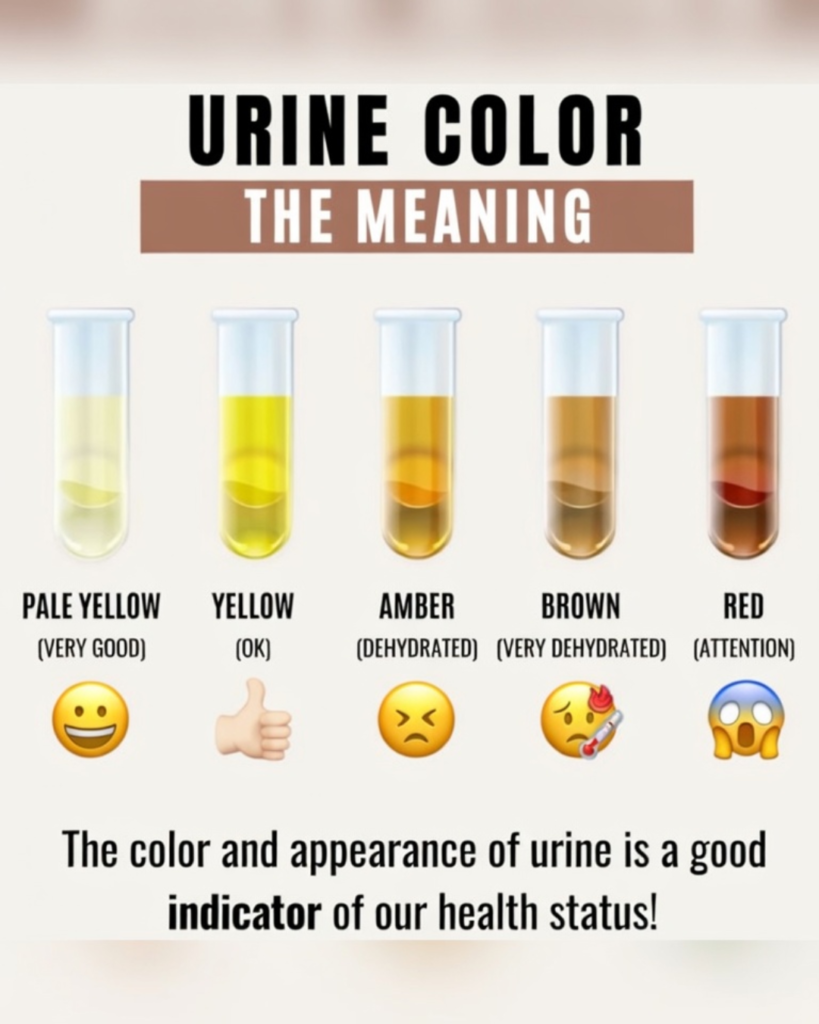
Under normal circumstances, urine ranges from pale yellow to deeper amber tones. These colors are largely influenced by a pigment called urochrome, a compound formed during the breakdown of hemoglobin in the body. The concentration of this pigment changes depending on hydration levels and other factors.
Learning to recognize what different urine colors may indicate can help people better understand their body’s signals and maintain healthy habits. This article explores what urine color means, why it changes, and when changes may require medical attention.
What Determines the Color of Urine?
The color of urine depends on several biological and environmental factors. The most important factor is hydration level, which affects how concentrated or diluted the urine becomes.
When the body is well hydrated, urine appears lighter because it contains more water relative to waste products. When fluid intake is low, urine becomes more concentrated, resulting in a darker yellow color.
Other factors that influence urine color include:
- Certain foods and beverages
- Vitamin supplements
- Medications
- Metabolic byproducts
- Health conditions affecting the kidneys or liver
These influences can temporarily alter urine color without necessarily indicating a health problem.
What Does Clear Urine Mean?
Clear urine usually indicates that the body is very well hydrated. This often occurs when a person drinks large amounts of water or fluids.
While adequate hydration is important, consistently clear urine may sometimes suggest excessive fluid intake. Drinking extremely large amounts of water can dilute electrolytes in the body.
For most people, a very pale yellow color is generally considered a healthy sign of balanced hydration.
What Does Pale Yellow Urine Indicate?
Pale yellow urine is commonly considered the ideal color and usually reflects good hydration and normal kidney function.
This color appears when the body has enough water to dilute waste products without excessive fluid intake.
Many health professionals view pale yellow urine as a practical indicator that fluid intake is appropriate.
What Does Dark Yellow or Amber Urine Mean?
Dark yellow or amber urine often suggests mild dehydration. When the body needs to conserve water, the kidneys reduce fluid excretion, making urine more concentrated.
Possible reasons for darker urine include:
- Low fluid intake
- Intense physical activity
- Hot weather or sweating
- Temporary dehydration
Increasing water intake usually helps return urine to a lighter color.
What Causes Orange Urine?
Orange urine can sometimes appear due to dietary or medication factors.
Possible causes include:
- Certain medications
- High intake of vitamin B supplements
- Foods containing strong pigments
- Dehydration in some cases
If orange urine appears without a clear dietary or medication cause, it may be advisable to consult a healthcare professional.
Why Can Urine Sometimes Appear Pink or Red?
Urine that appears pink or red may occur for several reasons.
Common harmless causes include:
- Foods such as beets or berries
- Food coloring
- Certain medications
However, red urine may also sometimes indicate the presence of blood in the urine. If this occurs without a clear dietary explanation, medical evaluation is recommended.
What Does Dark Brown Urine Suggest?
Brown urine may result from:
- Severe dehydration
- Certain medications
- Consumption of particular foods
- Liver-related conditions affecting bile pigments
Persistent dark brown urine should be evaluated by a healthcare professional.
Can Urine Ever Appear Blue or Green?
Although rare, urine may occasionally appear blue or green due to specific medications, dyes used in medical procedures, or food colorings.
Certain bacterial infections may also contribute to unusual urine coloration.
These cases are uncommon but should be discussed with a healthcare provider if the color persists.
When Should Urine Color Changes Be Checked by a Doctor?
Temporary changes in urine color are often harmless and related to hydration or diet. However, medical advice should be sought if urine color changes are:
- Persistent or unexplained
- Accompanied by pain or burning
- Associated with strong odors
- Linked to other symptoms such as fever or fatigue
- Red or dark brown without a dietary explanation
Healthcare professionals can perform tests to determine whether the change is related to hydration, infection, or another condition.
Conclusion
Urine color can provide useful insights into hydration levels and certain bodily processes. The most common healthy range lies between pale yellow and light straw color, reflecting balanced hydration.
Changes in urine color may occur due to fluid intake, foods, medications, or metabolic factors. While most variations are harmless and temporary, persistent or unusual colors—especially red, brown, or very dark tones—should be evaluated by a healthcare professional.
Paying attention to simple body signals like urine color can help individuals maintain awareness of hydration and overall health.