Introduction
Kidney stones are small—but they can cause intense pain.
Many people don’t even know they have them until a sudden, sharp pain appears in the lower back or side. While they are common, they’re also largely preventable with the right habits.
So what exactly are kidney stones, and why do they form?
In this article, you’ll learn:
- What kidney stones are
- How they form inside the body
- Common symptoms
- Main causes and risk factors
- Simple ways to prevent them
What Are Kidney Stones?
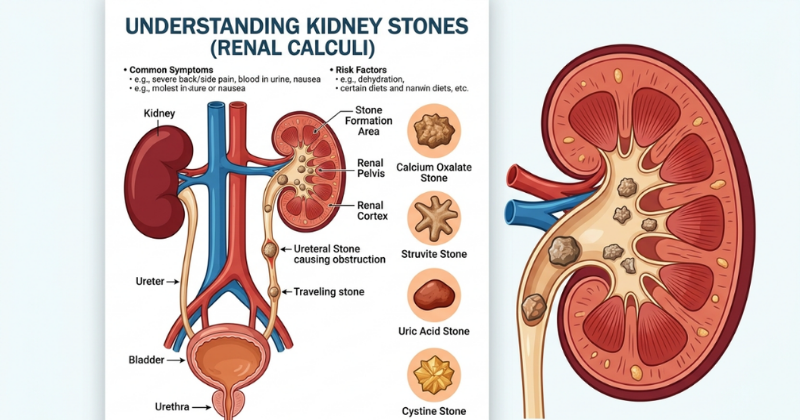
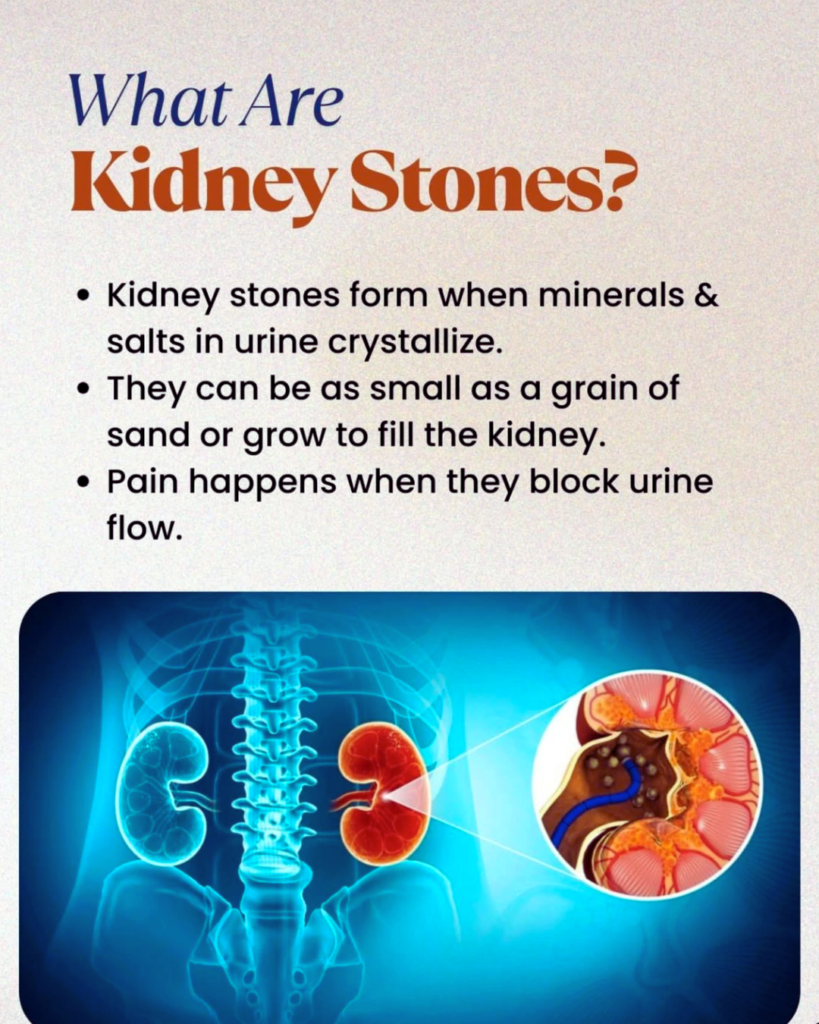
Kidney stones are hard deposits made of minerals and salts that form inside your kidneys.
This condition is known as kidney stones.
They develop when certain substances in urine—like calcium, oxalate, or uric acid—become too concentrated and crystallize.
Over time, these crystals stick together and grow into stones.
How Do Kidney Stones Form?
Your urine normally contains substances that:
- Prevent crystals from forming
- Help flush out waste
But when there’s an imbalance, crystals can develop.
Key Factors:
- Low fluid intake (dehydration)
- High concentration of minerals
- Lack of protective compounds in urine
When urine becomes too concentrated, stone formation becomes more likely.
Types of Kidney Stones
Not all kidney stones are the same.
1. Calcium Stones
The most common type, often made of calcium oxalate.
2. Uric Acid Stones
Form when urine is too acidic.
3. Struvite Stones
Often linked to infections.
4. Cystine Stones
Rare and usually genetic.
Common Symptoms
Small stones may not cause symptoms, but larger ones can be very painful.
Signs to Watch For:
- Sharp pain in the back or side
- Pain that spreads to the lower abdomen
- Pain during urination
- Nausea or vomiting
- Blood in urine
- Frequent urge to urinate
Pain often comes in waves and can be intense.
What Causes Kidney Stones?
1. Dehydration
Not drinking enough water is one of the biggest causes.
2. Diet Choices
High intake of:
- Salt
- Sugar
- Processed foods
can increase risk.
3. Excess Oxalate Foods (in imbalance)
Examples:
- Spinach
- Chocolate
- Nuts
4. High Protein Intake (in excess)
Especially from animal sources.
5. Medical Conditions
Some health conditions increase risk over time.
How to Prevent Kidney Stones
1. Stay Hydrated
Drink enough water to keep urine light in color.
This helps flush out minerals before they form stones.
2. Balance Your Diet
Focus on:
- Fruits and vegetables
- Moderate protein
- Low salt intake
3. Don’t Cut Calcium Completely
Low calcium intake can actually increase certain types of stones.
Balance is key.
4. Limit Sugary Drinks
Sodas and sugary beverages can increase stone risk.
5. Stay Active
Movement supports overall kidney function.
Foods That Help Reduce Risk
- Citrus fruits (like lemons)
- Water-rich foods (cucumber, watermelon)
- Vegetables and whole foods
Citrate (found in citrus) can help prevent stone formation.
Common Mistakes
1. Drinking Water Only When Thirsty
You need consistent hydration.
2. Extreme Diet Changes
Cutting entire food groups can backfire.
3. Ignoring Early Symptoms
Early action can prevent complications.
When to See a Doctor
Seek medical attention if you experience:
- Severe or persistent pain
- Blood in urine
- Fever with symptoms
These may indicate complications.
Conclusion
Kidney stones may be small, but they can have a big impact on your health and comfort.
The good news is that many cases are preventable through simple habits—especially staying hydrated and maintaining a balanced diet.
By understanding how they form and what increases your risk, you can take practical steps to protect your kidneys and avoid future problems.