Introduction (Meta Description-ready, 155–160 characters when condensed):
A poetic claim suggests aging bees rest on flowers under the stars to give Earth a final gift—this article examines the science behind bee aging, behavior, and ecology.
Introduction
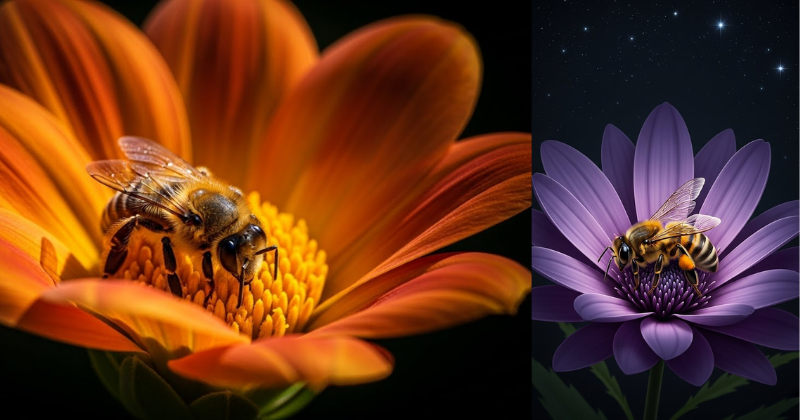
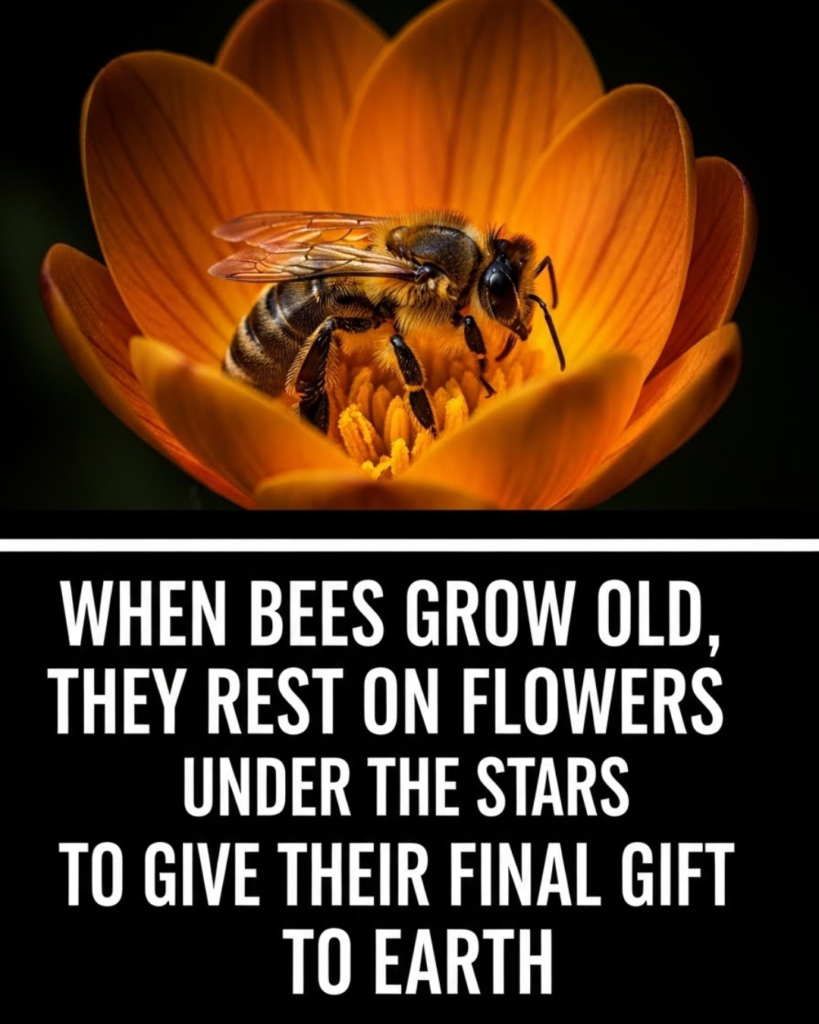
“When bees grow old, they rest on flowers under the stars to give their final gift to Earth.” The phrase has traveled widely, resonating with people who admire bees and worry about their decline. It paints a tender image of senescent bees choosing blossoms as their final resting place, quietly contributing to nature one last time. But what does science actually say?
This article offers a comprehensive, evidence-based analysis of this idea. While the statement is poetic rather than literal, it touches on real biological processes: aging in bees, changes in behavior late in life, nocturnal resting, and the profound ecological contributions bees make throughout—and sometimes at the end of—their lives.
By separating metaphor from measurable evidence, we can appreciate the beauty of the story while understanding the remarkable, well-documented biology that inspired it. The result is a deeper respect for bees—not myths, but facts that are just as extraordinary.
What Does the Phrase “When Bees Grow Old” Mean in Biological Terms?
In scientific terms, “growing old” in bees refers to senescence, the gradual decline in physiological function with age. Unlike many animals, bees experience aging that is tightly linked to their social role rather than just chronological time.
Worker bees typically live:
- 4–6 weeks during active seasons
- Several months if born late in the year
Their lifespan is shaped by energy expenditure, exposure to predators, and metabolic stress from foraging. Aging bees show reduced muscle strength, slower reflexes, and diminished navigation accuracy.
Thus, “old age” in bees is not symbolic—it is a measurable biological state with clear behavioral consequences.
How Does Aging Affect Bee Behavior and Movement?
As bees age, especially worker bees, their behavior changes in predictable ways supported by entomological research.
Decline in Foraging Efficiency
Older bees:
- Fly shorter distances
- Carry lighter pollen loads
- Take longer to return to the hive
This is due to wing wear, oxidative stress, and reduced neural processing speed.
Increased Risk of Disorientation
Studies show that senescent bees are more likely to:
- Fail to return to the hive
- Land frequently to rest
- Remain outside overnight
These behaviors are often misinterpreted as intentional “final acts,” when they are actually consequences of physical decline.
Do Bees Actually Rest on Flowers at Night?
Yes—but not in the romanticized sense often implied.
Documented Nocturnal Flower Resting
Certain bees, especially solitary species, are known to:
- Grip flower heads with their mandibles
- Enter a low-metabolism resting state called torpor
- Remain on flowers overnight for warmth and predator avoidance
This behavior is well documented in genera such as Melissodes and Anthophora.
Is This Linked to Old Age?
Not specifically. Bees of various ages may rest on flowers overnight due to:
- Sudden drops in temperature
- Exhaustion after foraging
- Distance from nesting sites
While older bees are more likely to fail to return to the hive, flower resting itself is not a ritualized end-of-life behavior.
What Is the “Final Gift” Bees Give to the Ecosystem?
The phrase “final gift to Earth” is metaphorical—but it aligns closely with ecological reality.
Pollination Until the Very End
Bees do not stop pollinating because they are old. As long as they can fly:
- They transfer pollen between plants
- They contribute to genetic diversity
- They support food webs and plant reproduction
Even a weakened bee landing on a flower may still deposit pollen grains, creating real ecological impact.
Nutrient Recycling After Death
When bees die outdoors:
- Their bodies decompose
- Nutrients return to the soil
- Microorganisms and insects benefit
This is a small but genuine contribution to ecosystem cycling.
Which Scientific Observations Inspired This Poetic Interpretation?
The widespread quote likely arose from misinterpreted but real observations.
Field Observations by Naturalists
Naturalists and gardeners frequently observe:
- Bees motionless on flowers at dusk
- Bees remaining overnight on blossoms
- Dead bees found on petals in the morning
Without context, these scenes appear intentional or symbolic.
Social Media and Narrative Amplification
In digital spaces, these observations were:
- Anthropomorphized
- Detached from biological explanation
- Reframed as purposeful final acts
Science does not support intentional end-of-life choices in bees, but it does explain why these moments occur.
How Do Social Bee Colonies Handle Aging Members?
In honeybee colonies, aging is managed at the colony level, not the individual level.
Functional Aging in Worker Bees
Worker bees transition roles:
- Nurse bees (young)
- Hive maintenance
- Foragers (oldest stage)
Foraging is the most dangerous role and is typically assigned to older workers.
Colony-Level Efficiency
When an older forager fails to return:
- The colony reallocates labor
- No resources are spent on rescue
- Overall fitness remains high
This is not neglect—it is evolutionary efficiency.
Why Humans Are Drawn to Stories About Bees and Mortality
The popularity of this phrase reveals as much about humans as it does about bees.
Projection of Human Values
Humans tend to project:
- Intentionality
- Altruism
- Ritual meaning
onto animal behavior, especially in species we admire.
Bees as Ecological Symbols
Bees represent:
- Cooperation
- Environmental balance
- Fragility of ecosystems
The idea of a “final gift” resonates because it mirrors our own desire for meaning at the end of life.
What Does Science Ultimately Say About Bees, Aging, and Meaning?
Science offers something quieter, but no less powerful, than poetry.
Bees do not choose flowers as a final resting place out of intention. They do not understand “gifts” or “Earth” as concepts. Yet, through instinct, physiology, and ecological integration, their lives—and deaths—are deeply meaningful.
Their contribution is not a single final act, but a lifetime of continuous service to ecosystems that depend on them.
Conclusion
The idea that when bees grow old, they rest on flowers under the stars to give their final gift to Earth is not scientifically literal—but it is emotionally grounded in real biological truths. Aging bees do experience exhaustion, disorientation, and increased time spent resting on flowers. They do continue to pollinate until their physical limits are reached. And even in death, they return nutrients to the environment.
Understanding the science behind the story does not diminish its beauty. Instead, it replaces myth with something more enduring: respect for the extraordinary biology of bees and the quiet, measurable ways they sustain life on Earth—every day, until the very end.