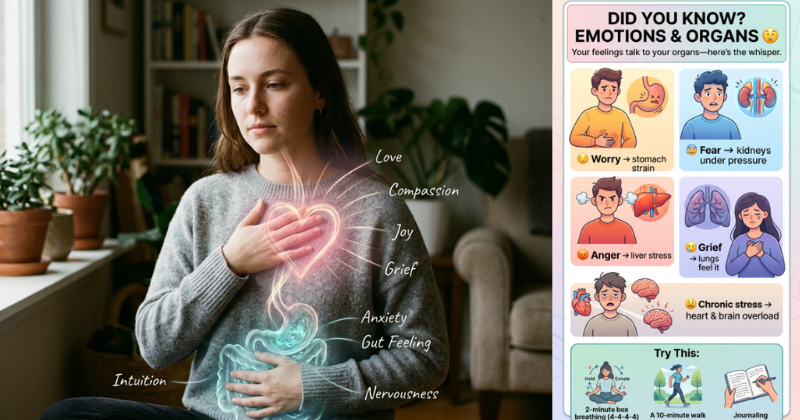
Ever felt butterflies in your stomach when worried, a heavy chest when grieving, or sudden tension when angry? These aren’t just “in your head” — they’re real signals from your organs. In Traditional Chinese Medicine (TCM) and modern mind-body science, specific emotions are linked to specific organs. When emotions run high or chronic, they can create physical strain. The good news? Simple daily habits can help you release that tension and feel lighter fast.
In this guide you’ll learn the exact emotion-organ connections, the science and ancient wisdom behind them, early warning signs to watch for, and three easy 2-minute practices (box breathing, walking, and journaling) that calm both mind and body. No complicated routines or expensive tools — just practical ways to support your whole self.
The Mind-Body Connection: Ancient Wisdom Meets Modern Science
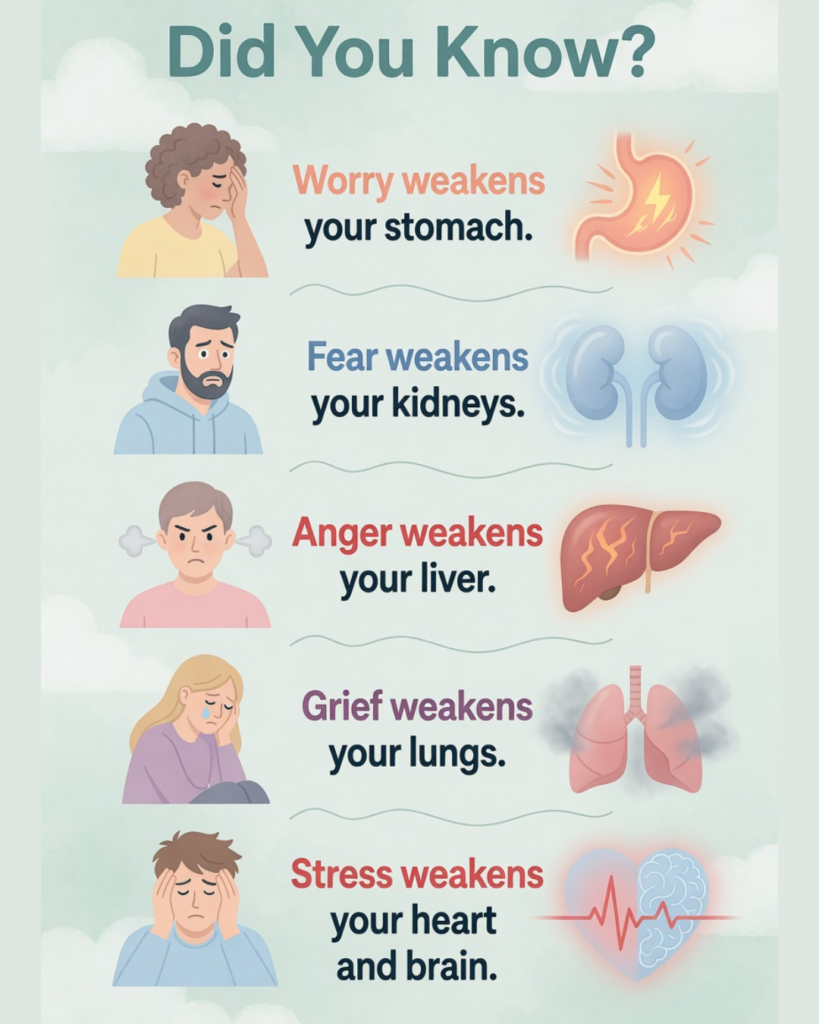
Your emotions and organs communicate constantly through the nervous system, hormones, and inflammation pathways. TCM, practiced for over 2,000 years, maps five major emotions to five key organs. Western research now supports this: chronic stress raises cortisol, anger spikes blood pressure and liver enzymes, and grief affects lung function and immune response. When an emotion lingers, the linked organ works harder, leading to tightness, fatigue, or discomfort. Recognizing the pattern lets you address the root instead of just the symptom.
5 Common Emotion-Organ Links (and What They Feel Like)
😟 Worry → Stomach Strain Worry and overthinking tax the spleen and stomach in TCM. You might feel bloating, nausea, poor appetite, or that “knot in the stomach.” Modern view: Chronic worry activates the gut-brain axis, slowing digestion and causing IBS-like symptoms.
😨 Fear → Kidneys Under Pressure Fear depletes kidney energy, linked to your adrenal glands. Signs include lower-back tension, fatigue, frequent urination, or feeling “frozen.” Modern view: Fear triggers the fight-or-flight response, flooding the body with adrenaline and straining the adrenals over time.
😡 Anger → Liver Stress Anger and frustration stagnate liver energy. You may notice headaches, tight shoulders, irritability, or digestive upset. Modern view: Anger raises blood pressure and liver enzymes; studies link repressed anger to fatty liver risk.
😢 Grief → Lungs Feel It Grief affects the lungs and large intestine. Shortness of breath, tight chest, frequent colds, or emotional sighing are common. Modern view: Grief weakens respiratory and immune function; research shows bereaved people have higher inflammation.
😫 Chronic Stress → Heart & Brain Overload Long-term stress impacts the heart and brain most. You might feel heart palpitations, brain fog, anxiety, or insomnia. Modern view: Chronic cortisol damages the cardiovascular system and shrinks the hippocampus (memory center).
3 Quick Fixes You Can Do Today
These three practices interrupt the emotion-organ stress cycle in minutes. Do them daily or whenever you notice tension rising.
1. 2-Minute Box Breathing (4-4-4-4) This calms the nervous system and resets every organ link.
- Inhale for 4 counts
- Hold for 4 counts
- Exhale for 4 counts
- Hold for 4 counts Repeat 5–10 rounds. It lowers cortisol, eases stomach knots, and opens the lungs.
2. 10-Minute Walk (Even Indoors) Movement circulates energy and flushes stress hormones. Walk briskly while swinging your arms. Focus on your feet touching the ground. This grounds fear, moves liver stagnation, and clears mental fog.
3. Quick Journaling (2–3 Minutes) Write the emotion and where you feel it in your body. Example: “I feel worry in my stomach — what do I need right now?” Naming emotions reduces their intensity and prevents organ strain.
How to Build This Into Your Day
Morning: Box breathing while coffee brews. Midday: 10-minute walk when stress builds. Evening: 2-minute journal before bed. Start with just one practice and add the others as they feel natural.
Common Mistakes to Avoid
- Ignoring early signals (tight stomach or chest) until they become pain.
- Suppressing emotions instead of naming and releasing them.
- Over-relying on one fix — combine breathing, movement, and journaling for best results.
- Expecting instant cures — these habits work gently over days and weeks.
When to Seek Extra Support
These practices support wellness but are not a substitute for medical care. If emotions feel overwhelming, physical symptoms persist, or you suspect anxiety/depression, talk to a doctor, therapist, or TCM practitioner. Combining these habits with professional support gives the best outcomes.
Conclusion
Your emotions really do talk to your organs — worry to the stomach, fear to the kidneys, anger to the liver, grief to the lungs, and chronic stress to the heart and brain. The whisper is there to guide you. With simple tools like box breathing, a short walk, and quick journaling, you can listen, release tension, and feel lighter every day.
Try the 2-minute box breath right now and notice the shift. Small daily practices like these create big changes in how you feel in your body and mind. You deserve to feel calm, clear, and connected — start with one breath, one step, one honest sentence today. Your organs (and your whole self) will thank you.