Meta Description: Learn about Graves’ disease clinical presentation, key symptoms, causes, and diagnostic features. Understand how this autoimmune thyroid condition affects the body.
Graves’ disease is one of the most common causes of hyperthyroidism, a condition where the thyroid gland becomes overactive and produces too many hormones. This hormonal imbalance affects nearly every system in the body, from metabolism to heart rate and even emotional well-being.
Understanding the clinical presentation of Graves’ disease is important because its symptoms can develop gradually and sometimes be mistaken for stress or anxiety. Early recognition helps prevent complications and improves quality of life.
In this article, you’ll discover how Graves’ disease appears in the body, its key symptoms, and the features doctors look for during diagnosis.
What Is Graves’ Disease?
Graves’ disease is an autoimmune disorder. This means the immune system mistakenly attacks healthy tissues—in this case, the thyroid gland.
How it affects the thyroid
In Graves’ disease:
- The immune system produces antibodies (TSI antibodies)
- These antibodies overstimulate the thyroid gland
- The thyroid releases excessive hormones (T3 and T4)
This leads to hyperthyroidism, where the body’s metabolism speeds up abnormally.
Why it matters
Thyroid hormones regulate:
- Energy levels
- Heart rate
- Body temperature
- Digestion
- Mood and mental function
When levels are too high, multiple body systems become overactive.
Featured Snippet: What are the main symptoms of Graves’ disease?
The main symptoms of Graves’ disease include weight loss, rapid heartbeat, anxiety, tremors, heat intolerance, goiter (enlarged thyroid), and eye changes such as bulging eyes (exophthalmos).
Clinical Presentation of Graves’ Disease
The clinical presentation of Graves’ disease refers to how the condition appears in a patient during examination and daily life.
Symptoms often develop gradually and can vary in severity.
1. Metabolic and Physical Symptoms
One of the most noticeable effects is an increase in metabolism.
Common signs include:
- Unexplained weight loss despite normal or increased appetite
- Increased sweating
- Heat intolerance
- Fatigue despite high energy levels
Why this happens
Excess thyroid hormones make the body burn energy faster than normal, even at rest.
2. Cardiovascular Symptoms
Graves’ disease strongly affects the heart.
Key heart-related symptoms:
- Rapid heartbeat (tachycardia)
- Irregular heartbeat (palpitations)
- Increased blood pressure
- Shortness of breath during activity
Clinical significance
Doctors often detect Graves’ disease first through a fast resting heart rate.
3. Neurological and Emotional Symptoms
The nervous system becomes overactive in Graves’ disease.
Common neurological signs:
- Anxiety or nervousness
- Irritability
- Tremors in hands or fingers
- Difficulty sleeping
- Restlessness
Featured pattern
Many patients describe feeling “constantly wired” or unable to relax.
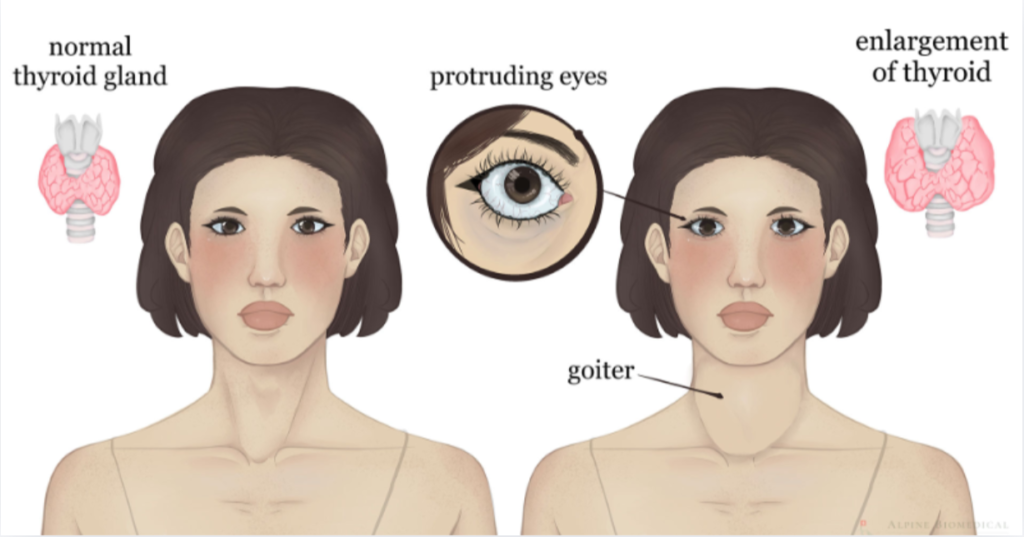
4. Thyroid Enlargement (Goiter)
One of the most visible signs is an enlarged thyroid gland.
What is a goiter?
A goiter is a swelling in the neck caused by an enlarged thyroid.
Signs include:
- Visible neck swelling
- Feeling of tightness in the throat
- Difficulty swallowing (in some cases)
5. Eye Changes (Graves’ Ophthalmopathy)
A unique feature of Graves’ disease is its effect on the eyes.
Common eye symptoms:
- Bulging eyes (exophthalmos)
- Dry or irritated eyes
- Double vision
- Light sensitivity
- Eye pressure or discomfort
Why eye symptoms occur
The immune system can also affect tissues around the eyes, causing inflammation and swelling.
Step-by-Step: How Doctors Diagnose Graves’ Disease
Diagnosis is based on symptoms, physical exam, and laboratory tests.
Step 1: Clinical evaluation
Doctors look for:
- Weight changes
- Heart rate
- Tremors
- Eye signs
- Neck examination for goiter
Step 2: Blood tests
Key tests include:
- TSH (thyroid-stimulating hormone) — usually very low
- Free T3 and T4 — usually high
- Thyroid antibodies (TSI or TRAb) — often positive
Step 3: Imaging (if needed)
- Thyroid ultrasound
- Radioactive iodine uptake scan
These help confirm overactive thyroid activity.
Advanced Features and Complications
If untreated, Graves’ disease can lead to serious complications.
Possible complications include:
- Heart rhythm problems (atrial fibrillation)
- Osteoporosis (bone weakening)
- Thyroid storm (medical emergency)
- Severe eye damage
Why early detection matters
Early treatment helps:
- Stabilize hormone levels
- Protect the heart
- Prevent eye complications
Common Triggers and Risk Factors
While the exact cause is unknown, several factors increase risk.
Risk factors include:
- Family history of thyroid disease
- Female gender (more common in women)
- Smoking
- High stress levels
- Other autoimmune conditions
Management Overview (General Information)
Graves’ disease is manageable with medical care.
Treatment options may include:
- Antithyroid medications
- Beta-blockers for heart symptoms
- Radioactive iodine therapy
- Surgery in severe cases
Internal Linking Opportunities
This topic connects well with other health subjects such as:
- Thyroid hormone imbalance and metabolism
- Autoimmune diseases and immune system health
- Heart rate and cardiovascular regulation
- Stress and hormonal health connection
- Eye disorders linked to systemic disease
Conclusion
Understanding the clinical presentation of Graves’ disease helps recognize early warning signs like weight loss, rapid heartbeat, anxiety, and eye changes. Because symptoms often develop gradually, they can be mistaken for stress or lifestyle issues.
Graves’ disease is a complex autoimmune condition, but with proper diagnosis and treatment, it can be effectively managed. Early detection plays a key role in preventing complications and improving long-term health outcomes.
If you notice persistent symptoms that match those described, seeking medical evaluation is an important step toward restoring balance and protecting your thyroid and overall well-being.