Meta Description: Learn about panic attacks, including common symptoms, physical reactions, triggers, and the body’s fight-or-flight response explained clearly.
A panic attack is a sudden episode of intense fear or discomfort accompanied by strong physical and emotional symptoms. Although panic attacks are not usually physically dangerous, they can feel overwhelming and may closely mimic serious medical emergencies such as heart attacks.
Understanding the symptoms and physiological reactions involved can help explain why panic attacks feel so intense and why they affect both the mind and body.
What Is a Panic Attack?
A Panic attack is a rapid surge of fear or distress that typically peaks within minutes.
Key characteristics
- Sudden onset
- Intense physical sensations
- Strong emotional distress
- Activation of the body’s stress response
Important distinction
A panic attack can occur:
- As part of Panic disorder
- During periods of stress or anxiety
- In other mental or physical health conditions
Featured Snippet: What is a panic attack?
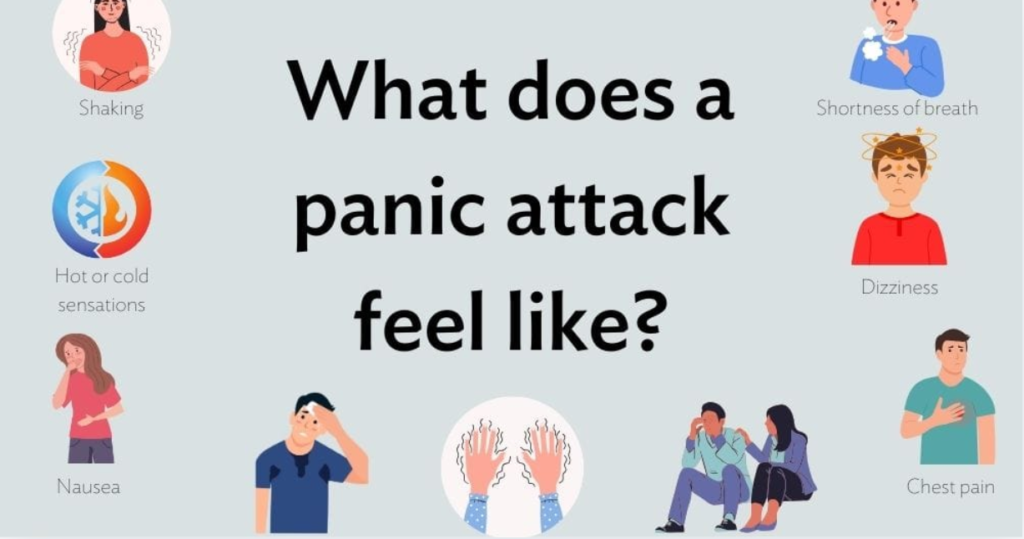
A panic attack is a sudden episode of intense fear accompanied by physical symptoms such as rapid heartbeat, shortness of breath, dizziness, and chest discomfort.
Why Panic Attacks Feel Physical
Panic attacks activate the body’s fight-or-flight response, a survival mechanism designed to protect against danger.
During this response, the body may:
- Release adrenaline
- Increase heart rate
- Redirect blood flow
- Heighten breathing rate
- Increase muscle tension
These reactions are normal stress responses—but during a panic attack, they occur intensely and sometimes without immediate danger.
Common Symptoms of Panic Attacks
Symptoms often peak within 10–20 minutes.
1. Rapid heartbeat (palpitations)
Many people feel:
- Heart pounding
- Racing pulse
- Fluttering sensations
This occurs due to adrenaline release.
2. Shortness of breath
People may feel:
- Difficulty breathing
- Tight chest
- Sensation of choking
Rapid breathing may also contribute to dizziness.
3. Chest pain or discomfort
Chest tightness may resemble cardiac symptoms, which is why panic attacks are sometimes confused with heart emergencies.
Featured Snippet: What are symptoms of a panic attack?
Common panic attack symptoms include rapid heartbeat, chest tightness, dizziness, sweating, trembling, shortness of breath, and intense fear.
4. Dizziness or lightheadedness
Often linked to:
- Hyperventilation
- Stress hormone release
- Altered oxygen–carbon dioxide balance
5. Sweating and chills
The autonomic nervous system may trigger:
- Excess sweating
- Cold sensations
- Shaking or trembling
6. Tingling or numbness
Commonly affects:
- Hands
- Feet
- Face
Usually related to rapid breathing and nerve sensitivity.
7. Intense fear or sense of doom
Many individuals report:
- Fear of losing control
- Fear of dying
- Feeling detached from reality
8. Gastrointestinal symptoms
Stress responses may affect digestion and cause:
- Nausea
- Stomach discomfort
- Urge to use the bathroom
Physical Reactions During a Panic Attack
Cardiovascular response
- Increased heart rate
- Elevated blood pressure temporarily
Respiratory response
- Faster breathing
- Hyperventilation
Neurological response
- Heightened alertness
- Sensory sensitivity
- Dizziness
Muscular response
- Tension
- Trembling
- Tightness
Featured Snippet: Why do panic attacks cause physical symptoms?
Panic attacks trigger the body’s fight-or-flight response, causing adrenaline release that affects the heart, breathing, muscles, and nervous system.
Common Triggers
Triggers vary between individuals.
Emotional stress
- Anxiety
- Chronic stress
- Emotional overwhelm
Physical factors
- Sleep deprivation
- Excess caffeine
- Stimulant use
Situational triggers
- Crowded places
- Public speaking
- Driving or travel
- Medical settings
Panic Attack vs Heart Attack
Some symptoms overlap, but they are different conditions.
Panic attack characteristics
- Symptoms often peak rapidly
- Tingling and hyperventilation common
- May improve within minutes
Heart attack warning signs
- Persistent crushing chest pain
- Pain radiating to jaw or arm
- Associated cardiovascular risk factors
Important note
Any new or severe chest pain should always be medically evaluated.
Featured Snippet: Can panic attacks feel like heart attacks?
Yes. Panic attacks can cause chest pain, rapid heartbeat, and shortness of breath that may resemble heart attack symptoms, making medical evaluation important when symptoms are uncertain.
How Panic Attacks Are Evaluated
Healthcare providers may assess:
- Medical history
- Symptom patterns
- Anxiety and stress factors
- Cardiovascular or respiratory causes
Possible tests
- ECG
- Blood tests
- Physical examination
Used mainly to exclude other medical conditions when necessary.
Management and Support Strategies
1. Breathing regulation
Slow controlled breathing may help reduce hyperventilation.
2. Stress management
Helpful approaches may include:
- Relaxation techniques
- Mindfulness practices
- Structured therapy support
3. Sleep and lifestyle balance
- Regular sleep
- Reduced caffeine intake
- Physical activity
4. Professional support
Therapy and medical care may help recurrent panic attacks.
5. Cognitive approaches
Learning to recognize panic symptoms may reduce fear amplification.
Featured Snippet: How can panic attacks be managed?
Panic attacks may be managed with breathing techniques, stress reduction, therapy, healthy lifestyle habits, and professional mental health support when needed.
When to Seek Medical Attention
Seek immediate medical care if symptoms include:
- New or severe chest pain
- Fainting
- Difficulty breathing
- Neurological symptoms
- Uncertainty about the cause
Common Misconceptions
Myth 1: Panic attacks are “just anxiety”
Reality: They involve real physiological stress responses.
Myth 2: Panic attacks are dangerous to everyone physically
Reality: Though extremely distressing, they are usually not physically harmful in otherwise healthy individuals.
Myth 3: People can simply “stop” a panic attack
Reality: Panic attacks are involuntary physiological and emotional responses.
Internal Linking Opportunities
This topic connects well with:
- Anxiety and stress physiology
- Nervous system and autonomic responses
- Hyperventilation and breathing patterns
- Sleep and mental wellness
- Cardiovascular symptom differentiation
Conclusion
Panic attacks are intense episodes involving both emotional distress and powerful physical reactions triggered by the body’s fight-or-flight system. Symptoms such as rapid heartbeat, chest tightness, dizziness, trembling, and shortness of breath can feel alarming, but understanding the physiology behind them may help reduce fear and improve coping strategies.
With appropriate support, lifestyle management, and professional care when needed, many individuals can successfully manage panic-related symptoms and improve quality of life.
Important Disclaimer: This article is for educational purposes only and should not replace professional medical or mental health advice. Persistent anxiety, panic symptoms, or chest pain should be evaluated by a qualified healthcare professional.