Meta Description: Learn the differences between pitting and non-pitting edema, their causes, clinical significance, and what swelling may reveal about underlying health conditions.
Edema is a common clinical finding characterized by swelling caused by excess fluid accumulation in the tissues. Healthcare professionals often classify edema as pitting or non-pitting, as this distinction can provide important clues about the underlying cause.
Understanding the difference helps guide evaluation and treatment.
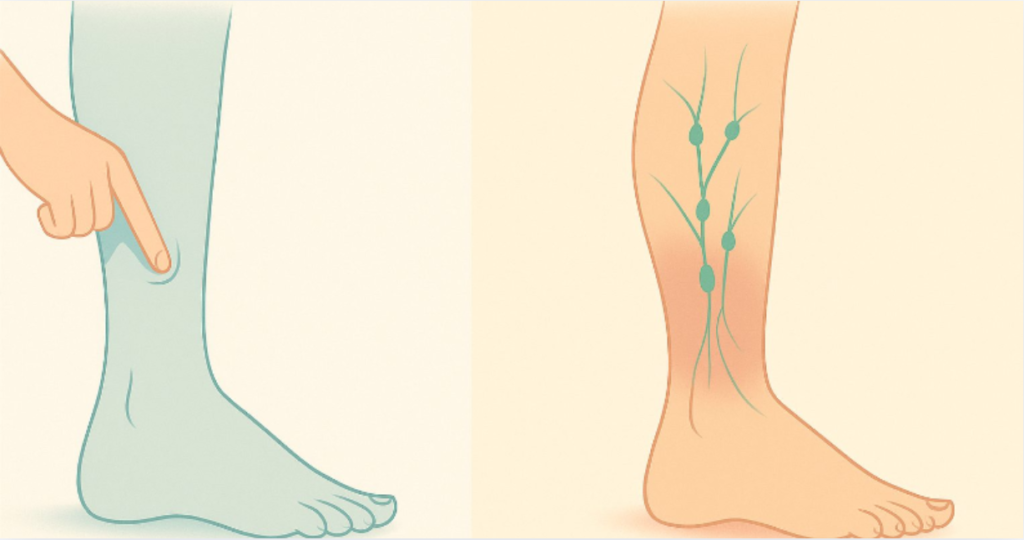
Featured Snippet: What is the difference between pitting and non-pitting edema?
Pitting edema leaves a temporary indentation when pressure is applied to the swollen area, while non-pitting edema does not leave an indentation and is often associated with lymphatic or tissue-related abnormalities.
What Is Pitting Edema?
Pitting edema occurs when excess fluid accumulates in the tissues and can be displaced by pressure.
How it is identified
When a finger is pressed firmly against the swollen area for several seconds:
- A visible indentation remains
- The depression gradually returns to normal
Common locations
- Ankles
- Feet
- Lower legs
- Sacral area in bedridden individuals
Why it happens
Fluid moves freely within the tissue spaces, allowing pressure to temporarily displace it.
Common Causes of Pitting Edema
Cardiovascular causes
Heart failure
Reduced circulation may lead to fluid accumulation in the lower extremities.
Kidney-related causes
Chronic kidney disease
Impaired kidney function can affect fluid and sodium balance.
Liver-related causes
Cirrhosis
Changes in protein production and circulation may contribute to edema.
Other causes
- Prolonged standing
- Pregnancy
- Certain medications
- Venous insufficiency
Understanding Non-Pitting Edema
Non-pitting edema does not leave a lasting indentation when pressure is applied.
Key characteristic
The swollen tissue feels firmer and more resistant to compression.
Featured Snippet: What causes non-pitting edema?
Non-pitting edema is commonly caused by lymphatic obstruction, tissue inflammation, or conditions that alter the structure of the skin and underlying tissues.
Common Causes of Non-Pitting Edema
1. Lymphedema
Lymphedema
Occurs when lymph fluid cannot drain properly.
Common features
- Firm swelling
- Heaviness of the limb
- Skin thickening over time
2. Thyroid Disorders
Hypothyroidism
Severe hypothyroidism may cause a form of non-pitting edema known as myxedema.
3. Chronic Inflammatory Conditions
Inflammation can alter tissue composition and fluid distribution.
Comparing Pitting and Non-Pitting Edema
| Feature | Pitting Edema | Non-Pitting Edema |
|---|---|---|
| Indentation after pressure | Present | Absent |
| Tissue consistency | Soft | Firm |
| Fluid movement | Easily displaced | Less easily displaced |
| Common causes | Heart, kidney, liver disorders | Lymphedema, thyroid disorders |
| Skin changes | Usually minimal initially | May become thickened |
Clinical Assessment of Edema
Healthcare providers evaluate:
Location
- One limb or both limbs
- Generalized or localized swelling
Severity
Pitting edema may be graded according to depth and duration of indentation.
Associated symptoms
- Pain
- Redness
- Shortness of breath
- Weight gain
- Skin changes
Warning Signs Requiring Medical Attention
Seek prompt medical evaluation if swelling is associated with:
- Sudden onset
- Chest pain
- Difficulty breathing
- Significant asymmetry between limbs
- Rapid worsening
Related condition
Deep vein thrombosis
Management Approaches
Treatment depends on the underlying cause.
Common strategies
- Managing cardiovascular conditions
- Supporting kidney or liver health
- Compression therapy for lymphedema
- Physical activity as recommended
- Sodium intake management when appropriate
Featured Snippet: Can edema be treated?
Yes, edema can often be improved by treating the underlying cause and using supportive measures such as compression, movement, and appropriate medical management.
Internal Linking Opportunities
This topic connects well with:
- Heart failure and circulation
- Kidney disease and fluid balance
- Liver dysfunction and ascites
- Lymphedema management
- Thyroid disorders and metabolism
Conclusion
Pitting and non-pitting edema are important clinical signs that can provide valuable clues about underlying health conditions. Pitting edema is usually associated with excess free fluid accumulation, while non-pitting edema often reflects lymphatic dysfunction or tissue infiltration.
Recognizing the difference can aid in early diagnosis and appropriate treatment, helping to address the root cause rather than simply the swelling itself.
Important Disclaimer: This article is for educational purposes only and should not replace professional medical advice. Persistent or unexplained swelling should be evaluated by a qualified healthcare professional.