
You emerge from the shower, skin still warm and water-kissed, reaching for that freshly laundered towel only to be greeted by a scent that betrays your effort—a damp, sour whisper that speaks not of cleanliness but of something deeply wrong. This olfactory betrayal feels personal, as though your domestic rituals have failed you at the most intimate moment. You’ve washed these towels faithfully, followed every instruction on every detergent bottle, yet they carry within their fibers a mustiness that no amount of fragrant soap seems capable of erasing.
The truth is both liberating and slightly unsettling: detergent was never the answer to this particular problem. What you’re smelling isn’t dirt that soap can lift away, but rather a complex ecosystem of bacteria and mildew that has colonized the very architecture of your towel fibers. These microorganisms thrive in the dark, damp labyrinth of terry cloth, creating biofilms that detergent merely dances around without penetrating. The solution requires not more washing, but a fundamentally different approach—a resurrection rather than a cleaning.
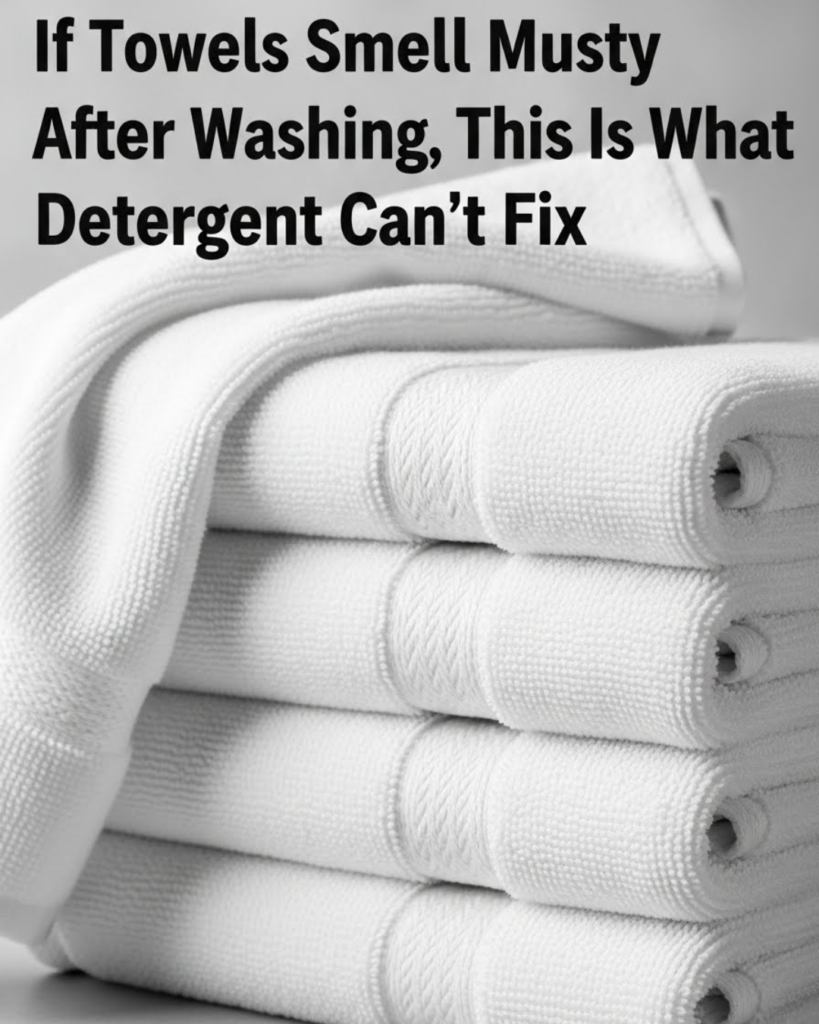
The Hidden Geography: Understanding What Lives in Your Towels
Your towels are not merely fabric but landscapes, three-dimensional territories where moisture lingers long after you’ve hung them to dry, creating microclimates perfect for bacterial proliferation.
The Anatomy of Persistent Odor
When towels smell musty even after washing, you’re detecting the metabolic byproducts of bacteria and mildew that have established residence deep within the towel’s fiber structure. These organisms produce volatile organic compounds that create that characteristic sour smell. Traditional detergents, no matter how powerful their marketing claims, cannot penetrate the protective biofilms these microbes create around themselves.
The terry cloth weave, designed specifically to maximize surface area for water absorption, ironically creates countless pockets where moisture becomes trapped. In these hidden valleys between fiber loops, bacteria flourish in the hours between use and complete drying. Each use adds body oils, dead skin cells, and environmental particles—a feast for microbial communities that detergent alone cannot eliminate.
Why Your Washing Routine Fails
Modern detergents excel at removing visible dirt and surface-level contaminants, but they operate primarily through surfactant action—molecules that surround particles and allow water to wash them away. Bacteria embedded within fiber structures remain largely untouched by this mechanical process. Additionally, many contemporary detergents contain fabric softeners and moisturizing agents that actually contribute to residue buildup, creating additional surface area for bacterial colonization.
Cold water washing, while environmentally conscious and energy-efficient, lacks the thermal energy needed to disrupt bacterial cell walls. Warm water alone rarely reaches temperatures sufficient for microbial elimination. Even hot water settings on most household machines peak around 130 degrees Fahrenheit—warm enough to be uncomfortable to touch but inadequate for true sanitization.
The Resurrection Protocol: Heat as Purifying Ceremony
The most profound solution to musty towel odor isn’t found in any bottle but in the transformative power of sustained high temperature—a thermal baptism that resets your towels to their original state.
The Boiling Water Method
Fill your largest pot with water and bring it to a rolling boil. Submerge your offending towels completely, ensuring every fiber contacts the superheated water. Maintain this boil for fifteen to twenty minutes, stirring occasionally with a wooden spoon to ensure even heat distribution throughout the fabric mass.
This process achieves what no washing machine can: temperatures exceeding 200 degrees Fahrenheit that denature bacterial proteins and destroy mildew spores at a cellular level. The extended exposure time ensures heat penetrates even the densest fiber bundles, reaching colonies hidden in the towel’s interior architecture. You’ll notice the water becoming slightly discolored as oils, residues, and dead bacteria leach from the fabric—visual confirmation of the purification occurring.
After boiling, transfer towels directly to your washing machine while still hot. Run a complete cycle with minimal detergent and an extra rinse. The pre-heating from boiling makes the subsequent wash exponentially more effective, as fibers remain expanded and receptive to flushing.
The Vinegar and Baking Soda Renaissance
For those without large pots or who prefer gentler methods, white vinegar offers chemical transformation through acidity. Load your washing machine with musty towels and nothing else. Add two cups of white vinegar directly into the drum—not the dispenser, which dilutes effectiveness. Run the hottest, longest cycle your machine offers.
The acetic acid in vinegar dissolves mineral deposits, soap scum, and the residue matrix that bacteria cling to. It also adjusts pH to levels inhospitable for most odor-causing microorganisms. The sharp scent dissipates completely during drying, leaving behind only clean, neutral-smelling fabric.
Follow this vinegar cycle immediately with a second wash using half a cup of baking soda added directly to the drum. The sodium bicarbonate neutralizes any remaining acidity while providing mild abrasive action that physically scours fiber surfaces. This two-step chemical treatment addresses both the microbial presence and the environmental conditions that allowed colonization.
Advanced Techniques: Sunlight and Strategic Maintenance
Beyond emergency interventions, preventing musty towel recurrence requires understanding the subtle dance between use, moisture, and microbial opportunity.
Solar Disinfection: The Ancient Solution
Sunlight remains one of nature’s most powerful antimicrobial forces, delivering both ultraviolet radiation and desiccating heat. After washing towels using hot water or the vinegar method, hang them in direct sunlight rather than using a dryer. The UV rays penetrate fabric surfaces, disrupting DNA in any surviving bacterial cells and preventing reproduction.
Position towels so both sides receive direct sun exposure—flip them midday if possible. The combination of UV radiation and the complete moisture evaporation that occurs in bright sun creates conditions fundamentally incompatible with microbial survival. This solar treatment costs nothing, uses no energy, and imparts a subtle warmth to fabric that mechanical drying cannot replicate.
The Immediate Hanging Imperative
The single most crucial preventive measure occurs in the seconds after towel use. Never leave damp towels bunched on floors, draped over doors, or compressed in hampers. Instead, spread them fully open across shower rods or towel bars where air can circulate freely around all surfaces.
This practice transforms towel drying from passive waiting into active prevention. When fabric surfaces remain in contact, trapped moisture between layers creates anaerobic pockets—oxygen-poor zones where particularly pungent bacteria thrive. Full extension ensures complete air exposure, dramatically reducing the time towels remain damp and therefore vulnerable to colonization.
Machine Maintenance: Cleaning the Cleaner
Your washing machine itself may harbor the bacterial populations that reinfect freshly washed towels. Front-loading machines particularly suffer from mildew accumulation in door gaskets and detergent dispensers. Once monthly, run an empty cycle using two cups of vinegar or a commercial machine cleaner, selecting the hottest, longest setting available.
After this cleaning cycle, leave the washer door open for several hours to allow complete interior drying. Moisture that remains in rubber seals and hidden crevices creates breeding grounds for mold and bacteria that transfer to subsequent loads. This simple practice addresses the source of contamination rather than treating symptoms endlessly.
Troubleshooting Persistent Cases: When Standard Methods Fail
Some towel situations resist even aggressive treatment, requiring specialized interventions that address unusual circumstances.
The Hard Water Complication
If you live in an area with hard water, mineral deposits accumulate within towel fibers over time, creating rough surfaces where bacteria adhere more readily. These deposits also reduce fabric absorbency, trapping more moisture and exacerbating odor issues.
Add half a cup of washing soda (sodium carbonate) to the hottest wash cycle to chelate minerals and strip accumulated deposits. This alkaline treatment softens water during washing, preventing new mineral buildup while removing existing accumulation. Follow with the vinegar rinse method to neutralize pH and restore fiber softness.
The Synthetic Fiber Challenge
Towels containing polyester or microfiber blends present unique difficulties. Synthetic fibers naturally hold oils and resist water penetration, creating ideal conditions for bacterial persistence. These materials cannot withstand boiling temperatures, requiring alternative approaches.
Soak synthetic towels in a solution of oxygen bleach and hot water for several hours before washing. Oxygen bleach provides sanitizing power without the fabric damage risks of chlorine bleach. The extended soak time allows the solution to penetrate hydrophobic synthetic fibers that repel aqueous solutions during standard wash cycles.
Knowing When to Release
Sometimes the kindest act is acknowledging that a towel has reached the end of its functional life. If odors persist despite multiple intensive treatments, the fiber structure may be so compromised by bacterial colonization that restoration becomes impossible. Rather than fighting endlessly against entrenched microbial communities, redirect that energy toward prevention with new towels.
Consider demoting irredeemably musty towels to utility status—cleaning rags, pet bath towels, or car washing cloths where their condition matters less. This practical repurposing honors their service while liberating you from the frustration of failed rehabilitation attempts.
Creating a Towel Culture: Ritual and Prevention
The ultimate solution to musty towel odor isn’t found in emergency interventions but in cultivating daily practices that prevent bacterial establishment entirely.
The Three-Towel Rotation
Instead of using a single towel for a week between washes, rotate between three towels throughout the week. This extended drying time between uses ensures complete moisture evaporation before the next use. Bacteria require persistent dampness to colonize effectively—intermittent drying disrupts their establishment phase.
This rotation also extends towel lifespan by reducing the frequency of washing, which gradually degrades fiber integrity through mechanical agitation and chemical exposure. Fewer washes mean less wear while paradoxically improving hygiene through prevention rather than treatment.
The Heat Discipline
Commit to washing towels in the hottest water safe for the fabric, adding a vinegar rinse every third wash as preventive maintenance. This regular thermal treatment prevents bacterial populations from ever reaching problem levels, addressing colonization attempts before they produce noticeable odors.
The Minimalist Approach
Counterintuitively, using less detergent often yields better results than using more. Excess detergent creates residue that bacteria colonize, while insufficient rinsing leaves soap trapped in fibers. Use half the recommended detergent amount and add an extra rinse cycle to ensure complete soap removal.
The path from musty disappointment to fresh, welcoming towels isn’t paved with expensive products or complex procedures but with understanding the hidden microbial geography of fabric and heat’s purifying power. In addressing what detergent cannot fix, you discover that the solution was always elemental—water made hot enough to transform, air allowed to circulate freely, and light given time to work its ancient magic. These simple forces, properly wielded, restore not just towels but the small daily rituals of comfort and cleanliness that make a house feel like home.