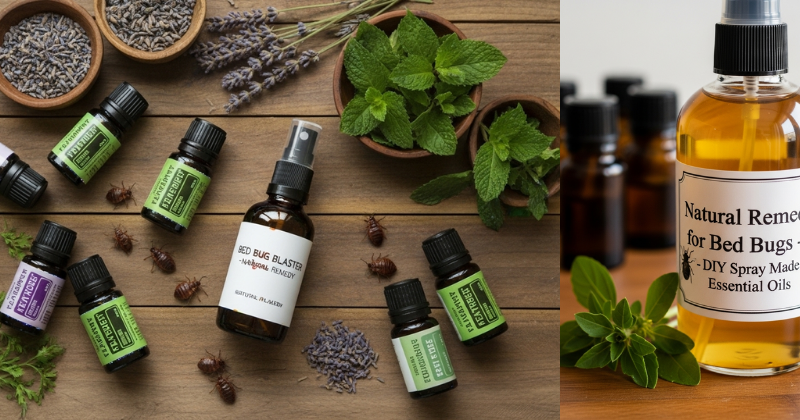
Discover a powerful natural remedy for bed bugs with our DIY spray made with essential oils. Reclaim your sleep and protect your home using safe, effective ingredients.
Important Disclaimer: This article is for informational purposes only and should not replace professional advice. For safety procedures, verify current best practices and local regulations. Individual results may vary, and personal circumstances should always be considered when implementing any suggestions.
Finding even a single sign of an infestation can send anyone into a spiral of stress and sleepless nights. We have all heard the horror stories about these tiny hitchhikers, and the thought of using harsh, heavy chemicals where you sleep can feel just as unsettling as the bugs themselves. But what if you could fight back using the power of nature? A Natural Remedy for Bed Bugs – DIY Spray Made with Essential Oils offers an eco-friendly way to deter these pests and refresh your sanctuary.
In this comprehensive guide, we are going to unlock the secrets of plant-based pest control. You will learn why certain oils are toxic to insects but soothing to humans, and how to create a high-potency spray right in your kitchen. You have the capability to take charge of your home’s environment today. By following these steps, you will transform your bedroom into a fortress of botanical protection and finally achieve the peace of mind you deserve!
Foundation: Why Essential Oils Work Against Pests
Before we start mixing your Natural Remedy for Bed Bugs – DIY Spray Made with Essential Oils, it is essential to build confidence in the science of botanicals. Many plants have evolved complex chemical defenses to keep insects away in the wild, and we can harness those same properties for our homes.
The Power of Terpenes and Phenols
Many essential oils contain compounds like linalool and menthol. To us, these smell like a relaxing spa, but to a bed bug, they are powerful neurotoxins or repellents. When you use a natural remedy for bed bugs, you are essentially using the plant’s own immune system to defend your mattress. This is a great addition to [sustainable lifestyle changes] for those looking to reduce their chemical footprint.
Addressing the Hesitation
A common concern is whether “nature” is strong enough to handle such a stubborn pest. While a spray is a fantastic deterrent and contact killer, it works best as part of a multi-pronged approach. You should reassure yourself that being proactive with non-toxic solutions is a smart first step. It allows you to treat your space frequently without worrying about respiratory irritants or skin sensitivities, which is a major win for [wellness-focused home care].
Key Ingredients for Your Toolkit
- Tea Tree Oil: Known for its antimicrobial and insecticidal properties.
- Peppermint Oil: A powerful repellent due to its high menthol content.
- Lavender Oil: Destroys eggs and larvae while helping you relax.
- Witch Hazel or Rubbing Alcohol: Acts as an emulsifier to help the oil and water mix.
Step-by-Step: Crafting Your DIY Bed Bug Spray
Ready to mix your botanical defense? Follow these manageable steps to create an effective Natural Remedy for Bed Bugs – DIY Spray Made with Essential Oils.
1. The Master Recipe
- The Base: Fill a 16-ounce glass spray bottle with 1 cup of distilled water and 1/2 cup of witch hazel (or 70% isopropyl alcohol).
- The Oils: Add 20 drops of Tea Tree oil, 20 drops of Peppermint oil, and 15 drops of Lavender oil.
- The Boost: For extra strength, add 10 drops of Eucalyptus or Lemon Eucalyptus oil.
2. The Mixing Process
- The Emulsion: Since oil and water don’t naturally mix, the witch hazel is crucial.
- The Shake: Close the bottle tightly and shake vigorously for 30 seconds. You must shake the bottle before every single use to ensure the oils are evenly distributed.
3. Application Strategy
- The Target: Strip your bed and spray the mattress seams, headboard cracks, and bed frame.
- The Perimeter: Don’t forget the baseboards and the area where the carpet meets the wall.
- The Timing: Apply the spray in the morning to allow the scent to dissipate and the surfaces to dry completely before you go to sleep.
Advanced Strategies: Pro Tips for Total Eradication
Once you have your spray ready, share these expert-level insights to ensure your natural remedy for bed bugs is as effective as possible.
The Heat Treatment Synergy
Essential oils are great, but heat is the ultimate enemy of bed bugs. Before you spray, wash all bedding in the hottest water possible and dry them on high heat for at least 30 minutes. The spray then acts as a secondary line of defense, catching any stragglers that escaped the laundry. This is a vital part of [efficient home maintenance].
Using Diatomaceous Earth (DE)
For a “pro-level” approach, apply a thin layer of Food-Grade Diatomaceous Earth in cracks and crevices after your spray has dried. DE is a natural powder that dehydrates insects on contact. When paired with your DIY spray made with essential oils, it creates a lethal environment for pests while remaining safe for your family and pets.
Pro-Tip: Travel Protection
Take a small travel-sized version of your spray whenever you stay in a hotel. Sprat your luggage and the hotel bed frame as soon as you arrive. This simple [travel wellness tip] can prevent you from bringing unwanted guests back to your home in the first place.
Troubleshooting: Common Challenges and Solutions
Even with the best natural tools, you might encounter a few hurdles. Here is how to address frequent obstacles with encouragement.
“I still see a bug after spraying.”
- The Solution: Remember that natural sprays often work through contact or persistent repelling.
- The Fix: Increase the frequency of your application. Spraying every 2-3 days for the first two weeks ensures you are catching bugs as they emerge from hiding.
“The smell is too strong for me.”
- The Advice: If peppermint is too overwhelming, you can adjust the ratios. Increase the Lavender and decrease the Peppermint.
- Alternative Approach: Ensure the room is well-ventilated during application. The scent will fade, but the repellent properties will remain on the surfaces.
“Will the oil stain my sheets?”
- The Secret: Always test a small, inconspicuous area first.
- The Prevention: Using a high-quality emulsifier like rubbing alcohol helps the oil evaporate quickly, reducing the risk of oily residue. Avoid spraying directly onto silk or very delicate fabrics.
Maximizing Results: Long-Term Prevention Tips
To build upon your success, look at your home environment as a whole. Prevention is much easier than a cure!
Declutter for Success
Bed bugs love hiding spots. By keeping the area under your bed clear and reducing clutter around your nightstands, you leave them nowhere to hide. This is a great opportunity to [organize your bedroom for better sleep].
Regular Inspections
Make it a habit to check your mattress seams every time you change your sheets. Catching a problem early makes your natural remedy for bed bugs significantly more effective. You can also learn [how to deep clean your bathroom] and other areas of the house to ensure your entire living space remains a “no-bug zone.”
Featured Snippet: What essential oils kill bed bugs?
Essential oils like Tea Tree, Peppermint, Lavender, and Eucalyptus are the most effective at killing and repelling bed bugs. Tea Tree oil acts as a contact killer, while Peppermint and Eucalyptus contain high levels of menthol and eucalyptol which act as powerful neurotoxins to insects. When mixed into a DIY spray with an emulsifier like witch hazel, these oils provide a non-toxic way to manage infestations and deter pests from returning.
Conclusion
Mastering a Natural Remedy for Bed Bugs – DIY Spray Made with Essential Oils is an empowering way to protect your home and your health. You have discovered that you have the capability to succeed in pest management using safe, botanical ingredients. By combining this spray with heat treatments and smart home habits, you achieve a level of protection that commercial chemicals can’t always provide.
You’ve got this! Start today by mixing your first batch of spray and giving your bedroom a fresh, protective coat of lavender and peppermint. You deserve a peaceful, bug-free night’s sleep.