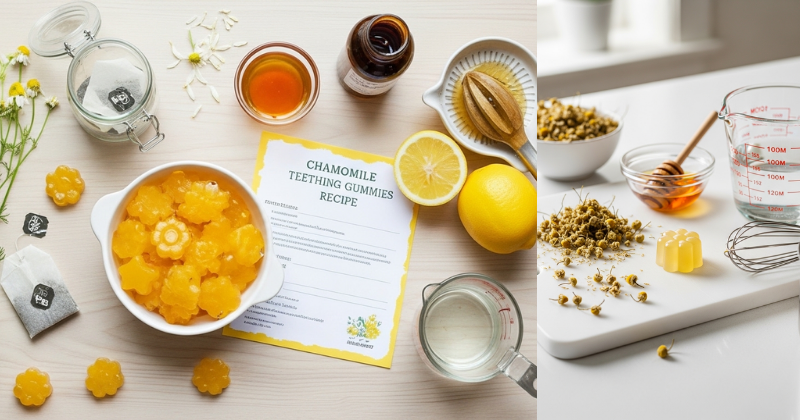
Teething is one of parenthood’s most challenging milestones — watching your baby experience discomfort while feeling limited in safe, effective ways to help is genuinely distressing. Chamomile teething gummies offer a thoughtful, natural approach that combines chamomile’s well-documented soothing properties with the satisfying texture that babies instinctively seek during teething. These homemade gummies give you complete control over every ingredient, eliminating the synthetic dyes, artificial flavors, and questionable compounds found in many commercial teething products. Made with simple, recognizable ingredients, they can be prepared in under 30 minutes and stored for convenient use throughout those difficult teething weeks. This complete recipe guide walks you through everything — from understanding why chamomile works, to perfecting your technique, to customizing the recipe for your baby’s specific needs and your family’s preferences.
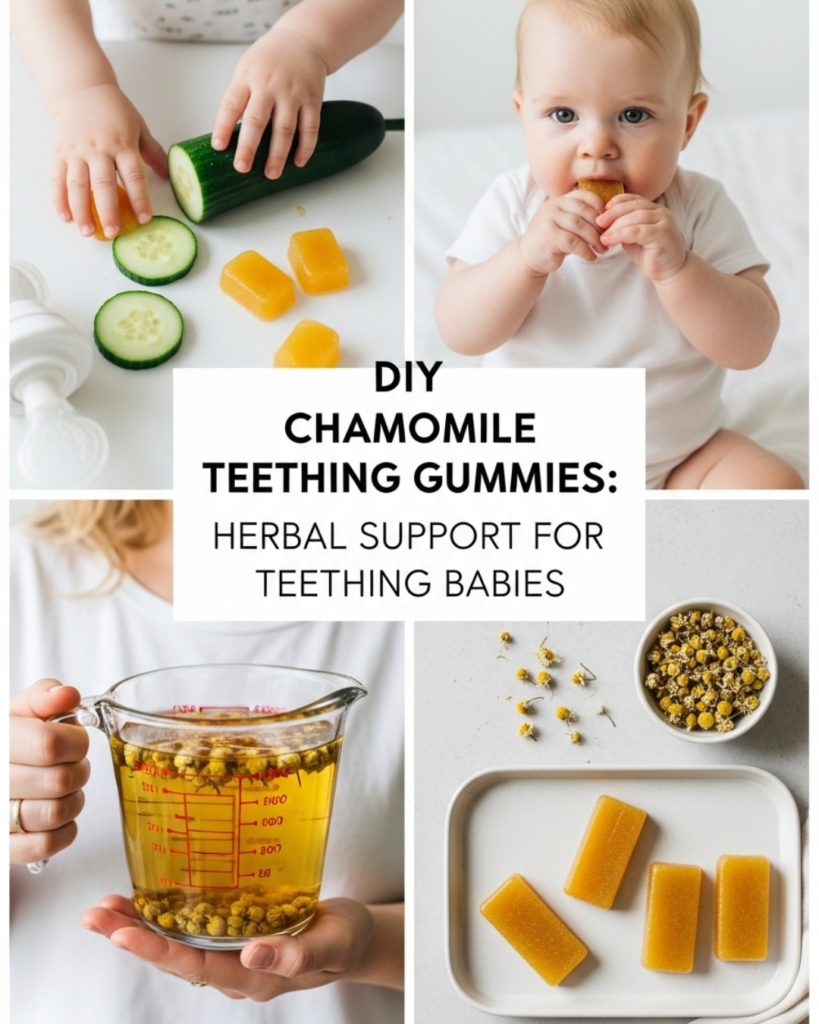
Why Chamomile for Teething Relief: The Science Behind the Soothing
Before mixing a single ingredient, it’s worth understanding precisely why chamomile has been trusted across cultures for centuries as a remedy for infant discomfort — and what contemporary research confirms about its mechanisms.
Active Compounds in Chamomile
German chamomile (Matricaria chamomilla), the variety most extensively studied and most appropriate for infant use, contains several bioactive compounds with documented pharmacological properties. Alpha-bisabolol — a primary terpenoid in chamomile essential oil — exhibits measurable anti-inflammatory activity through inhibition of 5-lipoxygenase and cyclooxygenase enzymes, the same enzymatic pathways targeted by conventional anti-inflammatory medications. Chamazulene, formed from matricine during the brewing process, provides additional anti-inflammatory activity and gives properly brewed chamomile tea its characteristic blue-tinged color when concentrated.
Apigenin, a flavonoid abundant in chamomile, binds to GABA-A receptors in the central nervous system — the same receptor class targeted by benzodiazepines — producing mild anxiolytic and sedative effects at appropriate doses. This receptor interaction explains chamomile’s calming properties beyond simple anti-inflammatory action and provides neurochemical basis for its traditional use in reducing infant fussiness and promoting sleep during teething episodes. The concentration of these compounds in a properly brewed, cooled chamomile tea (the base of these gummies) is mild and appropriate for infant use, providing genuine soothing benefit without the pharmacological intensity of medicinal preparations.
Gelatin’s Role Beyond Structure
The gelatin in these teething gummies serves functional purposes beyond simply holding the mixture in shape. Gelatin is composed of partially hydrolyzed collagen — a protein providing glycine, proline, and hydroxyproline amino acids that support connective tissue development. The satisfying resistance that gelatin-set gummies provide when babies bite and chew them delivers the counterpressure on emerging teeth and inflamed gum tissue that babies instinctively seek and that temporarily reduces teething discomfort through sensory competition mechanisms. The act of chewing also stimulates saliva production, which contains natural antimicrobial and tissue-soothing properties that contribute to gum comfort. Choosing a quality gelatin source matters — grass-fed bovine gelatin or sustainably sourced alternatives provide superior amino acid profiles compared to conventional gelatin.
Ingredients and Equipment: What You Need Before Starting
Gathering everything before you begin makes the process smooth and prevents the rushed adjustments that compromise texture and quality in gelatin-based preparations.
Ingredients List
The basic chamomile teething gummies recipe uses five simple ingredients, each serving a specific purpose. Proportions are calibrated for approximately 40-50 small gummies using a standard silicone mold.
- 1 cup brewed chamomile tea (from 3-4 chamomile tea bags or 2 tablespoons loose-leaf dried chamomile in 1.25 cups water, steeped 10 minutes, strained and cooled to room temperature)
- 3 tablespoons grass-fed gelatin powder (not gelatin sheets, which require different hydration ratios)
- 2 tablespoons raw honey (for babies over 12 months only — see safety note below) OR 1 tablespoon maple syrup for younger babies
- 1 tablespoon fresh apple or pear juice (optional, for mild natural sweetness and palatability)
- 1-2 teaspoons coconut oil (prevents sticking and adds mild antimicrobial properties from lauric acid content)
Critical safety note regarding honey: Raw honey is absolutely contraindicated for infants under 12 months due to the risk of infant botulism — Clostridium botulinum spores present in honey can germinate in infant digestive systems that lack the mature gut flora to prevent colonization. For babies under 12 months, substitute maple syrup, which carries no equivalent risk. This substitution has no impact on the gummies’ soothing properties.
Equipment Requirements
You need a small saucepan, a silicone gummy mold (bear shapes, worm shapes, or simple geometric shapes work equally well — silicone is essential for easy unmolding), a measuring cup, measuring spoons, a whisk, a small pouring pitcher or measuring cup with a spout for clean mold filling, and a fine mesh strainer if using loose-leaf chamomile. A dropper or small squeeze bottle makes mold filling significantly neater, though it’s not essential.
The Step-by-Step Chamomile Teething Gummies Recipe
Follow these steps precisely, particularly the temperature management steps — they’re the difference between gummies with perfect texture and those that are either too firm or refuse to set.
Step 1: Brew and Cool Your Chamomile Tea. Place 3-4 chamomile tea bags (or 2 tablespoons loose chamomile) in 1.25 cups of water that has just come off the boil — approximately 90-95°C. Steep for a full 10 minutes with the vessel covered to prevent aromatic volatile compound loss. Remove tea bags or strain loose chamomile completely. Allow tea to cool to room temperature — this is critical. Adding gelatin to hot liquid causes it to clump rather than bloom evenly. If you’re short on time, set the brewed tea in the refrigerator for 15-20 minutes.
Step 2: Bloom the Gelatin. Pour the room-temperature chamomile tea into your small saucepan. Sprinkle the gelatin powder evenly across the surface — don’t dump it all in one spot — and allow it to sit undisturbed for 5 minutes. During this blooming period, gelatin granules absorb liquid and swell, which ensures smooth, lump-free dissolving when heat is applied. You’ll see the surface become slightly gel-like and the gelatin visibly hydrate.
Step 3: Gently Heat the Mixture. Place the saucepan over the lowest possible heat setting. Stir gently and continuously as the mixture warms. Never allow this mixture to boil or reach a rolling simmer — high temperatures degrade chamomile’s active compounds and can make gelatin rubbery and grainy. You’re aiming for a temperature of approximately 60-70°C, which is warm enough to fully dissolve the gelatin but gentle enough to preserve the botanical properties you’re specifically including for their soothing benefits. The gelatin is fully dissolved when the mixture is completely smooth and leaves no visible granules on a spoon lifted from the pan — typically 3-5 minutes at low heat.
Step 4: Add Sweetener and Optional Juice. Remove the pan from heat and add your chosen sweetener (maple syrup for babies under 12 months, raw honey for older babies) and the optional apple or pear juice if using. Stir until fully incorporated. Add the coconut oil and stir until it melts and disperses throughout the mixture. Taste the mixture — it should be pleasantly mild with a light chamomile flavor and gentle sweetness. Adjust sweetener very slightly if desired, keeping in mind that gummies taste slightly less sweet once set and chilled.
Step 5: Fill the Molds. Work quickly once the mixture is off the heat — gelatin begins setting as it cools and becomes increasingly difficult to pour once setting begins. Transfer the mixture to your pouring pitcher or use a dropper/squeeze bottle for precision filling. Fill each mold cavity to just below the rim. If bubbles appear on the surface, pop them quickly with a toothpick. Place the filled mold on a flat surface in the refrigerator — not the freezer, which creates uneven setting and potentially crumbly texture — and allow to set for a minimum of 2 hours. Overnight setting produces the firmest, most consistent texture.
Step 6: Unmold and Store. Once fully set, gently flex the silicone mold to release gummies — they should pop out cleanly. Store in an airtight glass container in the refrigerator. These chamomile teething gummies remain fresh and safe for up to 2 weeks when consistently refrigerated. Never leave them at room temperature for extended periods as gelatin-based preparations without preservatives are perishable.
Advanced Variations and Pro-Level Customizations
Once you’ve mastered the basic recipe, these thoughtful variations address specific needs and preferences.
The Enhanced Comfort Version
For particularly difficult teething episodes, adding 1 teaspoon of elderflower tea (brewed separately and substituted for an equal portion of the chamomile tea) introduces quercetin and rutin — flavonoids with additional anti-inflammatory activity. A very small amount of pure vanilla extract (1/8 teaspoon) improves palatability significantly for babies who initially resist the mild bitterness of concentrated chamomile. Vanilla’s aromatic compounds also have mild calming properties and make the gummies considerably more appealing to reluctant tasters.
The Chilled Texture Variation for Maximum Relief
For acute teething discomfort, the cold temperature of refrigerated gummies provides immediate but brief counterirritant relief on inflamed gum tissue. To amplify this effect, make slightly softer gummies (reduce gelatin to 2.5 tablespoons) that can be briefly placed in the freezer for 15-20 minutes before offering — creating a partially frozen texture that maximizes the cooling benefit while remaining soft enough to be completely safe. Never give hard-frozen gummies, which present choking and dental hazard concerns.
Fruit-Chamomile Blend Version
Replace the optional juice with 2 tablespoons of pureed ripe banana or strained pear puree for gummies with a fruity flavor profile more familiar to babies already eating solid foods. Banana’s natural sugars provide pleasant sweetness without additional sweetener, and its potassium content complements chamomile’s properties. Ensure the puree is very smooth and completely lump-free before adding to the mixture — any fruit fiber that doesn’t integrate smoothly can create textural inconsistency in the finished gummies.
Troubleshooting Common Chamomile Teething Gummy Challenges
Gummies That Don’t Set Properly
Soft, syrupy, or completely unset gummies almost universally indicate insufficient gelatin or temperature problems during mixing. If your gummies aren’t setting after 3+ hours of refrigeration, the gelatin either didn’t fully dissolve (visible if you notice grainy texture), was an insufficient quantity for the liquid volume, or the mixture got too hot and the gelatin’s protein structure was denatured. The fix: gently reheat the unset mixture, add an additional tablespoon of gelatin, ensure it fully dissolves at low heat, then re-pour into molds and refrigerate again. This recovery process almost always produces properly set gummies on the second attempt.
Rubbery or Overly Firm Texture
Gummies that are too hard or rubbery result from too much gelatin or overcooking. For the next batch, reduce gelatin by half a tablespoon and be more attentive to maintaining very low heat during dissolving. Rubbery gummies aren’t unsafe, but very young babies may struggle to chew them appropriately — always supervise gummy use and ensure the texture is appropriate for your baby’s chewing ability.
Gummies Sticking to Molds
Sticking occurs when the coconut oil coating the molds is insufficient or when the gummies were unmolded before fully setting. Ensure coconut oil is thoroughly rubbed into every cavity of the mold before filling, or lightly spray with coconut oil spray. If sticking persists despite adequate oiling, allow an additional hour of refrigeration before attempting to unmold.
Maximizing Safety and Long-Term Success
Supervision, Portion Size, and Age Appropriateness
These chamomile teething gummies are intended for supervised use only — never leave a baby unattended while eating any gummy product, regardless of the softness of the texture. Small gummy shapes appropriate for babies’ hands and mouths (standard gummy bear molds produce an ideal size) reduce choking risk compared to larger pieces. Always start with one gummy to assess your baby’s tolerance before offering more, and monitor for any signs of allergic reaction — chamomile, while generally well-tolerated, is in the Asteraceae family and can occasionally cause reactions in individuals with ragweed or chrysanthemum allergies.
Most pediatric practitioners consider chamomile appropriate for babies who have begun eating solid foods (typically 6+ months), though consulting your pediatrician before introducing any new food or botanical preparation remains best practice, particularly for babies with known allergies or health conditions.
Building a Holistic Teething Support System
Chamomile teething gummies work most effectively as one component of a comprehensive teething comfort approach rather than a standalone solution. Pairing gummies with cold teething rings (refrigerated silicone rings, not frozen hard plastic), gentle gum massage with a clean finger, consistent comfort and skin-to-skin contact, and adequate sleep opportunity creates a multi-layered support system that addresses teething discomfort from physical, sensory, and emotional dimensions simultaneously. This integrative approach consistently produces better outcomes than any single intervention.
Conclusion
Making chamomile teething gummies at home transforms a challenging developmental period into an opportunity to provide your baby with genuinely effective, completely natural comfort using ingredients you understand and trust. The recipe is simple, the results are reliable, and the knowledge that you’re offering your baby something made with care from clean, purposeful ingredients carries its own profound satisfaction. Prepare your first batch before the most intense teething begins — having them ready in the refrigerator means you can respond immediately when your baby needs relief. Every parent navigates teething differently, but with these gummies in your toolkit, you’re equipped with a safe, soothing, and lovingly made option that supports your baby through one of their first significant developmental milestones.
Important Disclaimer: This article is for informational purposes only and should not replace professional advice. For health-related topics, particularly those involving infants and young children, consult healthcare providers before introducing new foods or remedies. Never give honey to infants under 12 months. Individual results may vary, and personal circumstances should always be considered when implementing any suggestions. Always supervise infants during eating.