Salmonellosis is one of the most common foodborne infections worldwide, often appearing suddenly after consuming contaminated food or water. Recognizing the early warning signs can help you respond quickly, prevent complications, and protect those around you.
In this guide, you’ll learn how to recognize the key symptoms of salmonellosis, understand how the infection develops, and discover practical strategies to manage symptoms and reduce risk. With the right knowledge, you can take confident steps to safeguard your digestive health and make informed decisions about food safety.
Meta description (150–160 characters): Learn to recognize salmonellosis symptoms, understand causes, and discover practical steps to manage infection and prevent foodborne illness.
What Is Salmonellosis and Why Should You Recognize It Early?
Salmonellosis is an infection caused by bacteria from the Salmonella family. These bacteria are commonly found in contaminated food products such as raw poultry, eggs, unpasteurized dairy, and improperly washed produce.
The infection occurs when the bacteria enter your digestive tract and begin multiplying in the intestines. For most people, symptoms appear within 6 to 48 hours after exposure.
Early recognition is essential because it allows you to:
- Prevent dehydration and complications
- Seek appropriate medical care when necessary
- Avoid spreading the infection to others
- Identify potential food safety risks in your environment
Understanding how salmonellosis develops helps you stay alert to the earliest warning signs.
How Salmonella Bacteria Spread
Salmonella spreads primarily through:
- Contaminated food or water
- Improper food handling or preparation
- Cross-contamination in kitchens
- Contact with infected animals or reptiles
- Poor hand hygiene after bathroom use
Foodborne outbreaks often occur when hygiene practices break down during food preparation.
Who Is Most at Risk?
Certain groups may experience more severe infections:
- Young children
- Older adults
- Pregnant individuals
- People with weakened immune systems
- Individuals with chronic illnesses
For these groups, early recognition of symptoms is particularly important.
What Are the Most Common Symptoms of Salmonellosis?
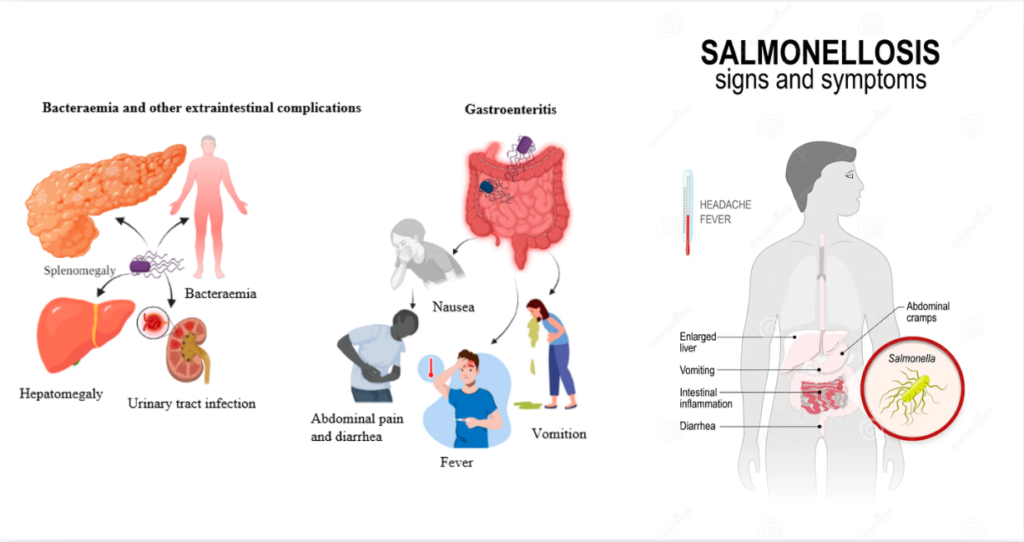
Recognizing the key symptoms of salmonellosis can help you identify the infection quickly. While severity varies, most cases involve gastrointestinal distress.
1. Diarrhea
Diarrhea is the hallmark symptom of salmonellosis. It may be:
- Frequent and watery
- Occasionally containing mucus or blood
- Accompanied by urgent bowel movements
This symptom often appears suddenly and may last several days.
2. Abdominal Cramps
Sharp abdominal pain or cramping frequently accompanies diarrhea. The discomfort usually occurs in the lower abdomen and can range from mild to intense.
3. Fever and Chills
A moderate fever commonly develops as your immune system responds to the infection. Temperatures may reach 38–39°C (100–102°F).
4. Nausea and Vomiting
Some individuals experience nausea or vomiting, especially during the early stages of infection.
5. Fatigue and Weakness
Loss of fluids and electrolytes can lead to:
- General weakness
- Fatigue
- Dizziness
Proper hydration becomes critical during this phase.
How Does Salmonellosis Progress in the Body?
Understanding the timeline of salmonellosis helps you recognize when symptoms may worsen or improve.
Initial Infection Phase
After ingesting contaminated food:
- Salmonella bacteria enter the digestive tract
- They begin multiplying in the intestines
- The immune system responds with inflammation
This stage typically produces early symptoms like nausea and stomach discomfort.
Active Symptom Phase
Within 24–48 hours, symptoms intensify:
- Diarrhea becomes more frequent
- Abdominal cramps worsen
- Fever may appear
The body attempts to flush the bacteria from the intestines.
Recovery Phase
Most healthy individuals recover within 4–7 days. During recovery:
- Diarrhea gradually decreases
- Energy levels return
- Appetite improves
However, some people may experience lingering digestive sensitivity for a short period.
What Are Advanced Warning Signs of Severe Infection?
While most cases resolve naturally, certain symptoms indicate a more serious infection that requires medical attention.
Signs of Dehydration
Severe diarrhea can lead to dehydration. Watch for:
- Dry mouth or lips
- Reduced urination
- Dark-colored urine
- Dizziness when standing
Young children and older adults are especially vulnerable.
Persistent High Fever
A fever above 39°C (102°F) may signal that the infection is spreading beyond the intestines.
Blood in Stool
Bloody diarrhea may indicate intestinal inflammation or complications.
Severe Weakness or Confusion
These symptoms could suggest systemic infection and require immediate evaluation.
What Steps Help Manage Salmonellosis Symptoms?
While antibiotics are not always necessary, supportive care plays a key role in recovery.
Hydration Strategies
Replacing lost fluids is the most important step.
Helpful options include:
- Water
- Oral rehydration solutions
- Clear broths
- Electrolyte drinks
Avoid alcohol and caffeine, which may worsen dehydration.
Gentle Nutrition
During recovery, choose foods that are easy on the digestive system:
- Bananas
- Rice
- Applesauce
- Toast
These foods help stabilize digestion while providing energy.
Rest and Recovery
Your body needs time to fight infection. Adequate rest supports immune function and accelerates healing.
How Can You Prevent Salmonella Infection in Everyday Life?
Preventing salmonellosis often comes down to consistent food safety practices.
Safe Food Handling
Follow these essential guidelines:
- Wash hands before and after food preparation
- Separate raw meat from ready-to-eat foods
- Use separate cutting boards for meat and vegetables
- Clean kitchen surfaces thoroughly
Proper Cooking Temperatures
Cook foods to safe internal temperatures:
- Poultry: 74°C (165°F)
- Ground meats: 71°C (160°F)
- Eggs: Cook until yolk and white are firm
Adequate heat kills harmful bacteria.
Food Storage Practices
Refrigerate perishable foods promptly and avoid leaving cooked meals at room temperature for extended periods.
Related Topics to Explore
For deeper knowledge, consider learning about:
- Food poisoning prevention strategies
- Safe poultry handling practices
- Understanding bacterial foodborne illness
- Hydration during gastrointestinal infections
- Gut health and immune defense
These topics expand your understanding of digestive health and infection prevention.
Conclusion
Recognizing salmonellosis symptoms early empowers you to take action and protect your health. Common warning signs—such as diarrhea, abdominal cramps, fever, and nausea—often appear within hours after consuming contaminated food. By staying alert to these signals and supporting your body with hydration, rest, and gentle nutrition, most infections can resolve safely within a week.
Equally important is prevention. Safe food handling, proper cooking temperatures, and good hygiene significantly reduce the risk of salmonella infection. When you understand how these bacteria spread and how symptoms develop, you gain the knowledge needed to make smarter choices in the kitchen and beyond.
Awareness is your strongest tool. With the right habits and informed decision-making, you can confidently protect yourself and your family from foodborne illness.
Important Disclaimer: This article is for informational purposes only and should not replace professional advice. For health-related topics, consult healthcare providers. Individual results and circumstances may vary.