
Asthma is a chronic condition that affects your airways, making breathing sometimes difficult. While medications help manage symptoms, avoiding triggers can prevent flare-ups and improve daily life. Understanding common asthma triggers can help you stay in control and reduce the risk of attacks.
In this guide, we’ll cover four common triggers, why they matter, and practical ways to reduce exposure.
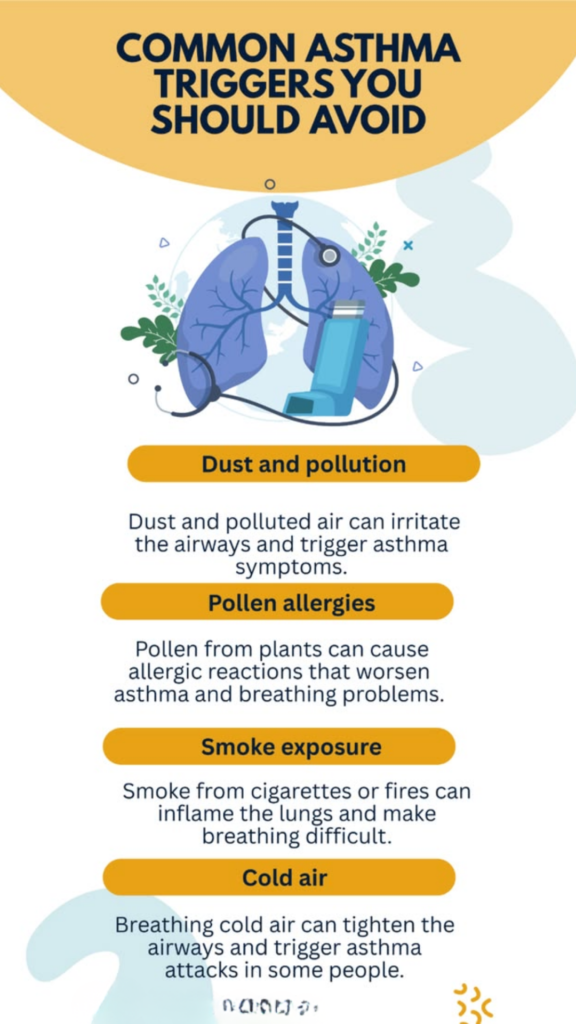
Why Knowing Triggers Matters
Asthma attacks can be unpredictable, but many are caused by environmental or lifestyle factors. By identifying triggers, you can create a safer living space, plan outdoor activities, and reduce reliance on emergency medication.
1. Dust and Dust Mites
Dust contains tiny particles, pollen, pet dander, and dust mites — all potential triggers. Dust mites thrive in mattresses, pillows, carpets, and upholstered furniture.
Tips to reduce exposure:
- Wash bedding weekly in hot water
- Use allergen-proof mattress covers
- Vacuum regularly with a HEPA filter
- Declutter surfaces where dust collects
2. Pollen and Seasonal Allergens
Tree, grass, and weed pollen can irritate airways and trigger asthma symptoms, especially during spring and fall.
Tips to minimize exposure:
- Check daily pollen forecasts
- Keep windows closed during high pollen days
- Shower and change clothes after outdoor activities
- Use air purifiers with HEPA filters
3. Smoke and Strong Odors
Cigarette smoke, fireplace smoke, incense, and strong cleaning chemicals can trigger asthma attacks by irritating the lungs.
Tips to avoid:
- Avoid smoking indoors and around your home
- Ventilate rooms when using chemicals
- Use fragrance-free cleaning products
- Encourage family/friends to smoke outside
4. Cold Air and Exercise
Cold air can tighten airways, while exercise — especially in cold weather — can trigger exercise-induced asthma.
Tips for prevention:
- Wear a scarf or mask over your nose and mouth in cold weather
- Warm up before exercise
- Use rescue inhalers if prescribed before intense activity
- Exercise indoors on cold or high-pollen days
Conclusion
Knowing your asthma triggers is essential for managing the condition and maintaining a healthy lifestyle. Dust, pollen, smoke, and cold air/exercise are common culprits, but everyone is different — keeping a journal of symptoms can help you pinpoint personal triggers. By reducing exposure and taking preventive steps, you can breathe easier every day.