
Cats are mysterious creatures, and anyone who’s lived with one knows they communicate in subtle ways. From a slow blink to the twitch of a tail, your feline friend is constantly sending signals. Understanding these “secret messages” can make your bond stronger, prevent misunderstandings, and help your cat feel safe and happy.
In this guide, we’ll break down the most common cat behaviors and what they really mean, without confusing scientific jargon or complicated terms.
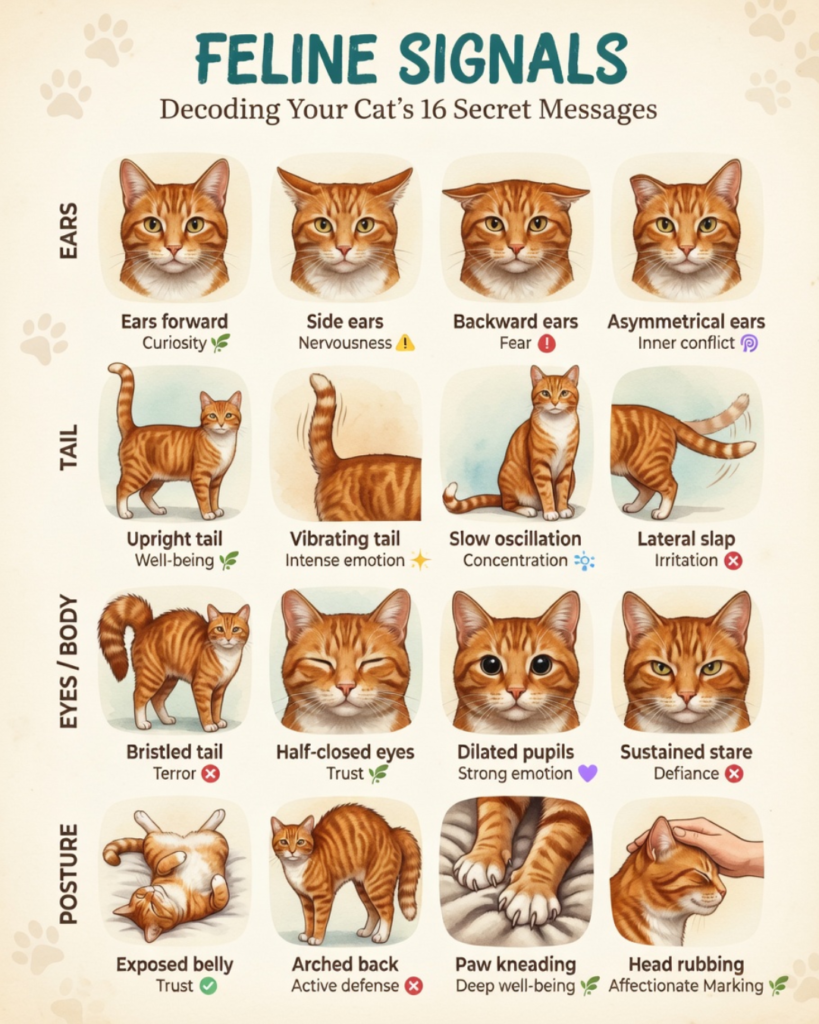
Why Understanding Cats Matters
Cats can’t speak human language, but their body language is always clear if you know how to read it. Ignoring their signals may lead to stress for your cat, or even minor accidents like scratches or furniture damage. Learning the signs helps you respond in a way that builds trust and calmness.
Tail Messages
- Straight up with a curve at the tip: Friendly and happy, your cat wants attention.
- Twitching or flicking: Mild irritation, excitement, or focus on something.
- Low or tucked tail: Fear, anxiety, or discomfort.
Tip: Always approach a cat with a tucked tail gently.
Ear Signals
- Forward ears: Relaxed, attentive, and curious.
- Sideways or backward ears: Irritation or feeling threatened.
- Quick swivels: Alert and sensing surroundings.
Eye Communication
- Slow blink: Love, trust, or calm greeting — often called a “cat kiss.”
- Dilated pupils: Excitement, fear, or playful energy.
- Half-closed eyes: Relaxation and comfort.
Vocalizations
- Purring: Comfort, contentment, or sometimes self-soothing.
- Meowing: Usually for human attention, varies by cat personality.
- Hissing or growling: Fear, anger, or warning.
Body Posture
- Arching back: Defensive or stretching, context matters.
- Rolling over: Playfulness or trust — only roll over if relaxed.
- Crouching low: Feeling threatened, hiding, or preparing to sprint.
Other Subtle Signs
- Head bunting: Affection and marking you with their scent.
- Kneading paws: Comfort and happiness, often from kittenhood habits.
- Grooming you: Trust and social bonding.
Tips for Understanding Your Cat
- Observe your cat’s natural behaviors regularly.
- Combine tail, ear, and eye signals for accurate reading.
- Respect warning signs — don’t approach if a cat is tense.
- Reward positive interactions with gentle petting or play.
- Remember each cat has its own personality — learn their specific signals.
Conclusion
Cats constantly communicate with their bodies, eyes, ears, tails, and even vocalizations. Learning to read these secret messages strengthens your bond, reduces stress, and makes coexisting with your feline friend more joyful. Next time your cat slow-blinks or flicks its tail, you’ll know exactly what it’s trying to tell you.