Meta Description: Discover the essential benefits of proper hydration, including effects on energy, digestion, skin health, brain function, and overall body performance.
Water is fundamental to life and is involved in nearly every physiological process in the human body. Adequate hydration supports cellular function, circulation, temperature regulation, and waste elimination.
Even mild dehydration can affect physical and cognitive performance, making daily water intake a key pillar of health.
Featured Snippet: What are the benefits of drinking water?
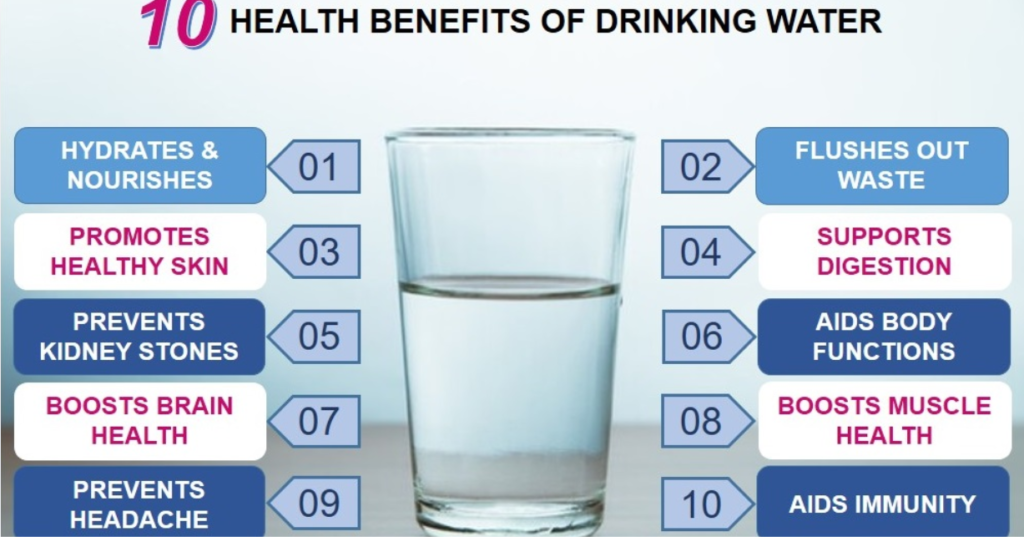
Drinking enough water helps regulate body temperature, supports digestion, improves kidney function, enhances brain performance, boosts energy, supports skin health, and aids circulation.
1. Improves Brain Function and Focus
The brain is highly sensitive to hydration levels.
Effects of dehydration
- Reduced concentration
- Slower cognitive processing
- Headaches
- Brain fog
Benefits of proper hydration
- Improved alertness
- Better memory performance
- Enhanced focus
2. Supports Digestion and Gut Health
Water plays a key role in breaking down food and absorbing nutrients.
Benefits include
- Helps prevent constipation
- Supports smooth bowel movements
- Assists nutrient absorption
3. Enhances Kidney Function and Detoxification
The kidneys rely on water to filter waste products.
Kidney
Hydration supports:
- Waste elimination
- Prevention of kidney stone formation
- Proper electrolyte balance
Featured Snippet: How does water help the kidneys?
Water helps the kidneys filter waste from the blood, produce urine efficiently, and reduce the risk of kidney stones.
4. Boosts Physical Performance
Hydration is essential for muscle function and endurance.
Benefits during activity
- Better muscle contraction
- Reduced fatigue
- Improved endurance
- Lower risk of cramps
5. Regulates Body Temperature
The body uses water for thermoregulation through sweating.
Why it matters
- Prevents overheating
- Maintains internal balance during exercise or heat exposure
6. Supports Healthy Skin
Hydration contributes to skin elasticity and appearance.
Possible benefits
- Improves skin hydration
- Supports elasticity
- May reduce dryness
Important note
Water supports skin health but does not replace skincare or treat skin conditions.
7. Helps Maintain Heart and Circulation Health
Blood is largely composed of water.
Benefits
- Supports blood volume
- Helps maintain blood pressure balance
- Improves circulation efficiency
Featured Snippet: Does drinking water help blood pressure?
Yes, proper hydration supports healthy blood volume and circulation, which can help maintain stable blood pressure levels.
8. Aids Weight Management
Water may support metabolic and appetite regulation.
How it helps
- Increases feelings of fullness
- May reduce unnecessary snacking
- Supports metabolism
Signs of Dehydration
Mild dehydration symptoms
- Dry mouth
- Fatigue
- Headache
- Dark urine
Severe dehydration symptoms
- Dizziness
- Rapid heartbeat
- Confusion
- Low blood pressure
How Much Water Do You Need?
Hydration needs vary based on:
- Age
- Activity level
- Climate
- Diet
A common general guideline is around 1.5–2.5 liters per day, but individual needs may differ.
Tips to Stay Hydrated
1. Drink regularly throughout the day
Don’t wait for thirst signals.
2. Eat water-rich foods
- Fruits (watermelon, oranges)
- Vegetables (cucumber, lettuce)
3. Carry a water bottle
Helps maintain consistent intake.
4. Increase intake during heat or exercise
Replace fluid lost through sweating.
Internal Linking Opportunities
This topic connects well with:
- Kidney health and urinary function
- Cognitive performance and brain hydration
- Digestive system efficiency
- Electrolyte balance and metabolism
- Cardiovascular circulation
Conclusion
Drinking enough water is one of the simplest yet most powerful habits for maintaining overall health. From brain performance and digestion to kidney function and circulation, hydration supports nearly every system in the body.
Consistent water intake throughout the day helps optimize energy, physical performance, and long-term wellness.
Important Disclaimer: This article is for educational purposes only and should not replace professional medical advice. Individuals with medical conditions affecting fluid balance should consult a healthcare provider for personalized hydration guidance.