Your liver is one of the most hardworking organs in your body. It detoxifies chemicals, processes nutrients from food, stores energy, and supports overall metabolism. Yet, many people overlook liver health until significant damage has occurred. The good news is that your body often sends subtle signals when your liver is struggling. Recognizing these early warning signs can empower you to take proactive steps, potentially preventing serious liver disease or complications.
In this article, we’ll explore 9 key signs your liver may be unhealthy, provide insights into underlying causes, and share practical strategies to protect and support liver function. By learning to listen to your body and acting early, you can unlock better wellness and prevent long-term health issues.
Meta Description (150–160 characters): Discover 9 warning signs of an unhealthy liver and learn practical strategies to protect your liver before serious complications arise.
Understanding Liver Health: The Basics
Before identifying warning signs, it’s important to understand why liver health is essential.
The Liver’s Key Functions
Your liver plays a vital role in:
- Detoxifying the bloodstream
- Metabolizing fats, proteins, and carbohydrates
- Producing bile to aid digestion
- Storing essential vitamins and minerals
- Regulating hormones and blood clotting
A healthy liver is crucial for energy, immunity, and overall wellness. Damage to this organ can impact multiple systems in your body.
Common Causes of Liver Damage
Several factors increase your risk of liver problems:
- Chronic alcohol consumption
- Poor diet high in processed foods and sugar
- Viral infections like hepatitis B or C
- Obesity and fatty liver disease
- Long-term use of certain medications
Understanding these risks helps you take preventive action before symptoms appear.
9 Warning Signs Your Liver May Be Unhealthy
Recognizing these signals early can make a significant difference in outcomes.
1. Jaundice (Yellowing of Skin and Eyes)
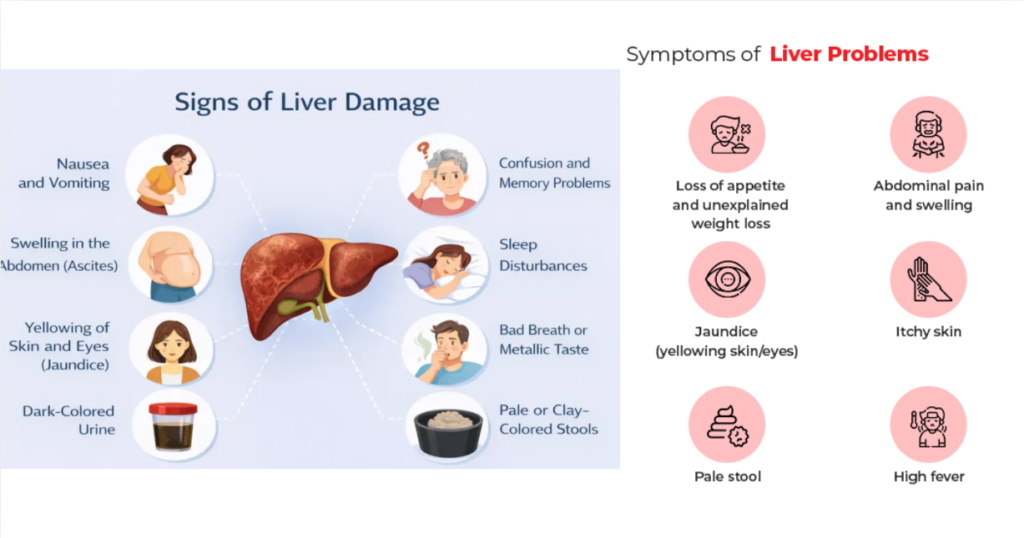
Jaundice occurs when bilirubin builds up in the blood due to impaired liver function. Yellowing of the skin or whites of the eyes is a classic red flag.
2. Persistent Fatigue
If you constantly feel tired despite adequate rest, it could indicate your liver is struggling to metabolize nutrients efficiently.
3. Abdominal Pain or Swelling
Discomfort in the upper right abdomen may signal inflammation or enlargement of the liver. Swelling or bloating can also result from fluid retention.
4. Unexplained Weight Changes
Sudden weight loss or gain, especially around the midsection, can indicate liver dysfunction or fat accumulation in the liver.
5. Dark Urine and Pale Stools
Changes in urine color (dark amber) or pale stools may result from bile flow disruption, a common symptom of liver issues.
6. Skin and Itchiness Problems
Persistent itching or skin rashes can occur due to bile salts depositing under the skin when liver function is compromised.
7. Nausea and Digestive Issues
Feeling nauseated, bloated, or experiencing a loss of appetite can reflect a liver struggling to process toxins efficiently.
8. Easy Bruising and Bleeding
The liver produces proteins necessary for blood clotting. Dysfunction may lead to easier bruising or prolonged bleeding.
9. Cognitive Symptoms
Mental fog, confusion, or difficulty concentrating may be linked to a buildup of toxins in the bloodstream due to reduced liver detoxification.
Steps to Support and Protect Your Liver
Taking proactive measures can preserve liver health and prevent disease progression.
Maintain a Balanced, Liver-Friendly Diet
- Increase vegetables, fruits, and whole grains
- Limit processed foods, added sugars, and trans fats
- Include healthy fats like olive oil and omega-3-rich foods
- Stay hydrated to aid toxin elimination
Manage Alcohol and Medication Intake
- Avoid excessive alcohol consumption
- Use over-the-counter and prescription medications responsibly
- Consult your healthcare provider before combining supplements and medications
Maintain a Healthy Weight and Active Lifestyle
- Regular exercise supports liver metabolism and reduces fat accumulation
- Maintain a healthy BMI to prevent non-alcoholic fatty liver disease
Advanced Strategies and Pro Tips
Beyond basics, you can optimize liver health through targeted strategies.
Consider Regular Screening
Routine liver function tests (LFTs) help detect issues early, even before symptoms appear.
Support with Nutrients and Herbs
Certain nutrients and herbs may support liver function:
- Milk thistle
- Turmeric
- Green tea extract
- Vitamin E (for non-alcoholic fatty liver disease)
Always consult a healthcare provider before supplementing.
Reduce Toxin Exposure
- Minimize exposure to environmental toxins, such as household chemicals
- Avoid unnecessary antibiotics or medications with liver toxicity potential
Troubleshooting Common Challenges
Even with awareness, lifestyle changes can be difficult. Here’s how to tackle common obstacles:
Challenge: Alcohol Habits
- Gradually reduce intake instead of abrupt cessation
- Seek support groups if needed
Challenge: Dietary Changes
- Plan meals in advance with liver-friendly ingredients
- Experiment with flavorful herbs and spices to enhance taste
Challenge: Sedentary Lifestyle
- Break up long periods of inactivity with short walks
- Incorporate at-home workouts if gym access is limited
Maximizing Liver Health: Next-Level Tips
Once basic habits are in place, these additional strategies help maintain long-term liver wellness:
- Monitor other organ health: Heart and kidney health are closely linked to liver function
- Regular checkups: Include liver panels in routine blood work
- Stress management: Chronic stress impacts liver enzyme levels; practice mindfulness and relaxation techniques
Featured Snippet: How Can I Know If My Liver Is Unhealthy?
You may have liver problems if you notice:
- Yellowing of skin or eyes (jaundice)
- Persistent fatigue and weakness
- Abdominal pain or swelling
- Dark urine or pale stools
- Easy bruising or bleeding
- Cognitive fog or confusion
Early detection and lifestyle adjustments can significantly improve liver outcomes.
Conclusion
Your liver is essential to your body’s detoxification, energy, and overall health. Recognizing warning signs early—such as jaundice, fatigue, digestive issues, and cognitive changes—allows you to take proactive steps. Through diet, exercise, moderation of alcohol, responsible medication use, and regular medical checkups, you can protect your liver, improve overall wellness, and reduce the risk of serious complications.
Take charge today: small, consistent changes can unlock long-term liver health, keeping your body vibrant and resilient for years to come.
Important Disclaimer: This article is for informational purposes only and should not replace professional advice. For health-related topics, consult healthcare providers. Individual results may vary.