
Growing an avocado seed transforms kitchen waste into a living meditation on patience, possibility, and the miraculous architecture hidden within every fruit. This journey from discarded pit to verdant plant reveals nature’s generosity—how a single seed contains entire forests in waiting, how life persists against improbable odds, how beauty emerges from what we almost threw away.
I remember the first avocado seed I ever sprouted, suspended above water like a small earth awaiting its awakening. Each morning became a pilgrimage to the kitchen windowsill, searching for signs of transformation. Then one day—after weeks of seeming dormancy—a pale root cracked through the seed’s brown armor, reaching downward with blind determination while simultaneously a green shoot pushed skyward toward light. In that moment, I witnessed the fundamental miracle that gardeners chase: the unstoppable impulse of life to unfold, to grow, to become.
This guide will walk you through every stage of avocado seed cultivation, from selecting the perfect candidate to nurturing a thriving indoor tree. You’ll learn the patient art of water propagation, the secrets of soil transition, and the long-term care that transforms a curious experiment into a living companion that may grace your home for decades.
Understanding the Avocado’s Sacred Geometry: Foundation and Promise
The Biology of Potential
An avocado seed—properly called a pit—contains everything necessary to recreate the parent tree, though it carries mysteries within its dense structure. Unlike many seeds that germinate readily, avocado pits demand specific conditions that mimic their evolutionary origins in the humid forests of Central America.
The seed’s hard outer shell protects delicate embryonic tissues that remain dormant until moisture, warmth, and oxygen signal that conditions favor growth. Inside this botanical fortress lies the embryo—a miniature plant complete with embryonic root (radicle) and shoot (plumule). Surrounding this potential life, the seed’s cotyledons store concentrated nutrients: fats, proteins, and starches that will fuel the seedling’s first weeks of growth before it develops leaves capable of photosynthesis.
Understanding this architecture helps us appreciate why avocado seeds seem to do nothing for weeks before suddenly erupting into growth. They’re not inactive—they’re preparing, absorbing water, softening their protective layers, and accumulating the chemical signals that trigger germination. This apparent dormancy teaches the gardener’s first lesson: trust the invisible processes occurring beneath the surface.
Selecting Your Seed: The Art of Recognition
Not all avocado seeds possess equal vigor. The ideal candidate comes from a ripe, unblemished fruit—one that yielded easily to gentle pressure, whose flesh tasted creamy and rich. These seeds come from fruits that achieved full maturity, developing the hormonal balance that translates to strong germination potential.
After enjoying your avocado, rinse the seed gently under lukewarm water, removing all clinging flesh. This step proves crucial—residual fruit matter can harbor mold that will sabotage germination. Handle the seed carefully; despite its apparent solidity, the embryo within remains vulnerable to damage.
Examine your seed’s surface. A healthy candidate appears smooth and unblemished, its brown skin intact. Cracks or soft spots may indicate internal damage, though minor surface imperfections rarely affect viability. The seed should feel heavy and dense—lightness suggests dehydration that reduces germination success.
Climate and Environment: Creating Optimal Conditions
Avocado seeds germinate best in environments that echo their tropical origins. They crave warmth—temperatures between 65-75°F (18-24°C)—and consistent conditions without dramatic fluctuations. Cold shock can halt germination; excessive heat above 85°F (29°C) may damage delicate tissues.
Bright, indirect light becomes important once the shoot emerges, though the seed itself germinates successfully in relative darkness. This mirrors the forest floor conditions where avocado seeds would naturally fall—shaded by the parent canopy yet receiving filtered sunlight.
Humidity matters, particularly in dry climates or heated homes during winter. The germinating seed loses moisture through transpiration; inadequate humidity can slow or stop the process. Grouping multiple plants together creates a microclimate of shared moisture, or place a small humidifier nearby during particularly dry periods.
The Water Method: Ancient Suspension and Modern Patience
Preparing the Seed for Its Journey
Begin by identifying the seed’s orientation. Every avocado pit has a slightly pointed top (where the shoot will emerge) and a flatter, broader bottom (where roots will develop). This polarity matters—upside-down seeds struggle to orient themselves correctly, wasting energy and time.
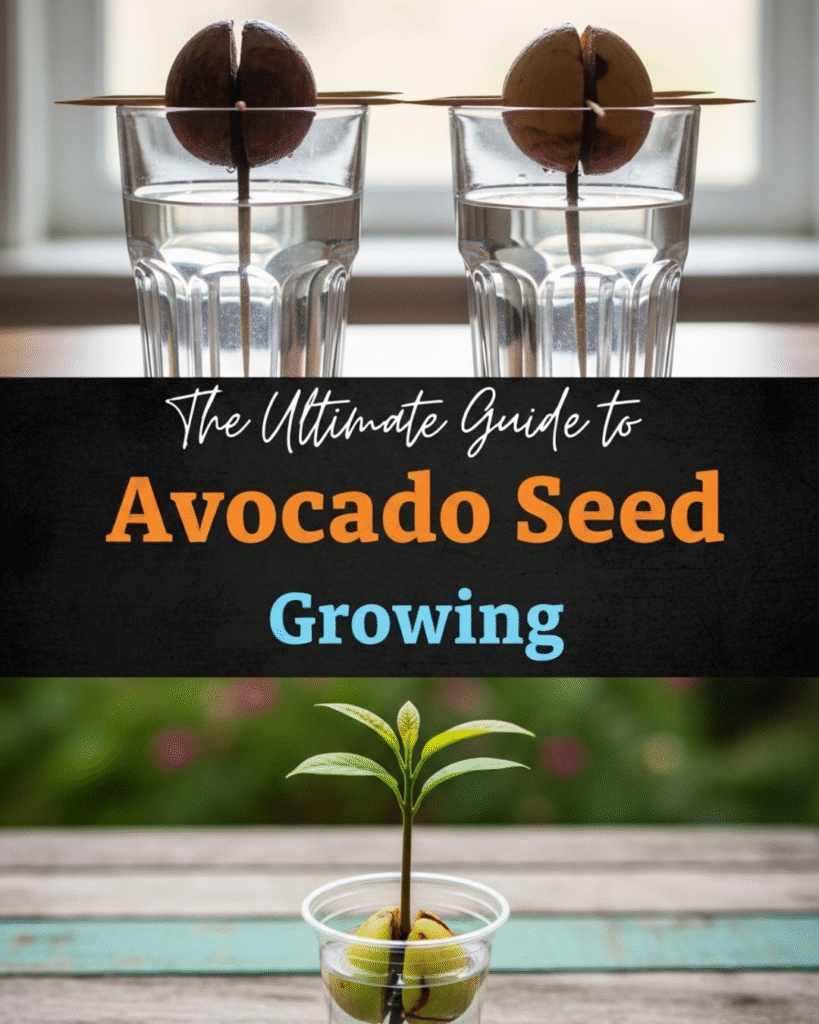
Insert three or four toothpicks around the seed’s midline, spacing them evenly. These will suspend the seed above water, submerging the bottom third while keeping the top exposed to air. Some gardeners prefer skewers for larger seeds; others use specially designed avocado seed holders that eliminate the need for puncturing. Choose whatever method feels comfortable, but ensure the toothpicks angle slightly downward to create stable suspension.
The insertion depth should be shallow—barely 5mm into the seed. Deeper punctures risk damaging the embryo. If a toothpick encounters hard resistance, withdraw and try a different location. The seed’s structure varies, with some areas denser than others.
The Ritual of Water and Waiting
Fill a clear glass or jar with room-temperature water—transparency allows you to monitor root development and water quality. Suspend your prepared seed so that the bottom third sits submerged. The water line should rest just below the seed’s widest point, ensuring constant moisture contact while preventing the seed from sitting entirely underwater, which can promote rot.
Place your suspended seed in a warm location with bright, indirect light. A kitchen windowsill often provides ideal conditions—ambient warmth from cooking, regular foot traffic that maintains interest and observation, and the gentle light that encourages growth without scorching.
Here begins the test of patience. For two to six weeks, seemingly nothing happens. The water slowly evaporates; you replenish it every few days, maintaining consistent levels. The seed sits, unchanged, while doubt whispers. This period separates casual experimenters from true cultivators—those willing to trust in processes they cannot see.
The Miracle of Emergence
Then one morning, you notice a vertical crack appearing at the seed’s top. The brown outer skin begins peeling away in papery sheets, revealing paler layers beneath. Within days, this crack widens, and from the seed’s bottom, a thick, pale taproot emerges—first tentatively, then with increasing confidence, pushing downward through the water.
This root—the first visible proof of life—grows rapidly, sometimes extending several inches within a week. It may branch, developing secondary roots that explore the water like pale fingers seeking sustenance. The main taproot often develops a reddish or pink tone, a sign of healthy growth and anthocyanin production.
Shortly after root emergence, the seed splits more dramatically at its top, and a shoot appears—a tightly furled spear of pale green pushing upward toward light. This shoot elongates with remarkable speed, sometimes growing an inch per day once it begins. The first leaves emerge folded, gradually unfurling to reveal their characteristic avocado shape: oval, slightly pointed, with a glossy surface that catches and reflects light.
Watch this transformation with reverence. You’re witnessing the fundamental process that makes all terrestrial life possible—the conversion of stored chemical energy into living tissue, the unfurling of genetic instructions written millions of years ago, the unstoppable impulse of life to perpetuate itself.
Water Management and Quality
Change the water weekly to prevent bacterial buildup and maintain oxygen levels. Room-temperature water prevents shock; cold water can slow growth or even damage tender new roots. If your tap water contains high levels of chlorine or fluoride, allow it to sit overnight before use, permitting these compounds to dissipate, or use filtered water.
As roots proliferate, they may develop a slightly fuzzy appearance—this usually indicates beneficial bacteria or minor algae growth, both harmless. However, if water becomes cloudy or foul-smelling, change it immediately and rinse roots gently under lukewarm water. Healthy roots should appear white to pale pink, firm, and clean.
Soil Transition: From Water’s Embrace to Earth’s Nourishment
Recognizing Readiness
Your avocado seedling signals its readiness for soil when it has developed a robust root system—multiple roots extending at least 3-4 inches, with visible secondary branching—and a shoot that has produced at least two sets of leaves. This typically occurs 8-12 weeks after initial germination, though timing varies with conditions and seed vigor.
The transition from water to soil represents a critical juncture. Handle this carefully; the roots, though they appear sturdy, remain delicate and can damage easily. Broken roots must regenerate, setting back growth and stressing the young plant.
Preparing the Perfect Growing Medium
Avocado trees demand excellent drainage—their roots evolved in volcanic soils that never become waterlogged. Create a growing medium that balances moisture retention with aeration: combine quality potting soil with perlite or coarse sand in a 2:1 ratio. Some growers add coconut coir for additional water management, while others incorporate a handful of compost for gentle nutrition.
Avoid heavy, clay-based soils that compact and suffocate roots. The growing medium should feel light and crumbly, forming a ball when squeezed but crumbling easily when disturbed. This structure allows roots to penetrate freely while ensuring water drains quickly, preventing the root rot that kills more avocado plants than any other cause.
The Planting Ceremony
Choose a container with generous drainage holes—inadequate drainage proves fatal. A 10-12 inch diameter pot provides adequate initial space; avocados appreciate room for root expansion. Terracotta pots offer breathability that benefits moisture management, though plastic containers work well if you monitor watering carefully.
Fill your container about two-thirds full with prepared growing medium. Create a shallow depression in the center. Carefully remove the toothpicks from your seed, supporting it gently. Position the seed in the depression so that the top third remains exposed above the soil line—never bury an avocado seed completely. This partial exposure prevents rot while allowing roots access to soil nutrients.
Fill around the seed with additional growing medium, firming gently to eliminate air pockets while avoiding compaction. Water thoroughly until liquid drains from the bottom, settling the soil around roots. This initial watering establishes crucial soil-root contact necessary for nutrient uptake.
Acclimation and Early Care
The newly potted seedling requires transition time to adapt from water to soil culture. Place it in bright, indirect light for the first week, gradually introducing more direct sun. Water when the top inch of soil feels dry to the touch—usually every 3-5 days initially, though frequency depends on temperature, humidity, and light exposure.
Monitor your seedling closely during this adjustment period. Some leaf yellowing or wilting is normal as the plant adapts, but severe drooping or leaf loss indicates stress. Ensure consistent moisture without waterlogging; adjust your watering schedule based on the plant’s feedback.
Advanced Cultivation: Nurturing a Thriving Indoor Tree
Light: The Currency of Growth
Avocado trees are sun-worshippers, evolved to compete for light in forest canopies. Indoor specimens require the brightest location you can provide—ideally a south-facing window receiving 6-8 hours of direct sunlight. Insufficient light produces leggy, weak growth: elongated stems with widely-spaced leaves, pale green coloration, and poor vigor.
If natural light proves inadequate, supplement with full-spectrum grow lights positioned 6-12 inches above the plant. LED grow lights offer energy efficiency and low heat output, allowing close placement without burning foliage. Maintain a consistent light schedule—12-14 hours daily—to support vigorous growth.
Watch your plant’s response to light intensity. Leaves that curl or develop brown, crispy edges indicate excessive direct sun, particularly during summer months or in southern exposures. Filter intense afternoon light with sheer curtains, or move the plant slightly away from the window during peak sun hours.
Water Wisdom: The Balance Between Extremes
Watering avocado trees requires calibrated intuition—neither too much nor too little, responsive to seasonal variations and growth stages. The goal is consistent moisture that never approaches either saturation or complete dryness.
Develop a finger-test habit: insert your finger 2-3 inches into the soil. If it feels dry at this depth, water thoroughly until liquid drains from the bottom. If moisture is still detectable, wait another day or two. This simple practice prevents the most common avocado tree failures: overwatering that suffocates roots, or underwatering that stresses the plant and causes leaf drop.
During active growth periods—spring and summer—expect to water more frequently, potentially twice weekly. Winter dormancy reduces water needs; once weekly watering often suffices. Adjust to your specific conditions: heated indoor air dries soil faster, while cool, humid environments slow evaporation.
Nutritional Support: Feeding the Growing Tree
Young avocado trees grow rapidly, depleting soil nutrients within months. Begin fertilizing approximately 6-8 weeks after soil transition, using a balanced, water-soluble fertilizer diluted to half-strength. Feed every 2-4 weeks during the growing season (spring through early fall), reducing to monthly or stopping entirely during winter dormancy.
Avocados particularly value nitrogen for leafy growth and iron for chlorophyll production. Look for fertilizers formulated for citrus or tropical plants, which provide appropriate nutrient ratios. Organic options like fish emulsion or diluted compost tea offer gentler nutrition that builds soil health while feeding the plant.
Watch for nutrient deficiency signs: yellowing leaves with green veins indicate iron chlorosis, common in alkaline soils or water. Pale, weak growth suggests nitrogen deficiency. Brown leaf tips often signal salt buildup from over-fertilization—flush the soil thoroughly with water to remediate.
Pruning: Shaping Growth and Encouraging Branching
Left to its own devices, an avocado seedling often grows as a single, lanky stem—attractive perhaps, but structurally weak. Strategic pruning creates a bushier, more tree-like form with multiple branches and fuller foliage.
When your seedling reaches 12 inches in height, pinch or cut the top 2-3 inches of the main stem. This removes apical dominance—the tendency of the highest bud to suppress lower growth—stimulating dormant buds lower on the stem to activate and develop into side branches.
After new branches emerge and grow 6-8 inches, pinch their tips to encourage further branching. This repeated pruning creates the scaffolding of a well-formed tree. Always prune just above a leaf node (where leaves attach to the stem), using clean, sharp scissors or pruning shears.
Remove any yellowing or dead leaves promptly—they no longer contribute to the plant and may harbor pests or diseases. Prune during the growing season when the plant can quickly heal and redirect energy; avoid pruning during winter dormancy.
Troubleshooting: Navigating Common Challenges with Grace
When Seeds Refuse to Germinate
Some seeds stubbornly resist sprouting despite perfect conditions. If six to eight weeks pass without any sign of cracking or root emergence, several interventions may help.
Gently peel away the brown outer skin—sometimes this layer becomes too thick and tough, physically preventing the seed from splitting. Beneath it lies a lighter, thinner layer that allows easier expansion. This gentle assistance can trigger germination in resistant seeds.
Alternatively, try the “nick and soak” method: make a small, shallow cut in the seed’s side with a clean knife, then soak overnight in lukewarm water before suspending above water. This scarification mimics natural weathering that would occur in wild conditions, permitting moisture to penetrate more effectively.
Temperature may be the limiting factor. Move your setup to a warmer location, ensuring temperatures consistently stay above 70°F (21°C). Some cultivators use heating mats designed for seed starting, providing gentle bottom heat that accelerates germination.
Root Rot and Fungal Issues
Discolored, mushy roots or a foul odor emanating from your water or soil indicates rot—usually caused by inadequate oxygen, contaminated water, or soil that stays too wet. Catching this early allows intervention; advanced rot often proves fatal.
For water-propagated seeds, immediately change to fresh water, gently rinse affected roots, and trim away any obviously dead tissue using sterilized scissors. Reduce the water level slightly, ensuring the seed isn’t sitting too deeply submerged.
In soil-grown plants, root rot requires more drastic action. Remove the plant from its container and examine roots carefully. Healthy roots appear white to pale tan and feel firm; rotted roots look brown or black and feel soft or slimy. Trim away all affected tissue, then repot in fresh, well-draining soil in a clean container.
Pest Management: Tiny Invaders
Indoor avocado trees occasionally attract spider mites, aphids, or scale insects—tiny sap-feeders that weaken plants and mar their beauty. Regular inspection catches infestations early when control proves easiest.
Spider mites—barely visible to the naked eye—create fine webbing on leaf undersides and cause stippled, yellowing foliage. Combat them by increasing humidity (they thrive in dry conditions) and washing leaves weekly with lukewarm water. Severe infestations may require insecticidal soap or neem oil applications.
Aphids appear as clusters of small, soft-bodied insects on new growth. Their feeding distorts leaves and stems while producing sticky honeydew that attracts mold. A strong spray of water dislodges many aphids; repeated applications of insecticidal soap eliminates persistent populations.
Scale insects attach to stems and leaf undersides, appearing as small, raised bumps. Remove manually using a cotton swab dipped in rubbing alcohol, then monitor for reappearance.
Leaf Problems: Reading Your Plant’s Language
Yellowing leaves communicate various messages depending on the pattern. Lower leaves that yellow and drop while new growth remains green indicate natural shedding—trees continually replace old foliage. However, widespread yellowing suggests problems: nutrient deficiency, overwatering, inadequate light, or root issues.
Brown, crispy leaf tips or edges typically indicate low humidity, salt buildup from hard water or over-fertilization, or fluoride sensitivity. Mist leaves regularly, use filtered water, and flush soil periodically to address these issues.
Leaves that droop despite moist soil may indicate root problems or temperature stress. Check that roots haven’t become waterlogged and ensure the plant isn’t sitting in cold drafts or near heating vents.
Long-Term Vision: From Seedling to Specimen
Realistic Expectations About Fruiting
A question burns in every avocado grower’s mind: when will my tree produce fruit? The answer requires tempering enthusiasm with botanical reality. Seedling avocado trees—those grown from pits rather than grafted—rarely fruit before 5-10 years of age, and many never fruit at all when grown indoors due to inadequate light, space, or pollination.
Moreover, seedling trees don’t reproduce true to their parent. That delicious Hass avocado you enjoyed? Your seedling will genetically differ, potentially producing fruit with entirely different characteristics—if it fruits at all. Commercial growers use grafted trees that clone specific varieties, ensuring predictable fruit quality and earlier production.
This doesn’t diminish the value of growing from seed. Your tree offers lush, tropical beauty, air purification, and the profound satisfaction of nurturing life from inception. Treat fruiting as a possible bonus rather than the primary goal, and you’ll find joy in the growing itself.
Seasonal Care and Annual Rhythms
As your avocado matures, it responds to seasonal cues even indoors. Winter brings slower growth, reduced water needs, and potential leaf drop—not death, but dormancy. Respect this rhythm by reducing water and fertilizer, allowing the plant to rest.
Spring triggers renewed vigor. You’ll notice accelerated growth, new leaf production, and increased water demands. This is the ideal time for repotting (if needed), pruning to shape, and resuming regular fertilization.
Summer may stress indoor trees if temperatures rise excessively or humidity drops too low. Provide extra vigilance regarding watering and consider moving your tree outdoors to a shaded patio if conditions permit—the fresh air and natural light work wonders.
Repotting: Giving Roots Room to Expand
Every 2-3 years, your growing avocado requires a larger home. Signs include roots circling the soil surface, water running straight through without absorbing, or obviously stunted growth despite good care.
Choose a container 2-4 inches larger in diameter than the current pot—too large a jump can lead to waterlogged soil and root problems. Carefully remove the plant, gently loosening circling roots, and position in the new container at the same depth it grew previously. Fill with fresh growing medium, water thoroughly, and monitor closely for several weeks as the plant adjusts.
The Meditation of Growing: What Avocado Seeds Teach Us
Beyond the practical techniques and troubleshooting strategies, growing an avocado seed from water to thriving tree offers profound lessons about patience, faith, and the generous spirit of nature.
We live in an instant-gratification culture, but avocado seeds refuse to be rushed. They germinate on their own timeline, indifferent to our impatience. This teaches us to trust invisible processes, to maintain faith during periods when nothing visible happens, to understand that profound transformations often occur in darkness and silence before manifesting in the visible world.
The seed demonstrates resilience—how life persists despite imperfect conditions, how systems self-correct and adapt, how growth continues even after setbacks. A broken root regenerates. A pruned stem produces multiple branches. The tree adjusts to available light, finding ways to thrive within constraints.
Most touchingly, the avocado seed reminds us that potential hides in unexpected places. What we almost discarded—kitchen waste destined for the compost—contains entire forests. How many other overlooked possibilities surround us, waiting for recognition and nurturing?
Your Avocado Journey Begins: A Call to Creation
You now possess the knowledge to transform an avocado pit into a living companion that may grace your home for decades. From selecting the perfect seed through germination’s patient vigil, from soil transition through mature tree care, you understand the complete arc of cultivation.
Begin today. The next time you slice an avocado, pause before discarding the seed. Rinse it carefully, insert your toothpicks, suspend it above clear water, and place it where you’ll see it daily. Let it become a morning meditation, a reminder that growth happens even when we can’t see it, that patience yields rewards that hurry cannot achieve.
Your seedling will teach you things this guide cannot convey—lessons learned through direct observation, through trial and error, through the intimate knowledge that comes from daily tending. You’ll develop an intuition about when to water, how to prune, what your particular tree needs in your specific environment.
Share this practice with others. Give sprouted seedlings as gifts, teaching friends and family the simple joy of watching life unfold. Start multiple seeds, comparing their progress, marveling at how each expresses slight variations despite identical treatment—individuals from the beginning.
The relationship between gardener and plant transcends utility. Your avocado tree will clean your air, beautify your space, and connect you to earth’s green rhythms even in the most urban setting. In caring for it, you practice the ancient human art of nurturing—not for harvest or profit, but for the relationship itself, for the privilege of participating in life’s unfolding.
Place your seed in water today. Trust the process. Watch the miracle. Your avocado tree awaits, wrapped in potential, ready to teach you everything about patience, persistence, and the generous abundance hidden in what we almost threw away.