Breast cancer symptoms often begin subtly, which is why recognizing the early warning signals can make a life-saving difference. Early awareness allows you to notice small changes in your body and seek medical advice sooner, improving the chances of successful treatment. Breast cancer remains one of the most common cancers worldwide, but advances in screening, research, and awareness have significantly improved survival rates.
Understanding breast cancer symptoms and recognizing the early warning signals empowers you to take an active role in your health. Many early signs are painless and easily overlooked, such as small changes in breast shape, skin texture, or nipple appearance. Learning what to watch for can help you respond quickly and confidently.
In this guide, you will explore the most common breast cancer symptoms, how to perform self-checks, when to seek medical attention, and practical strategies to support long-term breast health. With knowledge and awareness, you can take proactive steps that protect your well-being and support early detection.
Understanding Breast Cancer and Why Early Detection Matters
Breast cancer develops when abnormal cells in breast tissue begin to grow uncontrollably. These cells may form a lump or tumor that can potentially spread to nearby tissues or other parts of the body if not detected early.
How Breast Cancer Develops
Breast cancer usually begins in one of two main areas of the breast:
- Milk ducts, which carry milk to the nipple
- Lobules, the glands that produce milk
When genetic mutations occur within these cells, they can multiply abnormally and form a tumor.
Why Early Detection Saves Lives
Early detection significantly improves treatment outcomes. According to global cancer research organizations, breast cancers detected in early stages often have survival rates above 90%.
Early identification allows doctors to:
- Begin treatment sooner
- Prevent cancer from spreading
- Offer less invasive treatment options
Regular awareness of breast changes plays an important role in early diagnosis.
Who Is at Risk?
Although breast cancer can affect anyone, certain factors may increase risk.
Common risk factors include:
- Age over 40
- Family history of breast cancer
- Hormonal influences
- Genetic mutations such as BRCA1 or BRCA2
- Lifestyle factors including obesity or limited physical activity
However, many people diagnosed with breast cancer have no known risk factors, which makes awareness even more important.
Common Early Breast Cancer Symptoms to Watch For
Breast cancer symptoms can vary widely from person to person. Some individuals experience noticeable signs, while others may detect changes only during screening exams.
A Lump in the Breast or Underarm
One of the most recognized symptoms is a lump or thickened area in the breast tissue.
Characteristics of Concerning Lumps
Potentially concerning lumps may be:
- Hard or firm
- Irregular in shape
- Painless
- Persistent over time
Not all lumps are cancerous. Many are benign cysts or fibroadenomas. However, any new lump should be evaluated by a healthcare professional.
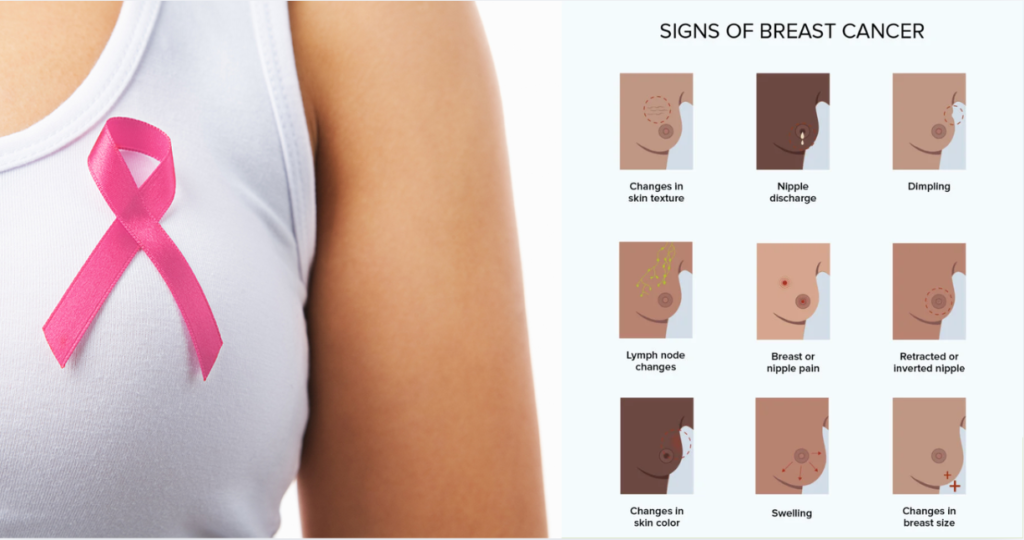
Changes in Breast Shape or Size
A noticeable change in the size or shape of one breast may signal underlying tissue changes.
These changes might include:
- One breast appearing larger or swollen
- Unusual asymmetry
- Visible distortion of the breast contour
Subtle shifts in breast shape can sometimes occur before a lump becomes noticeable.
Skin Changes on the Breast
Changes in the skin covering the breast may also indicate early warning signs.
Common Skin Changes
Possible signs include:
- Redness or inflammation
- Skin thickening
- Dimpling or puckering
Some individuals describe the skin as having a texture similar to orange peel, known medically as peau d’orange.
These changes occur when underlying tissues affect the skin’s structure.
Nipple Changes That May Signal a Problem
The nipple area can also show early indicators of breast abnormalities.
Nipple Retraction or Inversion
If a nipple suddenly turns inward or retracts when it was previously normal, it may indicate changes in underlying breast tissue.
While some individuals naturally have inverted nipples, a sudden change should be evaluated.
Unusual Nipple Discharge
Discharge from the nipple can sometimes signal breast abnormalities.
Types of Concerning Discharge
Medical evaluation is recommended if discharge is:
- Bloody
- Clear and persistent
- Occurring without squeezing the nipple
Many nipple discharges are benign, but persistent or unusual discharge should always be checked.
Skin Changes Around the Nipple
Skin near the nipple may also develop symptoms such as:
- Crusting
- Scaling
- Persistent itching or irritation
These symptoms may sometimes resemble eczema but should still be evaluated.
How to Perform a Breast Self-Awareness Check
Breast self-awareness helps you become familiar with your normal breast structure so you can detect changes early.
Step 1: Visual Inspection
Stand in front of a mirror with your shoulders straight and arms at your sides.
Look for:
- Changes in size or shape
- Skin dimpling or redness
- Nipple position changes
Raise your arms and repeat the inspection.
Step 2: Physical Examination
Using the pads of your fingers, gently feel the breast tissue.
Use small circular motions and cover the entire breast area.
Include:
- The area from the collarbone to the underarm
- The upper abdomen beneath the breast
Check both breasts thoroughly.
Step 3: Pay Attention to Sensations
Note any unusual sensations such as:
- Persistent pain in one area
- Thickened tissue
- A lump that does not disappear
Regular self-checks help you detect changes more quickly.
Quick Answer: What Are the Early Warning Signs of Breast Cancer?
The most common breast cancer symptoms and early warning signals include:
- A new lump in the breast or underarm
- Changes in breast size, shape, or symmetry
- Skin dimpling, redness, or thickening
- Nipple inversion or unusual discharge
- Persistent breast pain in one area
While many of these symptoms can have non-cancerous causes, any persistent change should be evaluated by a healthcare professional.
Troubleshooting: When to See a Doctor
Knowing when to seek medical advice is essential for early detection.
Symptoms That Require Medical Evaluation
Consult a healthcare professional if you notice:
- A lump that persists for more than a few weeks
- Skin changes that do not improve
- Sudden nipple inversion
- Unexplained breast swelling
Early evaluation helps rule out serious conditions or begin treatment quickly if necessary.
Importance of Screening Tests
In addition to self-awareness, medical screenings play a critical role in early detection.
Common screening tools include:
- Mammography, which detects tumors before they can be felt
- Breast ultrasound, used to examine suspicious areas
- MRI scans for individuals at higher risk
Healthcare providers recommend screening schedules based on age and risk factors.
Maximizing Breast Health and Prevention Strategies
While no method can completely prevent breast cancer, certain habits may support long-term breast health.
Maintain a Healthy Lifestyle
Healthy lifestyle choices may reduce risk factors.
Helpful habits include:
- Regular physical activity
- Balanced nutrition rich in fruits and vegetables
- Maintaining a healthy body weight
These practices support overall health and hormonal balance.
Limit Alcohol and Tobacco
Research suggests that excessive alcohol consumption may increase breast cancer risk.
Reducing alcohol intake and avoiding tobacco products can support long-term health.
Explore Related Health Topics
To deepen your understanding of breast health, you might explore related topics such as:
- Understanding hormonal health and breast tissue changes
- The role of nutrition in cancer prevention
- How inflammation affects long-term health
- Importance of regular health screenings
These subjects help build a broader foundation for preventive health.
Conclusion: Empowering Yourself Through Awareness
Recognizing breast cancer symptoms and early warning signals is one of the most powerful steps you can take to protect your health. By understanding what changes to look for and practicing regular breast self-awareness, you give yourself the opportunity to detect potential problems earlier.
Early detection saves lives. When breast cancer is identified in its early stages, treatment options are often more effective and less invasive. Combining personal awareness with regular medical screenings creates a strong foundation for long-term breast health.
Knowledge empowers action. By staying informed, listening to your body, and seeking medical advice when changes occur, you take an active role in protecting your health and supporting a future of well-being.
Important Disclaimer: This article is for informational purposes only and should not replace professional advice. For health-related topics, consult healthcare providers. Individual results may vary, and personal circumstances should always be considered when implementing any suggestions.