Discover how strategic nutrition supports cortisol regulation, stabilizes stress hormones, and enhances resilience through evidence-based dietary science.
Modern stress is constant. Notifications, deadlines, sleep disruption, and blood sugar swings repeatedly activate the hypothalamic–pituitary–adrenal (HPA) axis. At the center of this system is cortisol—a hormone essential for survival but harmful when chronically elevated.
“Calm on a Plate” is not a wellness slogan. It reflects measurable physiological mechanisms. Certain foods influence blood glucose stability, inflammatory signaling, gut-brain communication, and micronutrient availability—all of which shape cortisol dynamics. This article provides a structured, science-driven blueprint for using food to support hormonal balance and stress resilience.
What Is the Biological Foundation of Cortisol Regulation?
Cortisol is a glucocorticoid hormone released by the adrenal cortex in response to stress signals from the brain. Under normal conditions, it follows a circadian rhythm:
- Peaks within 30–45 minutes after waking
- Gradually declines throughout the day
- Reaches its lowest point at night
This rhythm regulates energy mobilization, immune modulation, cognitive alertness, and metabolic balance.
Acute vs. Chronic Cortisol Activation
Acute stress response:
- Mobilizes glucose
- Enhances focus
- Supports immediate survival
Chronic elevation:
- Promotes abdominal fat accumulation
- Impairs insulin sensitivity
- Disrupts sleep
- Increases systemic inflammation
- Accelerates cognitive fatigue
The objective is not to suppress cortisol entirely—but to restore rhythm and prevent prolonged elevation.
How Does Blood Sugar Stability Influence Cortisol Levels?
One of the strongest nutritional triggers of cortisol release is unstable glucose.
When blood sugar drops rapidly, the body interprets it as a stress signal. Cortisol rises to mobilize stored glycogen and restore circulating glucose. Repeated cycles of spikes and crashes create hormonal turbulence.
Foods That Stabilize Glucose and Protect Cortisol Rhythm
1. Complex carbohydrates
- Oats
- Quinoa
- Barley
- Brown rice
These release glucose slowly, preventing reactive cortisol surges.
2. Fiber-rich legumes
- Lentils
- Chickpeas
- Black beans
Soluble fiber slows digestion and improves glycemic control.
3. Balanced macronutrient meals
Combining protein, fat, and fiber prevents rapid glucose swings.
Strategic Application
- Avoid skipping meals
- Limit refined sugars and sweetened beverages
- Pair carbohydrates with protein or healthy fats
Glucose stability is the first structural pillar of cortisol balance.
Which Micronutrients Directly Support Adrenal Function?
The adrenal glands require specific nutrients to regulate stress responses efficiently.
Magnesium: The Relaxation Mineral
Magnesium modulates NMDA receptors and supports parasympathetic nervous system activity. Deficiency is associated with heightened stress sensitivity.
Rich sources:
- Pumpkin seeds
- Spinach
- Almonds
- Dark chocolate (70%+ cacao)
Vitamin C: Adrenal Concentration Nutrient
The adrenal cortex contains high concentrations of vitamin C. It participates in cortisol synthesis regulation and antioxidant defense.
Sources:
- Citrus fruits
- Kiwi
- Bell peppers
- Broccoli
B Vitamins: Neuroendocrine Regulators
B6, B12, and folate contribute to neurotransmitter synthesis and HPA-axis modulation.
Insufficient micronutrient intake reduces the body’s buffering capacity against stress.
How Do Anti-Inflammatory Foods Lower Stress Signaling?
Chronic inflammation sensitizes the HPA axis. Inflammatory cytokines amplify stress responses and may sustain cortisol elevation.
Omega-3 Fatty Acids
Found in:
- Salmon
- Sardines
- Mackerel
- Chia seeds
- Flaxseed
Omega-3 fatty acids reduce pro-inflammatory signaling and may attenuate stress-induced cortisol spikes.
Polyphenol-Rich Foods
- Blueberries
- Green tea
- Turmeric
- Extra virgin olive oil
Polyphenols neutralize oxidative stress and modulate inflammatory pathways.
Fermented Foods and the Gut-Brain Axis
- Yogurt with live cultures
- Kefir
- Sauerkraut
- Kimchi
A balanced microbiome reduces systemic inflammation and improves communication between gut and brain.
Inflammation control is the second structural pillar of hormonal calm.
What Role Does Protein Play in Stress Regulation?
Cortisol promotes protein breakdown during prolonged stress. Adequate dietary protein protects lean tissue and supports neurotransmitter balance.
Amino Acids and Mood Stability
Tryptophan is a precursor to serotonin. Stable serotonin levels improve emotional regulation and perceived stress.
Sources include:
- Eggs
- Poultry
- Dairy
- Legumes
- Tofu
Satiety and Hormonal Feedback
Protein stimulates satiety hormones (GLP-1, peptide YY), reducing stress-driven overeating and metabolic volatility.
Consistent protein intake reinforces metabolic resilience under stress conditions.
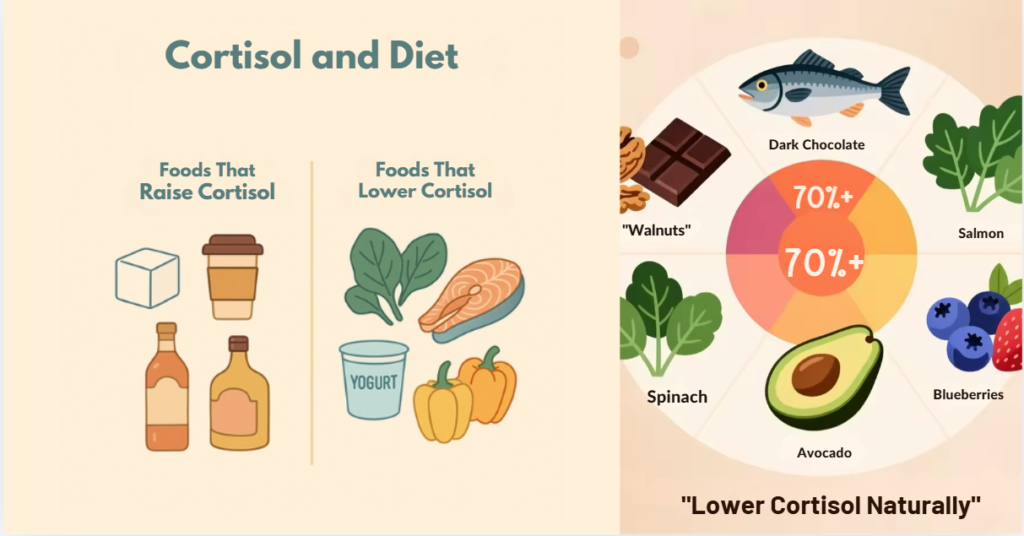
Which Foods May Quietly Elevate Cortisol?
Identifying destabilizing foods is equally critical.
Refined Sugars
Rapid glucose spikes increase insulin, followed by reactive drops that stimulate cortisol.
Excess Caffeine
Caffeine acutely increases cortisol—especially when consumed on an empty stomach or in excess.
Ultra-Processed Foods
Often high in refined carbohydrates, inflammatory fats, and additives, these foods contribute to metabolic stress and inflammatory signaling.
Reduction does not require elimination—but moderation and timing matter.
How Can You Build a Daily Cortisol-Balancing Blueprint?
A practical structure transforms theory into implementation.
Morning Foundation
- Protein-rich breakfast within 60–90 minutes of waking
- Include fiber and healthy fats
- Delay caffeine until after food intake
Example:
Greek yogurt, berries, chia seeds, and almonds.
Midday Stability
- Balanced plate: lean protein + complex carbohydrates + vegetables + healthy fats
Example:
Grilled salmon, quinoa, leafy greens, olive oil.
Afternoon Regulation
- Avoid high-sugar snacks
- Choose nuts, fruit with nut butter, or hummus with vegetables
Evening Wind-Down
- Magnesium-rich foods
- Light, balanced dinner
- Limit caffeine after early afternoon
Example:
Lentil stew with spinach and roasted vegetables.
Consistency trains the HPA axis toward rhythmic predictability.
Which Lifestyle Factors Amplify Nutritional Calm?
Nutrition operates within a broader physiological ecosystem.
Sleep
Inadequate sleep elevates evening cortisol and disrupts circadian rhythm. Nutrition supports—but cannot override—sleep deprivation.
Exercise
Moderate physical activity reduces baseline cortisol over time. Excessive high-intensity training without recovery may elevate it.
Psychological Stress Management
Breathing exercises, meditation, and structured relaxation directly modulate HPA-axis signaling.
Food builds biochemical resilience. Lifestyle behaviors determine expression.
What Does Long-Term Cortisol Balance Look Like?
Sustained hormonal balance is characterized by:
- Strong morning alertness
- Stable daytime energy
- Minimal energy crashes
- Reduced abdominal fat accumulation
- Improved sleep quality
- Enhanced cognitive clarity
The transformation is gradual. Cortisol rhythms adapt to repeated dietary and behavioral patterns. Precision and consistency matter more than intensity.
Conclusion: Engineering Calm Through Nutritional Intelligence
“Calm on a Plate” is a strategic approach rooted in endocrine physiology. By stabilizing blood sugar, reducing inflammation, supporting micronutrient adequacy, and moderating stimulants, individuals can meaningfully influence cortisol dynamics.
Whole grains, legumes, omega-3-rich fish, magnesium-dense foods, polyphenol-rich plants, and adequate protein create a metabolic environment that favors resilience rather than reactivity.
Cortisol is not the enemy—it is a powerful biological tool. When guided by intelligent nutrition and supportive lifestyle habits, it operates in rhythm rather than excess. Sustainable calm is not accidental; it is constructed, meal by meal.
Disclaimer
This article is for informational purposes only and does not constitute medical advice. Individuals with diagnosed endocrine disorders, adrenal conditions, or chronic stress-related illnesses should consult a qualified healthcare professional before making significant dietary or lifestyle changes.