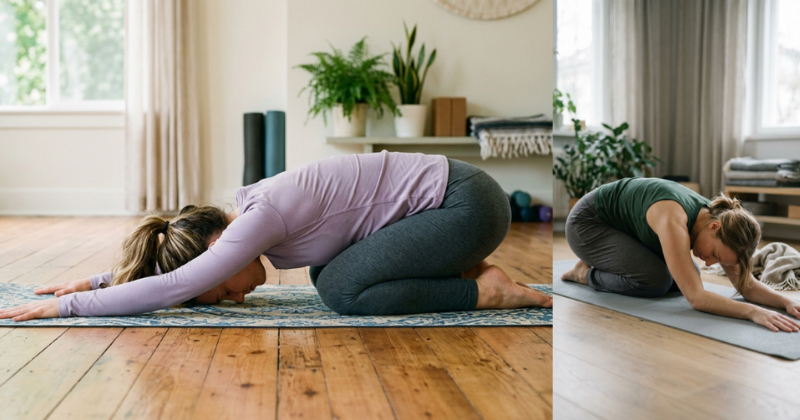
Feeling overwhelmed, tight in your lower back, or simply needing a quick reset after a long day? Child’s Pose (Balasana in Sanskrit) is one of the simplest yet most powerful yoga poses you can do — and it takes less than 60 seconds. This gentle forward fold has been used for centuries in yoga traditions and is now backed by modern science as a go-to move for stress relief, spinal decompression, and whole-body restoration. Whether you’re a beginner or an experienced yogi, practicing Child’s Pose regularly delivers noticeable benefits with zero equipment and almost no effort.
In this complete guide you’ll discover exactly what Child’s Pose is, the science behind its calming and healing effects, the 10 most researched benefits, step-by-step instructions, easy variations, common mistakes to avoid, and a simple daily routine that fits any schedule. Everything here is practical, beginner-friendly, and designed to give you real results you can feel in days.
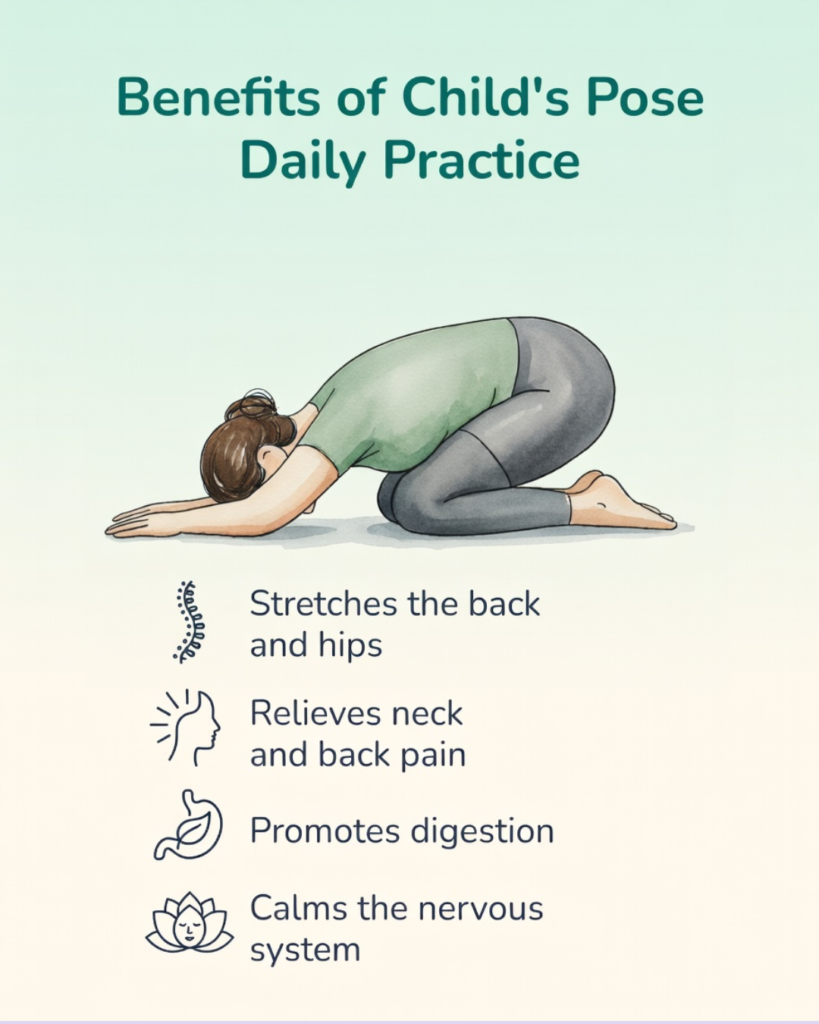
What Is Child’s Pose?
Child’s Pose is a restorative, grounding yoga posture where you kneel on the floor, sit back on your heels, and fold your torso forward over your thighs with arms extended or relaxed by your sides. It mimics the natural fetal position, signaling safety to your nervous system. Because it’s passive and supported by the floor, it’s accessible to almost everyone — including those with tight hips, sore backs, or limited mobility.
The Science Behind Child’s Pose
Child’s Pose activates the parasympathetic nervous system (your “rest and digest” mode) while gently stretching the spine, hips, and shoulders. Research from the International Journal of Yoga and studies on restorative yoga show that even short holds reduce cortisol (stress hormone) levels, lower heart rate, and improve vagal tone — the key marker of nervous-system calm. The forward fold also creates mild compression on the abdomen that can stimulate digestion and relieve bloating. When practiced consistently, it helps decompress spinal discs, increase hip mobility, and promote deeper, more restorative breathing.
10 Science-Backed Benefits of Child’s Pose
- Instant Stress & Anxiety Relief The pose calms the mind by encouraging slow, deep breathing and turning attention inward. Studies show just 1–3 minutes can lower perceived stress and anxiety.
- Gentle Relief for Lower Back Pain It elongates the spine and releases tight lower-back muscles without any strain — perfect after sitting or standing all day.
- Improved Hip Flexibility & Mobility Regular practice opens the hip flexors and inner thighs, reducing tightness from desk work or running.
- Better Sleep & Deeper Relaxation Evening Child’s Pose signals the body it’s time to wind down, making it easier to fall and stay asleep.
- Digestive Support & Reduced Bloating The gentle abdominal compression massages internal organs and can ease gas, constipation, and discomfort.
- Shoulder & Neck Tension Release Arms extended or by the sides gently stretch the upper back and shoulders, countering forward-head posture.
- Nervous-System Reset It activates the vagus nerve, helping shift you out of fight-or-flight mode after stressful situations.
- Spinal Decompression & Posture Improvement The forward fold creates space between vertebrae, relieving compression and encouraging better alignment.
- Mindfulness & Mental Clarity The quiet, inward focus builds present-moment awareness — a mini meditation you can do anywhere.
- Safe Recovery Pose for All Levels It’s low-impact and modifiable, making it ideal for beginners, pregnant women, or anyone recovering from injury.
How to Do Child’s Pose (Step-by-Step)
- Kneel on the floor with knees hip-width apart (or wider for more comfort).
- Sit your hips back toward your heels.
- Fold forward, letting your torso rest on your thighs.
- Extend arms forward or rest them alongside your body with palms up.
- Rest your forehead on the mat (or a block/pillow if it doesn’t reach).
- Breathe slowly and deeply — aim for 5–10 slow breaths or 1–5 minutes.
- To exit: Inhale and slowly roll up vertebra by vertebra.
Easy Variations & Modifications
- Wide-Knee Child’s Pose: Spread knees wider for deeper hip stretch.
- Supported Version: Place a bolster or pillow under your torso for extra comfort.
- Arms-Back Version: Rest arms by your sides for shoulder release.
- Pregnancy-Friendly: Keep knees wide and use props to avoid pressure on the belly.
- Seated Chair Version: Sit on a chair, fold forward, and rest arms on thighs for office or travel.
Common Mistakes to Avoid
- Forcing your forehead to the floor (use a block or pillow instead).
- Holding your breath — keep it slow and steady.
- Knees too close together if hips are tight.
- Pushing through pain instead of easing in.
- Skipping the pose entirely because it “looks too easy” — its power is in its simplicity.
When & How Often to Practice
- Morning: Gentle wake-up and spinal stretch.
- Midday: Quick desk reset (use the chair variation).
- Evening: Wind-down ritual before bed.
- Post-workout: Active recovery after intense sessions.
Aim for 1–3 minutes daily or whenever you feel overwhelmed. Consistency beats long, infrequent sessions.
Conclusion
Child’s Pose is more than just a yoga stretch — it’s a simple, powerful tool that delivers real stress relief, back-pain reduction, hip mobility, and nervous-system calm in minutes. With science confirming its benefits for cortisol reduction, digestion, posture, and mental clarity, this ancient posture belongs in every modern wellness routine. You don’t need flexibility, strength, or even a yoga mat — just a few quiet breaths on the floor.
Try Child’s Pose tonight for 60 seconds and notice how much lighter and calmer you feel tomorrow. Small daily habits like this add up to big changes in how you move, breathe, and handle stress. Your body already knows how to rest and restore — Child’s Pose simply gives it the perfect opportunity. Roll out your mat (or just the floor) and let Balasana do the rest.