Waking up the day after a tough workout with stiff, aching muscles can make even simple movements feel like a chore. That post-exercise soreness — known as Delayed Onset Muscle Soreness or DOMS — is completely normal, especially when you’ve tried something new or pushed a little harder. The good news? You don’t have to wait it out in discomfort. With the right recovery strategies, you can reduce soreness, speed up repair, and get back to training faster while lowering injury risk.
In this practical 2026 guide you’ll learn why soreness happens, the science behind effective recovery, and six evidence-based tips you can start using today. These strategies are simple, natural, and fit into any schedule — no fancy equipment or expensive supplements required. Whether you’re a beginner, weekend warrior, or serious athlete, these tips will help you feel better faster and keep making progress.
Why You Get Sore After a Workout
When you exercise, especially with eccentric movements (like lowering weights or running downhill), tiny micro-tears form in muscle fibers. Your body responds with inflammation and repair, which is what creates that deep ache 24–72 hours later. Factors like dehydration, poor sleep, new exercises, or skipping warm-ups can make it worse. The goal of recovery isn’t to eliminate soreness completely (some is a sign of adaptation), but to support your body’s natural healing process so you recover quicker and stronger.
The Science Behind Effective Recovery
Recovery isn’t passive. Research from the Journal of Strength and Conditioning Research and the British Journal of Sports Medicine shows that active strategies improve blood flow, reduce inflammation, and speed muscle repair. Key players include gentle movement to flush waste products, protein and carbs to rebuild tissue, sleep for hormone release, and hydration to reduce stiffness. Consistent recovery habits can cut DOMS intensity by 20–40% and improve performance in your next session.
6 Proven Tips for Faster, More Effective Recovery
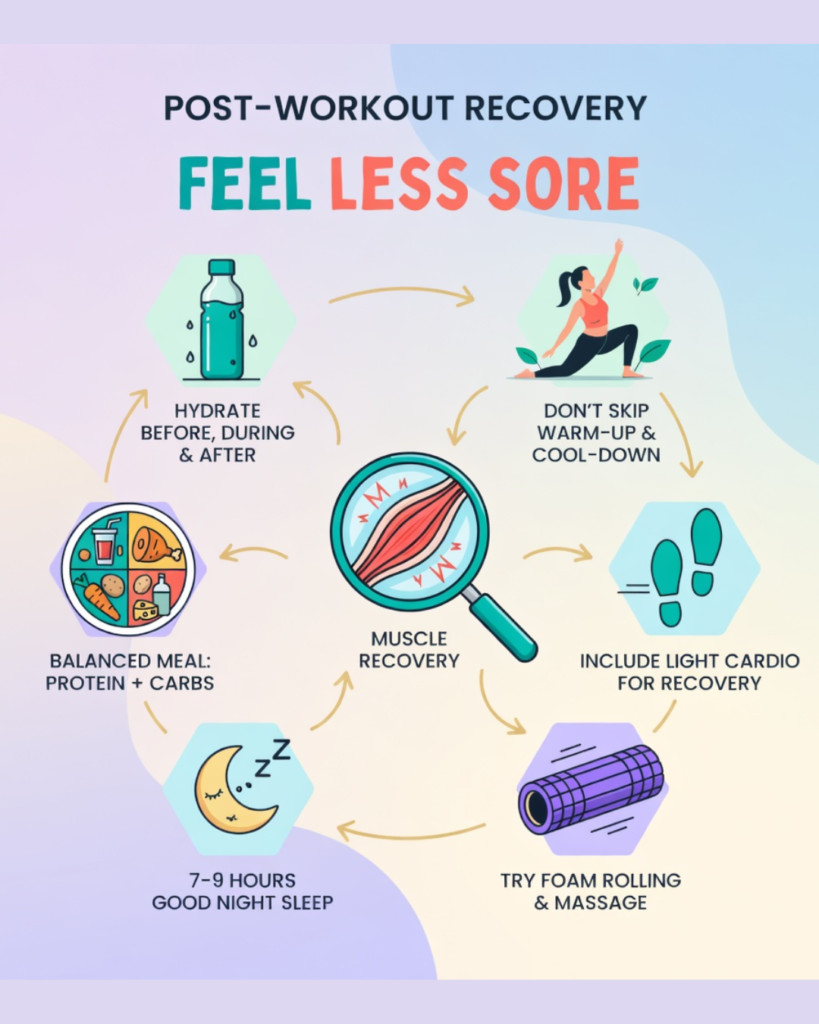
1. Move Gently the Next Day (Active Recovery)
Light movement increases circulation without adding more stress. How to do it: 10–20 minutes of walking, swimming, cycling, or yoga. Keep effort easy — you should be able to hold a conversation. Why it works: It clears lactic acid and inflammatory byproducts faster than complete rest.
2. Refuel with Protein + Carbs Within 30–60 Minutes
Your muscles are most receptive right after exercise. How to do it: Eat a snack with 20–30g protein and carbs — Greek yogurt with berries, a banana with peanut butter, or a smoothie with protein powder. Why it works: Protein supplies amino acids for repair; carbs replenish glycogen and reduce muscle breakdown.
3. Prioritize Sleep and a Consistent Wind-Down Routine
Deep sleep is when growth hormone peaks and most repair happens. How to do it: Aim for 7–9 hours. Create a 30-minute pre-bed ritual: legs-up-the-wall pose, light stretching, or magnesium-rich tea. Why it works: Poor sleep can double soreness duration; quality rest speeds recovery by 30%.
4. Stay Hydrated and Add Electrolytes
Dehydration thickens blood and increases stiffness. How to do it: Drink 3–4 liters of water daily. Add a pinch of sea salt, lemon, or coconut water for electrolytes. Why it works: Proper fluid balance reduces muscle cramps and helps flush inflammation.
5. Use Foam Rolling or Gentle Self-Massage
Target tight spots to release fascia and improve blood flow. How to do it: Spend 5–10 minutes on major muscle groups (quads, calves, back). Roll slowly and breathe deeply. Why it works: It decreases soreness by 20–30% the next day and improves range of motion.
6. Try Contrast Therapy or Epsom Salt Baths
Alternate temperatures or soak in magnesium-rich water. How to do it: End your shower with 30 seconds cold / 30 seconds warm (3–4 rounds) or soak in a warm Epsom salt bath for 15 minutes. Why it works: Cold reduces inflammation; heat relaxes muscles; magnesium eases soreness through the skin.
How to Build These Tips Into a Simple Recovery Routine
Same day (post-workout): Refuel immediately + 10-minute walk. Next morning: Gentle active recovery + foam roll. Evening: Hydrating meal + Epsom bath or contrast shower + early bedtime.
Do this consistently and you’ll notice less soreness, better energy, and faster progress.
Common Recovery Mistakes to Avoid
- Skipping the post-workout snack and wondering why you’re still sore two days later.
- Doing nothing but lying on the couch (complete rest slows circulation).
- Overusing painkillers or ice (they can blunt the natural repair signals).
- Ignoring sleep — it’s the #1 recovery tool most people overlook.
- Jumping back into intense workouts too soon (give yourself 48 hours for heavy sessions).
When to Seek Professional Help
Mild soreness is normal, but see a doctor or physical therapist if pain is sharp, one-sided, lasts longer than a week, or comes with swelling, redness, or weakness. These could signal injury rather than normal DOMS.
Conclusion
Feeling sore after a workout doesn’t have to slow you down or kill your motivation. These six simple, science-backed tips — gentle movement, smart refueling, quality sleep, hydration, self-massage, and contrast therapy — give your body exactly what it needs to repair faster and come back stronger. Start with just two or three that feel easiest today, and you’ll notice the difference in how you feel tomorrow.
Recovery isn’t a luxury — it’s what lets you keep showing up and reaching your goals. Small daily habits like these turn soreness into progress and help you enjoy movement for years to come. You’ve already done the hard part by working out — now give your body the recovery it deserves. Try one tip tonight and wake up feeling more ready than ever.