
Transform impossibly burnt oven racks into gleaming surfaces without exhausting scrubbing sessions through ammonia’s remarkable vapor-action chemistry. This overnight method harnesses ammonia fumes to dissolve carbonized grease and baked-on residues while you sleep, delivering professional-level cleaning results through patient, elegant simplicity.
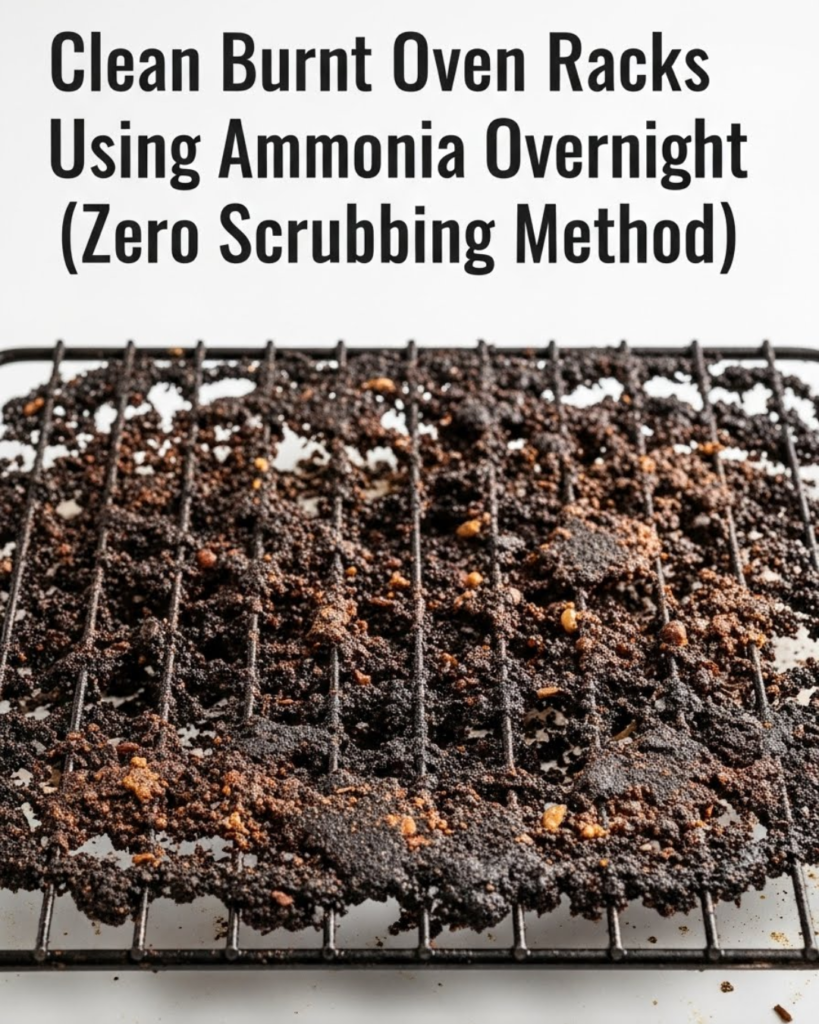
The burnt oven rack confronts us like a testament to culinary enthusiasm gone awry—layers of caramelized memories, blackened reminders of feasts past, each stubborn stain a challenge to our domestic pride. Yet within a humble bottle of household ammonia lies an alchemical solution, a patient dissolution process that works through vapor’s invisible caress rather than elbow grease’s violent assault. This comprehensive exploration reveals the chemistry, technique, and artistry behind this transformative cleaning ritual.
The Poetic Chemistry Behind Ammonia’s Cleaning Magic
Ammonia possesses a molecular elegance that makes it uniquely suited for dissolving the complex carbon matrices that form burnt oven residues. Understanding this chemistry transforms cleaning from drudgery into appreciation for molecular choreography.
The Vapor Action Philosophy
Unlike liquid cleaners that require direct contact and aggressive scrubbing, ammonia works through its gaseous personality. At room temperature, ammonia molecules escape their liquid confinement, filling enclosed spaces with alkaline vapors. These gases penetrate every crevice, every microscopic crack in carbonized deposits, initiating a slow, thorough breakdown process that liquid cleaners cannot achieve.
The ammonia molecule—one nitrogen atom embracing three hydrogen companions—carries a natural alkalinity measuring pH 11-12 in household concentrations. This alkaline nature acts as a key unlocking the bonds within grease polymers and carbonized proteins. While harsh scrubbing tears away at both grime and metal finish, ammonia’s vapor dissolves chemical bonds selectively, leaving metal surfaces unharmed while thoroughly dismantling organic residues.
Understanding Carbonization and Its Dissolution
When food oils and proteins encounter high heat, they undergo pyrolysis—a transformation into complex carbon structures harder than the original materials. These carbonized layers resist water-based cleaners because they’ve essentially become plastic-like polymers fused to metal surfaces. Ammonia’s alkalinity breaks these polymer chains through hydrolysis, gradually converting rigid carbon structures back into soluble compounds that rinse away effortlessly. This process requires time rather than force, patience rather than violence—a philosophy that honors both the cleaner and the cleaned.
The Zero-Scrubbing Method: Step-by-Step Ritual
This technique’s beauty lies in its simplicity and the peaceful satisfaction of allowing chemistry to perform labor while you rest. Preparation matters more than effort.
Gathering Your Simple Arsenal
You’ll need remarkably little: one bottle of household ammonia (clear, 5-10% concentration), one or two heavy-duty garbage bags large enough to contain your oven racks, and shallow containers like pie plates or bowls. The minimalism of required materials reflects the method’s elegant efficiency. Select a well-ventilated outdoor space or garage for this overnight transformation—ammonia’s pungent vapors, while effective, command respect and proper ventilation.
The Evening Preparation Ceremony
As daylight fades, begin your preparation ritual. Remove oven racks completely, carrying them to your chosen workspace. Place each rack inside its garbage bag cocoon—if racks are particularly large, use two bags, one from each end, meeting in the middle. The bag creates the enclosed environment essential for vapor concentration.
Pour approximately one cup of ammonia into shallow containers—use one container per rack. The liquid itself won’t touch your racks directly; instead, it serves as vapor source, releasing its cleaning essence into the sealed environment. Position these ammonia reservoirs inside the bags alongside (not touching) the racks. This spatial relationship matters—the vapors need freedom to circulate without liquid pooling on metal surfaces.
Sealing and Patience: The Overnight Transformation
Seal bags tightly, creating an ammonia atmosphere that will work its magic through darkness hours. This sealing represents a commitment to patience, to trusting invisible forces working in enclosed spaces. Place bags in a location where they won’t be disturbed—on concrete driveways, in garages, on patios—anywhere ventilated yet secure.
Walk away. Resist the urge to check progress. Ammonia vapors require 8-12 hours for complete penetration and dissolution of stubborn carbonized layers. This overnight timing aligns beautifully with human sleep cycles—your racks clean themselves while you dream, a satisfying arrangement that respects both chemistry’s pace and your own rest needs.
Morning Revelation: The Unwrapping and Gentle Completion
Dawn brings the satisfaction of discovery. Opening those bags reveals transformation that borders on domestic magic.
The Careful Unveiling Process
Approach your sealed bags outdoors or in well-ventilated spaces—the concentrated ammonia vapors, while having completed their work, remain pungent upon release. Cut bags open rather than untying them to minimize vapor escape into your breathing zone. Step back momentarily, allowing fumes to dissipate into open air.
What you’ll witness appears miraculous: burnt-on residues that once seemed permanent now appear loosened, softened, transformed from stubborn opponents into compliant residues ready for minimal removal. The carbonized black layers that resisted previous cleaning attempts now wipe away with remarkable ease, sometimes requiring nothing more than a damp cloth’s gentle persuasion.
The Gentle Finishing Touches
Rinse racks thoroughly with warm water—outdoors with a garden hose works beautifully, or in a bathtub if working indoors. Most residues simply dissolve under water’s flow. For any remaining stubborn spots—rare but occasionally present on severely burnt areas—a soft sponge with mild dish soap completes the work with minimal effort. The contrast between traditional scrubbing’s violence and this method’s gentle conclusion feels deeply satisfying.
Dry racks completely before reinstalling them. This final step prevents rust formation and gives you opportunity to appreciate the restored gleam of metal surfaces that seemed destined for replacement hours earlier.
Advanced Variations and Customization Strategies
While the basic method achieves remarkable results, understanding variations allows adaptation to specific challenges and preferences.
The Double-Bag Intensive Method
For exceptionally burnt racks—those witnessing years of neglect or particularly destructive cooking incidents—enhance vapor concentration through double-bagging. Place the sealed bag containing rack and ammonia inside a second garbage bag, creating a vapor-locking double chamber. This intensified environment accelerates dissolution of the most stubborn deposits, sometimes reducing required time from 12 hours to 8.
The Solar-Enhanced Approach
In warmer months, position sealed bags in sunny locations during daytime hours. Gentle solar warming increases ammonia’s vapor pressure, enhancing its penetration capabilities without requiring additional chemical intervention. This sun-and-chemistry partnership represents elegant efficiency—harnessing natural warmth to amplify cleaning power. Monitor bags to ensure they don’t overheat beyond warm-to-touch temperatures, as excessive heat could compromise bag integrity.
Combining with Baking Soda Post-Treatment
For racks displaying rust spots or oxidation alongside burnt residues, follow ammonia treatment with a baking soda paste application. Create a thick mixture of baking soda and water, apply to affected areas, let sit 15-20 minutes, then rinse. This alkaline duo—ammonia followed by baking soda—addresses both organic residues and metal surface imperfections, delivering comprehensive restoration.
Troubleshooting and Common Scenarios
Even elegant methods occasionally present unexpected situations requiring thoughtful responses.
Addressing Persistent Stubborn Spots
If isolated areas resist complete dissolution after the overnight treatment, resist the temptation to immediately resort to aggressive scrubbing. Instead, repeat the ammonia vapor process for a second night, focusing on problem areas. Some carbonized deposits feature multiple layers requiring sequential treatment sessions. Patience delivers better results than force—a lesson extending beyond oven rack cleaning into broader life philosophies.
Managing Ammonia Odor Concerns
Ammonia’s distinctive scent, while temporary, concerns some practitioners. Neutralize residual odors through thorough rinsing followed by a vinegar water spray (equal parts white vinegar and water). The acidic vinegar neutralizes alkaline ammonia residues, eliminating odor while leaving no harmful residues. Allow racks to air-dry completely in fresh air, which naturally dissipates any remaining scent molecules.
Adapting for Different Rack Materials
While this method works beautifully on standard chrome-plated steel racks, exercise caution with non-traditional materials. Porcelain-coated racks tolerate ammonia well, but aluminum racks may experience slight darkening—test a small inconspicuous area first if uncertain. Stainless steel racks respond excellently to ammonia vapor treatment with zero concerns about material compatibility.
Maximizing Long-Term Oven Rack Maintenance
Successful cleaning represents opportunity to establish preventive practices that reduce future buildup severity.
The Philosophy of Prevention
Line oven bottoms with aluminum foil or oven liners to catch drips before they cascade onto racks during cooking. This simple barrier reduces rack exposure to spills by approximately 70%, significantly decreasing carbonization frequency. Additionally, address spills promptly when cool rather than allowing them to bake through multiple cooking cycles—fresh spills wipe away easily while neglected ones transform into stubborn carbon layers.
Establishing Quarterly Cleaning Rituals
Rather than waiting for extreme buildup, schedule ammonia vapor treatments quarterly—four times annually regardless of visible necessity. This proactive approach prevents accumulation from reaching stubborn stages, making each cleaning session effortless. Mark calendar reminders aligned with seasonal changes, creating a satisfying rhythm of maintenance that honors your oven’s service.
Complementary Kitchen Cleaning Connections
The ammonia overnight method extends beyond oven racks. Apply identical principles to grill grates, broiler pans, stove drip pans, and range hood filters—any metal surface suffering carbonized buildup. This versatility makes mastering the technique worthwhile, as it addresses multiple kitchen cleaning challenges through one elegant approach. Consider exploring similar natural cleaning methods for other kitchen surfaces, from degreasing cabinets to restoring stainless steel appliances, building a comprehensive repertoire of gentle yet effective cleaning strategies.
Conclusion
The ammonia overnight method for cleaning burnt oven racks represents more than a clever household hack—it embodies a philosophy of working with chemistry rather than against physics, of patience yielding superior results to force. By sealing racks with ammonia vapors through night’s quiet hours, you harness molecular dissolution processes that traditional scrubbing can never achieve. This zero-scrubbing approach saves your energy, preserves rack surfaces, and delivers professional-level cleanliness through beautifully simple chemistry. Transform your approach to kitchen maintenance today by embracing this elegant solution—your oven racks and your arms will thank you for choosing intelligence over effort.
Important Disclaimer: This article is for informational purposes only and should not replace professional advice. For safety procedures, verify current best practices and local regulations. When working with ammonia, always ensure proper ventilation, avoid mixing with other cleaning products (especially bleach), wear gloves, and keep away from children and pets. Individual results may vary, and personal circumstances should always be considered when implementing any suggestions.