
Imagine transforming your living space into a sanctuary of pure light and fragrance, where each flickering flame whispers stories of natural ingredients and conscious creation. Making your own non-toxic candles isn’t merely a craft project—it’s an intimate ritual that reconnects you with the elemental beauty of fire, wax, and essence. In the next few minutes, you’ll discover how to craft candles that honor both your health and your home, replacing synthetic fragrances with the honest poetry of natural materials.
The journey toward creating non-toxic candles begins with a simple revelation: conventional candles often harbor paraffin wax derived from petroleum, synthetic fragrances laden with phthalates, and lead-core wicks that release harmful substances into the air you breathe. But you possess the power to change this narrative. By choosing natural waxes, pure essential oils, and cotton wicks, you’re not just making candles—you’re orchestrating a symphony of wellness that illuminates your space without compromising the air quality of your sanctuary.
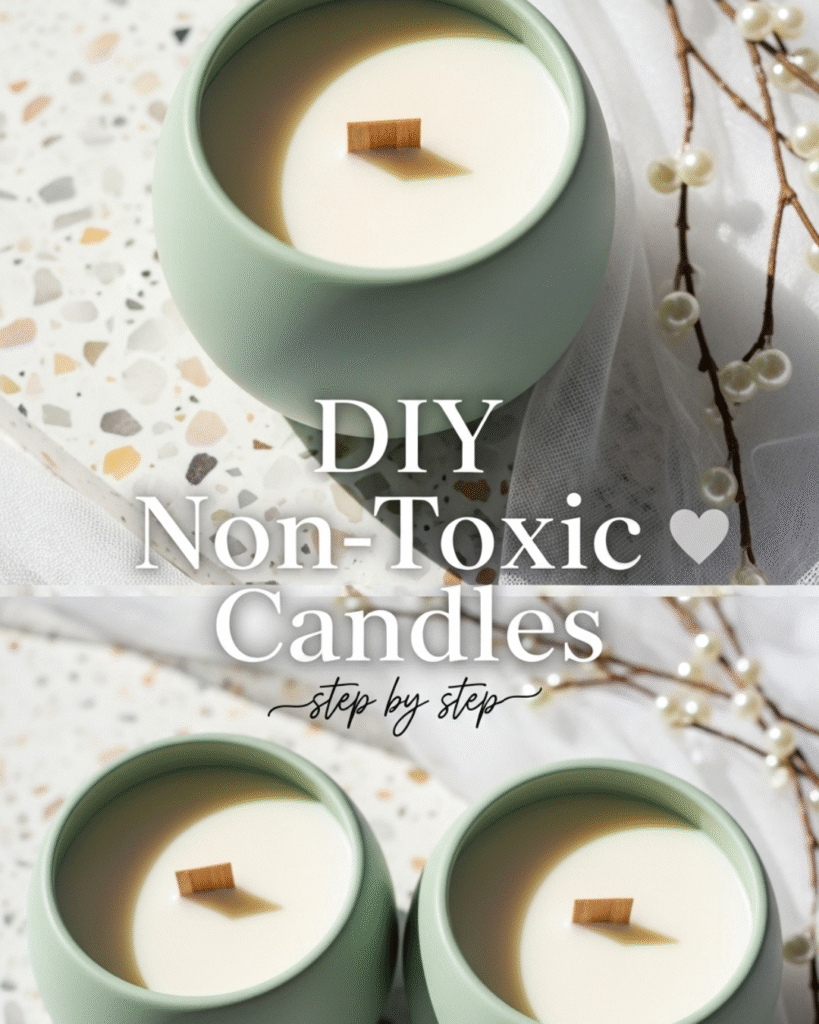
The Poetry of Pure Ingredients: Understanding Your Materials
Before your hands touch wax or your spirit encounters flame, you must first understand the language of natural materials. Each ingredient in your non-toxic candle carries its own story, its own purpose in this alchemical transformation.
Natural Waxes: The Foundation of Light
Soy wax emerges as the beloved protagonist in most non-toxic candle narratives. Born from soybean oil, it burns cleanly and slowly, creating a creamy canvas for your aromatic visions. Soy wax holds fragrance beautifully and produces minimal soot, making it ideal for those first entering the realm of candlemaking. Beeswax, nature’s golden gift, purifies the air as it burns by releasing negative ions that bind to toxins. Its natural honey scent creates an ambiance of warmth and ancient wisdom. Coconut wax, the tropical virtuoso, offers exceptional scent throw and a luxuriously smooth appearance. Many artisans blend these waxes, creating unique combinations that honor different aspects of natural beauty.
Essential Oils: Bottled Essence
Synthetic fragrances belong to the old world of unconscious consumption. Essential oils—pure distillations of plant wisdom—transform your candles into aromatic therapy. Lavender whispers of calm Provence evenings. Eucalyptus speaks of forest clarity. Citrus oils dance with brightness and joy. When selecting essential oils for candlemaking, seek those specifically designated as safe for burning. Not all essential oils withstand the heat of melted wax with grace. Typically, you’ll add approximately one ounce of essential oil per pound of wax, though this varies based on the oil’s potency and your desired intensity.
Wicks and Vessels: The Supporting Cast
Cotton wicks provide clean, steady burns without the metallic undertones of synthetic alternatives. Choose wick sizes appropriate to your vessel diameter—too small and your candle tunnels inward, too large and it smokes with displeasure. Glass jars, ceramic vessels, and metal tins each offer different aesthetic narratives for your creations. Ensure any container can withstand heat without cracking or releasing toxins.
The Sacred Process: Crafting Your First Non-Toxic Candle
Creating non-toxic candles follows a meditative sequence that transforms raw materials into luminous art. This step-by-step journey honors both precision and intuition.
Step One: Prepare Your Sacred Space
Clear a clean workspace near your stove or heat source. Gather your materials like ingredients for a healing potion: natural wax flakes, cotton wicks, wick holders or clothespins, a double boiler or dedicated wax-melting pot, a thermometer, essential oils, candle vessels, and a wooden stirring spoon. Cover your workspace with newspaper or parchment paper. This preparation ritual sets intention and prevents wax from marking surfaces with permanent memories.
Step Two: Secure the Wick
Center your cotton wick in the bottom of your chosen vessel using a dab of melted wax or a wick sticker. Allow it to cool and adhere completely. Position a wick holder, pencil, or clothespin across the vessel’s opening to keep the wick centered and taut while the wax sets. This seemingly simple step determines whether your candle burns evenly or struggles against its own design.
Step Three: Melt the Wax with Mindful Attention
Measure your wax flakes—a general rule suggests doubling the volume of your container to account for how wax contracts as it solidifies. Heat the wax gently in a double boiler, never allowing it to exceed 185°F for soy wax or the recommended temperature for your chosen variety. Stir occasionally with reverence, watching as solid transforms to liquid, as potential becomes possibility. This transformation happens slowly—rushing creates bubbles and imperfections that mar the candle’s final appearance.
Step Four: Infuse with Essence
Once your wax reaches approximately 175°F, remove it from heat and allow it to cool slightly to around 140-150°F. This temperature window preserves the integrity of essential oils while ensuring proper distribution. Add your chosen essential oils, stirring gently but thoroughly for about two minutes. Notice how the fragrance begins to bloom, how it mingles with the warm wax in an aromatic embrace. This moment transforms functional wax into sensory poetry.
Step Five: Pour with Intention
When your scented wax reaches 120-140°F, pour it slowly into your prepared vessel, avoiding the wick as much as possible. Fill to within half an inch of the rim, leaving space for the candle to breathe. Watch as the liquid finds its level, as it begins its patient return to solid form. Some candlemakers pour in stages, allowing the first layer to partially set before adding more—this technique prevents sinkholes and creates stronger structure.
Step Six: The Vigil of Cooling
Resist the temptation to move or disturb your candle during its transformation. Allow it to cool and cure for at least 24 hours in a room-temperature space away from drafts. This waiting period isn’t idle—it’s essential for proper crystallization and scent distribution. During this time, the wax contracts slightly, sometimes creating small sinkholes near the wick. If this occurs, simply remelt a small amount of wax and fill these depressions.
Advanced Alchemy: Elevating Your Candle Craft
Once you’ve mastered the fundamental ritual, numerous pathways open for creative exploration and refinement.
Layered Narratives and Gradient Dreams
Create visual poetry by pouring different colored or scented wax layers. Allow each layer to solidify partially before adding the next, creating distinct boundaries or allowing them to blend like watercolor memories. Natural colorants—such as mica powder or plant-based dyes—add visual dimension without introducing toxins. Each layer can tell its own aromatic story, shifting from morning citrus to evening lavender as the candle burns downward.
Botanical Embedments and Texture
Press dried flowers, herbs, or botanicals against the inside of your vessel before pouring, creating visible memories suspended in wax. Lavender buds, rose petals, or chamomile flowers add visual intrigue, though ensure they remain away from the wick’s flame path. Some artisans create textured surfaces by pouring at different temperatures or using specialized techniques that create peaks and valleys in the wax’s surface.
Signature Scent Blending
Develop your own aromatic signature by blending complementary essential oils. Lavender and vanilla create comforting warmth. Eucalyptus and peppermint offer invigorating clarity. Bergamot and cedarwood speak of sophisticated earthiness. Keep detailed notes of your proportions—aromatic alchemy rewards the methodical documenter. Consider seasonal blends that honor the turning year: spring florals, summer citrus, autumn spices, winter evergreens.
Troubleshooting: When Candles Speak of Challenges
Even the most devoted candlemaker encounters obstacles. These aren’t failures but rather invitations to deeper understanding.
The Mystery of Sinkholes
Sinkholes appear when wax cools unevenly or too rapidly. Prevent them by pouring at proper temperatures and allowing gradual cooling. If they appear, use a heat gun or hair dryer to gently remelt the surface, or pour a thin layer of melted wax to fill the depression. Some candlemakers embrace small imperfections as signatures of handcrafted authenticity.
Frosting and Crystallization
Soy wax sometimes develops a frosted appearance—a natural characteristic rather than a flaw. This crystallization doesn’t affect burn quality but can be minimized by pouring at higher temperatures (around 140°F) or using additives specifically designed for smooth finishes. Many artisans celebrate this frosting as evidence of pure, natural wax.
Weak Scent Throw
If your candle burns without releasing its aromatic promise, several factors may be at play. You may need more essential oil, a different wax blend with better scent retention, or proper curing time. Cold throw (scent when unlit) and hot throw (scent when burning) require different considerations. Ensure you’re using essential oils compatible with candlemaking rather than those designed solely for diffusion.
Tunneling and Uneven Burns
When a candle burns down the center leaving wax walls, the wick is likely undersized for the vessel diameter. The first burn is crucial—always allow the entire top surface to melt completely before extinguishing. This creates proper burn memory. If tunneling occurs, try wrapping aluminum foil around the top edge to reflect heat inward, helping the wax melt more evenly.
Maximizing the Magic: Caring for Your Candle Creations
Your relationship with each candle extends beyond creation into proper use and maintenance.
The First Burn Ritual
The inaugural lighting sets the pattern for all future burns. Allow your candle to burn until the entire top surface liquefies, typically one hour per inch of diameter. This prevents tunneling and ensures even consumption throughout the candle’s life. Never extinguish a candle before achieving full surface melt during this crucial first burn.
Wick Maintenance and Wisdom
Before each lighting, trim your wick to approximately one-quarter inch. This simple practice prevents smoking, mushrooming, and excessive flame height. Use dedicated wick trimmers or sharp scissors, removing the trimmed portion to prevent it from falling into the wax. A well-maintained wick burns steadily and cleanly, honoring the purity of your non-toxic creation.
Storage and Preservation
Store unlit candles away from direct sunlight and temperature extremes. Essential oils can degrade with prolonged light exposure, and heat can cause surface melting or warping. Cover candles when not in use to preserve their aromatic intensity and protect them from dust. Properly stored non-toxic candles maintain their quality for years, though essential oil potency gradually diminishes over time.
Sustainable Practices and Container Renewal
Once your candle burns down, clean the vessel with hot water and soap to remove remaining wax. These containers begin new lives as planters, storage vessels, or homes for future candle pours. This cyclical approach honors the sustainability principles underlying non-toxic candlemaking. Some artisans offer refill services, pouring new candles into customers’ returned vessels—a beautiful circle of conscious consumption.
The Broader Illumination: Beyond Individual Candles
Your candlemaking journey radiates outward, touching health, sustainability, and community.
Consider creating seasonal collections that honor the year’s turning. Gift handcrafted candles to loved ones, sharing not just light but the story of conscious creation. Explore related practices like making natural reed diffusers, aromatherapy room sprays, or botanical wax melts. Each expansion deepens your understanding of natural wellness and home atmosphere.
Connect with other candlemakers through online communities or local workshops. This craft flourishes through shared knowledge, troubleshooting wisdom, and creative inspiration. Document your journey through photography or journaling, noting which combinations resonate most powerfully in your space. Over time, you’ll develop intuitive understanding of how different waxes behave, how essential oils blend, and how vessels influence burn characteristics.
Conclusion: Illuminating Your Path Forward
You’ve discovered that creating non-toxic candles transcends simple craft—it becomes a meditation on conscious living, an act of reclaiming the atmosphere of your sanctuary. Each candle you pour represents a small revolution against synthetic substances, a quiet declaration that your home deserves pure light and honest fragrance.
The materials are simple: natural wax, cotton wicks, essential oils, and intention. The process flows naturally once you understand the fundamental rhythm of melting, scenting, pouring, and patience. The results illuminate not just your physical space but your connection to elemental materials and mindful creation.
Begin with a single candle. Choose a vessel that speaks to you, select an essential oil that resonates with your spirit, and embark on this luminous journey. As you trim that first wick and light that first flame, you’ll understand that you’ve not just made a candle—you’ve crafted a small beacon of wellness, a testimony to the beauty of natural materials transformed through conscious attention.
Your home awaits this pure light. Your hands possess the knowledge. The transformation begins now.