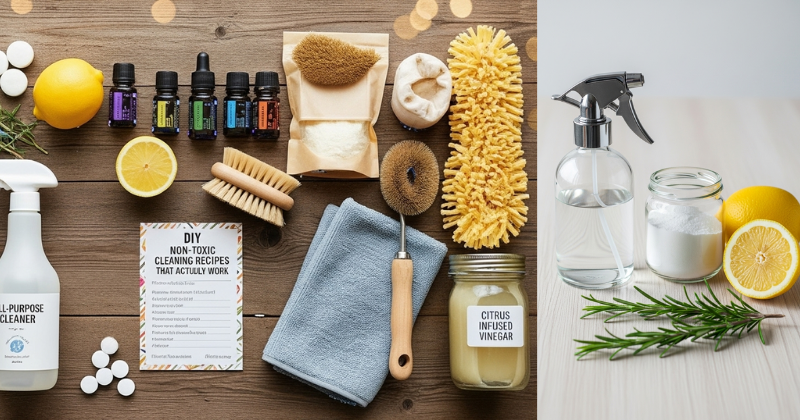
Learn how to create DIY non-toxic cleaning recipes that actually work. Discover safe, effective, and budget-friendly ways to transform your home into a chemical-free sanctuary today.
Important Disclaimer: This article is for informational purposes only and should not replace professional advice. For safety procedures, verify current best practices and local regulations. Individual results may vary, and personal circumstances should always be considered when implementing any suggestions.
Have you ever finished a deep cleaning session only to be left with a throbbing headache and the sharp, stinging scent of chemicals lingering in the air? Many of us have been conditioned to believe that if it doesn’t smell like bleach or synthetic ammonia, it isn’t truly clean. But the truth is, your home can be sparkling and sanitized without compromising your indoor air quality or your family’s health. By switching to DIY non-toxic cleaning recipes that actually work, you can remove hidden toxins from your living space while saving a significant amount of money.
In this guide, you will learn the secrets of plant-based cleaning science. We will explore how simple ingredients like white vinegar, baking soda, and essential oils can tackle even the toughest grime. You will discover actionable, step-by-step formulas for every room in your house, from the kitchen sink to the bathroom tiles. This journey isn’t just about cleaning; it’s about taking control of your environment and achieving a healthier, more sustainable lifestyle. Get ready to transform your home with the power of nature!
Foundation: Why Natural Cleaning is the Future
Building confidence in your cleaning routine starts with understanding that “natural” does not mean “weak.” In fact, many professional cleaners are returning to basic chemistry to achieve better results without the side effects of modern synthetics.
The Problem with Conventional Cleaners
Most store-bought cleaners contain volatile organic compounds (VOCs). These can contribute to respiratory issues and environmental pollution. When you choose DIY non-toxic cleaning recipes that actually work, you are choosing a [sustainable lifestyle change] that protects both your home and the planet. You are removing the risk of chemical burns and toxic residue on surfaces where your children play or your food is prepared.
Addressing Common Hesitancies
Many people worry that natural cleaners won’t kill germs. However, ingredients like high-proof alcohol, white vinegar, and specific essential oils have been scientifically noted for their antimicrobial properties. While they may not have the instant “kill-all” marketing of bleach, they are incredibly effective for daily maintenance. You don’t need a degree in chemistry to do this—just a few glass spray bottles and some basic pantry staples.
The Essential Non-Toxic Toolkit
- White Vinegar: An acetic acid that cuts through grease and dissolves mineral deposits.
- Baking Soda: A mild abrasive that neutralizes odors and scours surfaces.
- Castile Soap: A versatile, vegetable-based surfactant that lifts dirt.
- Hydrogen Peroxide: A natural whitening and disinfecting agent.
Step-by-Step: Top 3 Core Cleaning Formulas
Let’s get practical. These three recipes form the backbone of a chemical-free home. They are easy to make, safe to store, and highly effective.
1. The Ultimate All-Purpose Spray
This is your go-to for countertops, baseboards, and dusting.
- Mix: Combine 1 cup of distilled water and 1 cup of white vinegar in a glass spray bottle.
- Enhance: Add 15 drops of lemon or tea tree essential oil for added grease-cutting power.
- Apply: Spray on the surface and wipe with a microfiber cloth.
- Caution: Do not use vinegar on natural stone like marble or granite, as the acid can etch the surface.
2. The “Better Than Bleach” Scouring Paste
Perfect for bathtubs, sinks, and grout.
- Combine: Mix 1/2 cup of baking soda with enough liquid Castile soap to form a thick paste.
- Scent: Add 5 drops of peppermint oil for a fresh, clean aroma.
- Scrub: Apply to the surface, let it sit for 5 minutes, then scrub with a brush and rinse.
3. Streak-Free Glass & Mirror Cleaner
Achieve a professional shine without the blue dyes or ammonia.
- Mix: 1 1/2 cups water, 2 tablespoons white vinegar, and 2 tablespoons rubbing alcohol.
- Secret Ingredient: Add 1 teaspoon of cornstarch. It sounds strange, but it acts as a microscopic abrasive to remove every single streak.
- Shake: Shake well before each use as the starch will settle.
Advanced Strategies: Pro Tips for Stubborn Messes
Once you’ve mastered the basics, you can elevate your routine with expert-level insights for those “impossible” cleaning tasks.
Cutting Through Heavy Grease
If you have a particularly greasy stove, you need a targeted solution. You can adapt a DIY dish soap that cuts ALL grease by adding extra d-limonene (found in citrus oils). For baked-on oven grime, a thick coating of baking soda and water left overnight is often more effective than the high-heat “self-clean” cycle that fills your house with smoke.
The Power of Steam and Heat
Don’t underestimate the power of physical science. If you have a stubborn stain on your floor, a quick steam mop session followed by a vinegar-water spray can lift dirt that has been trapped for months. If you are dealing with odors in a carpet, a sprinkle of baking soda left for four hours before vacuuming will achieve better results than synthetic powders.
Customizing Your Scent Profile
One of the best parts of DIY non-toxic cleaning recipes that actually work is the aromatherapy.
- For Focus: Use Rosemary and Lemon in your office cleaner.
- For Relaxation: Use Lavender in your bedroom dusting spray.
- For Sanitization: Use Clove and Eucalyptus in the bathroom.
Troubleshooting: Common Challenges and Solutions
Switching to DIY can sometimes lead to unexpected results. Here is how to handle them with confidence.
“My surfaces feel sticky or filmy.”
- The Solution: This is usually caused by using too much soap or mixing vinegar and soap incorrectly. Vinegar (an acid) and Castile soap (a base) can cancel each other out, creating a “curdled” mess. Always use soap to clean first, then use a vinegar rinse to shine.
“I miss the whitening power of bleach.”
- Alternative Approach: For whites, use a homemade bleach alternative made of 1 part hydrogen peroxide and 2 parts water. It whitens effectively without the toxic fumes. For laundry, let the sun do the work! UV rays are nature’s best whitening tool.
“I’m worried about germs in the kitchen.”
- Preventive Measures: Use separate cutting boards for meat and vegetables. For sanitizing, spray a surface with vinegar first, then immediately spray with 3% hydrogen peroxide. Studies have shown this “one-two punch” is highly effective at killing bacteria.
Maximizing Results: The Holistic Clean Home
To truly achieve a chemical-free lifestyle, you should look beyond just the spray bottle.
Air Quality and Greenery
Cleaning your home is only half the battle. If you enjoy [gardening topics], consider adding air-purifying plants like Spider Plants or Snake Plants to your rooms. They work 24/7 to filter out any lingering VOCs. This creates a synergistic effect with your new cleaning routine.
Complementary Wellness Hacks
Since you are now saving money on cleaners, you can invest in other areas of self-care. Use your extra Mason jars to create [handmade Mason jar spa gifts] for friends, or brew a cup of [delicious fennel tea] to enjoy in your now-sparkling, fresh-smelling kitchen.
Featured Snippet: What is the best non-toxic all-purpose cleaner?
The best non-toxic all-purpose cleaner is a 50/50 mixture of white vinegar and distilled water. To enhance its effectiveness, add 10-15 drops of essential oils like lemon or tea tree. This formula is highly effective at cutting grease, removing water spots, and neutralizing odors on most household surfaces, excluding natural stone and unfinished wood.
Conclusion
Embracing DIY non-toxic cleaning recipes that actually work is one of the most empowering choices you can make for your home. You have discovered that you have the capability to succeed in maintaining a professional-level of cleanliness using safe, simple ingredients. By removing harsh chemicals, you achieve more than just a clean house; you achieve peace of mind and a healthier environment for everyone who walks through your door.
You’ve got this! Start small by mixing up your first bottle of all-purpose spray this weekend. Once you see the results (and smell the difference), you’ll never want to go back to the cleaning aisle again.