Protect your teeth naturally by choosing foods that support dental health, strengthen enamel, and promote a healthier smile every single day.
Your smile is one of the first things people notice about you. But dental health is about far more than appearance. Strong teeth and healthy gums allow you to eat comfortably, speak clearly, and avoid painful procedures later in life. While brushing and flossing are essential, what you eat plays an equally powerful role.
When you eat for a healthier smile, you nourish the tissues that protect your teeth, support enamel strength, and help balance oral bacteria. The right foods can reduce plaque buildup, strengthen tooth structure, and even lower your risk of cavities and gum disease. The best part? You can begin improving your dental health at your very next meal.
Let’s explore how to build a diet that truly supports your smile from the inside out.
Why Does Nutrition Matter for Dental Health?
Your mouth is the gateway to your body. Every bite you take either feeds harmful bacteria or strengthens your natural defenses.
Dental health depends on a balance between:
- Oral bacteria
- Saliva production
- Tooth enamel strength
- Gum tissue integrity
When you frequently consume sugary or acidic foods, harmful bacteria produce acids that weaken enamel. Over time, this leads to cavities and tooth decay. On the other hand, nutrient-dense foods provide minerals that help remineralize enamel and support healthy gums.
Research consistently shows that diets high in added sugars are linked to higher rates of tooth decay. Meanwhile, diets rich in calcium, phosphorus, fiber, and vitamins are associated with stronger teeth and reduced gum inflammation.
The encouraging news? Small dietary shifts can transform your dental health over time.
What Foods Support Dental Health and Strong Teeth?
If you want to eat for a healthier smile, focus on foods that strengthen enamel, increase saliva, and reduce harmful bacteria.
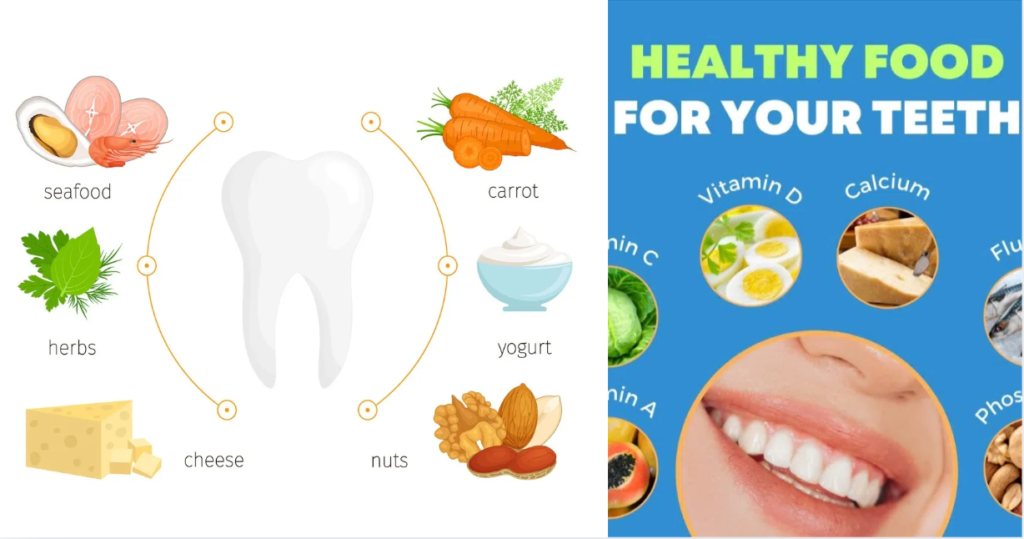
Calcium-Rich Foods
Calcium is essential for strong teeth because enamel is largely made of mineralized calcium compounds.
Excellent sources include:
- Milk, yogurt, and cheese
- Fortified plant milks
- Leafy greens like kale
- Almonds
Cheese is especially beneficial because it may help neutralize acids in the mouth and stimulate saliva production.
Phosphorus-Rich Foods
Phosphorus works alongside calcium to rebuild and protect enamel.
You’ll find it in:
- Eggs
- Fish
- Lean meats
- Nuts and seeds
Crunchy Fruits and Vegetables
Apples, carrots, and celery act like natural toothbrushes. Their fibrous texture helps scrub teeth surfaces while stimulating saliva flow.
More saliva means better acid neutralization and reduced cavity risk.
Water
Plain water, especially fluoridated water where available, helps rinse away food particles and supports enamel strength.
When you consistently include these foods that support dental health, you actively protect your smile with every bite.
How Can You Build a Tooth-Friendly Daily Meal Plan?
Creating a diet for dental health doesn’t mean giving up flavor. It means making strategic swaps.
Step 1: Start With a Balanced Breakfast
Instead of sugary cereal or pastries, try:
- Greek yogurt with nuts and berries
- Eggs with sautéed spinach
- Oatmeal topped with seeds
These options provide protein, calcium, and fiber without overwhelming your teeth with sugar.
Step 2: Choose Smart Lunches and Dinners
Build meals around:
- Lean protein (chicken, fish, tofu)
- Crunchy vegetables
- Whole grains
- A source of healthy fat
For example, grilled salmon with roasted vegetables supports both dental and overall health.
Step 3: Upgrade Your Snacks
Frequent snacking on sugary foods increases acid attacks on enamel. Instead, choose:
- Cheese slices
- Raw vegetables with hummus
- A handful of nuts
- Plain yogurt
Timing matters too. Eating sweets with meals rather than alone reduces prolonged acid exposure.
Step 4: Hydrate Throughout the Day
Water is your smile’s silent protector. Rinse your mouth after meals if brushing isn’t possible.
With simple adjustments, you can eat for a healthier smile without feeling deprived.
What Are Advanced Strategies for Protecting Your Smile Through Diet?
Once you’ve mastered the basics, you can take your dental health to the next level.
Support Enamel Remineralization
Foods rich in calcium and phosphorus help restore weakened enamel. Pairing these minerals with vitamin D improves absorption.
Consider combining:
- Yogurt with fortified cereals
- Salmon with leafy greens
Promote Healthy Gums
Vitamin C supports gum tissue repair and reduces inflammation. Include citrus fruits, strawberries, and bell peppers regularly.
Healthy gums are just as important as strong teeth.
Consider Probiotic Foods
Emerging research suggests that probiotic-rich foods like kefir and unsweetened yogurt may help balance oral bacteria.
Balanced bacteria reduce the risk of gum disease and bad breath.
These advanced strategies amplify the benefits of eating for dental health.
What Foods and Habits Harm Dental Health?
To fully support your smile, you must also reduce common dietary threats.
Sugary Beverages
Soda, sports drinks, and sweetened coffee expose teeth to prolonged acid and sugar.
If you consume them, use a straw and rinse with water afterward.
Sticky Sweets
Caramel, dried fruit, and chewy candies cling to teeth, feeding bacteria for extended periods.
Frequent Snacking
Constant grazing prevents saliva from neutralizing acids properly.
Acidic Foods in Excess
Citrus juices and vinegar-based drinks can erode enamel when consumed frequently without rinsing.
Moderation is key. You don’t have to eliminate every treat. Instead, balance indulgence with protective habits.
How Long Does It Take to Improve Dental Health Through Diet?
You may wonder: how quickly can diet impact your smile?
The answer depends on your starting point. Reduced sugar intake can lower cavity risk almost immediately. Gum inflammation can improve within weeks when supported by proper nutrition and oral hygiene.
Enamel, however, does not regenerate once deeply damaged. It can only be strengthened through remineralization.
That’s why early action matters. The sooner you eat for a healthier smile, the better your long-term results.
Consistency is your greatest advantage.
How Can You Maximize Results for a Lifetime of Healthy Teeth?
A dental health diet works best when combined with strong daily habits.
Maintain Proper Oral Hygiene
Brush twice daily with fluoride toothpaste and floss once daily.
Schedule Regular Dental Checkups
Professional cleanings remove tartar that diet alone cannot prevent.
Pair Diet With Overall Wellness
If you’re interested in holistic health, consider exploring topics like:
- The gut-oral health connection
- Anti-inflammatory diets
- The role of hydration in overall wellness
- Bone health nutrition
- Immune-supporting foods
Your oral health is connected to your entire body. A strong immune system and balanced nutrition create a healthier environment in your mouth.
Conclusion: Your Smile Reflects What You Eat
Eating for a healthier smile is one of the most empowering steps you can take for your long-term well-being. By choosing foods that support dental health—like calcium-rich dairy, crunchy vegetables, protein sources, and water—you strengthen enamel, protect your gums, and reduce cavity risk.
You don’t need complicated rules. You need consistent choices.
Start today. Swap one sugary snack for a tooth-friendly option. Add one extra serving of vegetables. Drink more water.
Every meal is an opportunity to protect your smile. Over time, those small changes build into strong teeth, healthier gums, and greater confidence.
Important Disclaimer: This article is for informational purposes only and should not replace professional advice. For health-related topics, consult healthcare providers. Individual results may vary, and personal circumstances should always be considered when implementing any suggestions.