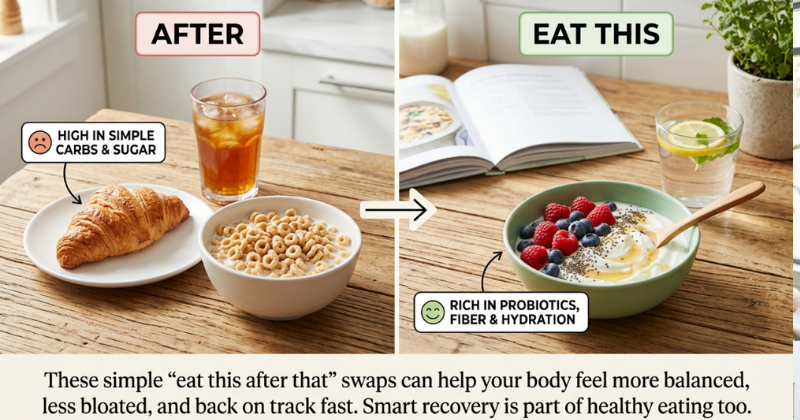
Most people focus on what they eat, but few realize that the order and pairing of foods can dramatically change how your body feels afterward. Simple “eat this after that” swaps can reduce bloating, stabilize energy, support recovery after workouts, and help your gut work more efficiently — all without complicated diets or expensive supplements.
In this practical guide you’ll discover why food sequencing matters, the science behind it, 10 easy everyday swaps you can start today, sample meal ideas, common mistakes that secretly cause discomfort, and a simple daily routine that fits real life. These swaps are backed by digestion research and used by nutritionists and athletes alike to feel lighter, more balanced, and recovered faster.
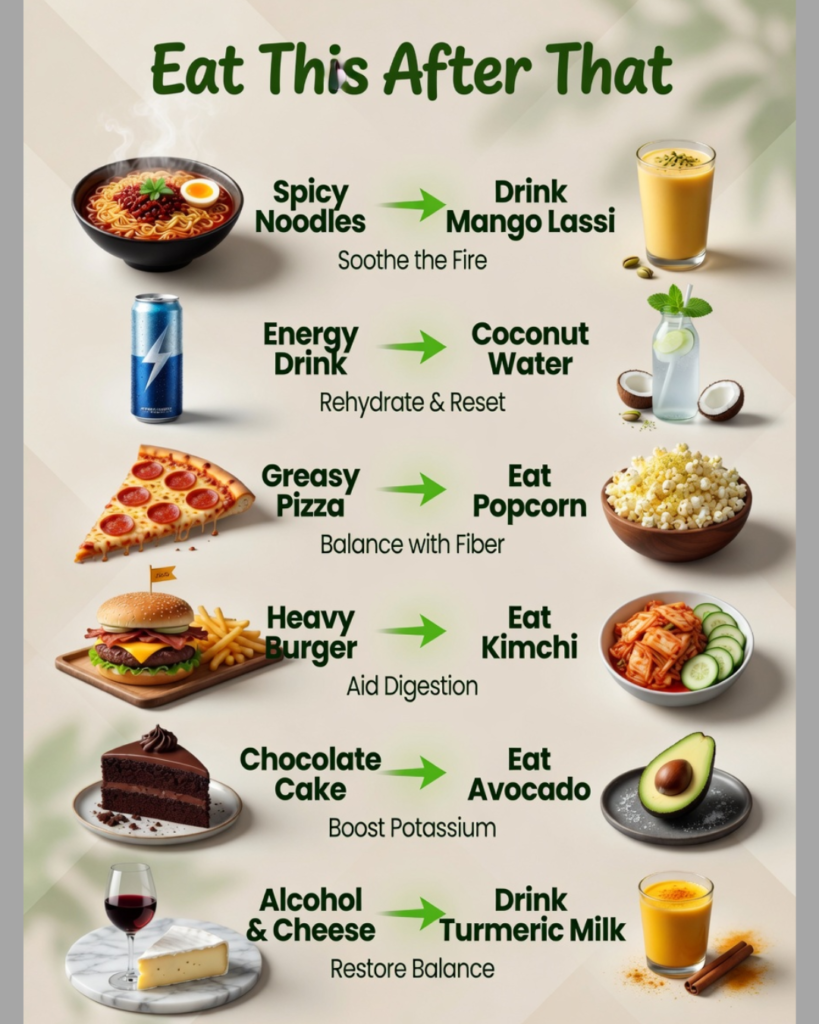
Why Food Order and Pairing Make a Difference
Your digestive system processes foods at different speeds. Carbohydrates break down quickly, proteins take longer, and fats slow everything down. Eating in the wrong order can spike blood sugar, ferment in the gut (creating gas and bloating), or leave you feeling heavy. Proper sequencing helps enzymes work efficiently, stabilizes blood sugar, and reduces inflammation. Studies in the Journal of Nutrition and Nutrients show that strategic food pairing improves nutrient absorption, lowers post-meal discomfort, and supports faster muscle recovery after exercise.
10 Simple “Eat This After That” Swaps That Work
1. Eat Protein Before Carbs (Not the Other Way Around)
Instead of starting with rice or bread, begin meals with protein (chicken, eggs, fish, tofu). Why it works: Protein slows carb absorption, preventing blood-sugar spikes and the subsequent crash that leaves you bloated and tired. Easy swap example: Grilled chicken or eggs first, then add rice or sweet potato.
2. Add Healthy Fat After Veggies (Not Before)
Eat your salad or vegetables first, then add avocado, olive oil, or nuts. Why it works: Fat slows digestion of fiber-rich veggies, reducing gas and bloating while helping your body absorb fat-soluble vitamins. Easy swap example: Big leafy salad first, followed by olive oil dressing or sliced avocado.
3. Drink Water 30 Minutes Before (Not During) Meals
Sip water 20–30 minutes before eating instead of gulping during the meal. Why it works: Drinking large amounts with food dilutes digestive enzymes and can cause bloating. Easy swap example: Finish your water 30 minutes before sitting down to eat.
4. Eat Fermented Foods After Protein (Not Before)
Save yogurt, kefir, or kimchi for the end of the meal or as a small dessert. Why it works: Probiotics work best after protein has been partially digested, supporting gut balance without competing for stomach acid. Easy swap example: Finish your meal with a small serving of Greek yogurt or sauerkraut.
5. Pair Carbs with Vinegar or Lemon (Post-Carb Swap)
After eating starchy carbs, add a splash of apple cider vinegar or lemon to the next bite or drink. Why it works: Acetic acid slows starch digestion and blunts blood-sugar spikes that cause bloating and cravings. Easy swap example: After pasta or rice, have a side salad with lemon dressing.
6. Eat Fruit Alone or After a Meal (Not as a Starter)
Have fruit 20–30 minutes after a balanced meal or on its own. Why it works: Fruit digests quickly; eating it with slower-digesting foods can cause fermentation and gas. Easy swap example: Finish your meal, wait 20 minutes, then enjoy berries or an apple.
7. Add Ginger or Peppermint After Heavy Meals
End heavy or protein-rich meals with ginger tea or fresh mint. Why it works: Both soothe the digestive tract, speed gastric emptying, and reduce post-meal bloating. Easy swap example: After dinner, sip warm ginger tea instead of a sweet dessert.
8. Eat Greens Before Anything Else in a Meal
Start every main meal with a handful of leafy greens or non-starchy vegetables. Why it works: Fiber from greens creates a protective layer in the stomach that slows digestion of heavier foods and stabilizes blood sugar. Easy swap example: Big salad or steamed broccoli first, then protein and carbs.
9. Choose Protein + Fat for Post-Workout Recovery (Not Just Carbs)
After exercise, eat protein and healthy fat before or with any carbs. Why it works: This supports muscle repair, reduces inflammation, and prevents the blood-sugar rollercoaster that causes post-workout fatigue. Easy swap example: Eggs + avocado, or Greek yogurt + nuts after training.
10. End the Day with a Light, Protein-Rich Snack (Not Heavy Carbs)
Finish your evening with something light and protein-focused instead of pasta or bread. Why it works: Heavy carbs late at night slow digestion and can cause overnight bloating and poor sleep. Easy swap example: Cottage cheese, a boiled egg, or a small handful of nuts before bed.
Sample Daily Meal Flow Using These Swaps
- Breakfast: Greens or spinach first → eggs + avocado → small berries afterward.
- Lunch: Big salad first → grilled chicken or tofu → rice or sweet potato last.
- Post-workout snack: Protein shake with nut butter or Greek yogurt + nuts.
- Dinner: Non-starchy veggies first → fish or lentils → small portion of carbs.
- Evening wind-down: Ginger tea or a small protein snack.
Common Mistakes That Undo These Swaps
- Eating everything at once in huge mixed plates.
- Drinking large amounts of water during meals.
- Starting meals with bread or carbs.
- Ignoring portion size — even the best order can cause bloating if you overeat.
- Skipping the post-meal walk or gentle movement.
Conclusion
These simple “eat this after that” swaps prove that smart food sequencing is one of the easiest ways to feel more balanced, reduce bloating, and support recovery without overhauling your entire diet. By paying attention to order and pairing, you give your digestive system the best chance to work efficiently, stabilize energy, and reduce discomfort after meals.
Start with just 2–3 swaps this week — perhaps greens first or protein before carbs — and notice how much lighter and more energized you feel. Small changes in the way you eat can create big improvements in how your body feels every day. Your gut, energy levels, and overall wellness will thank you for the simple upgrade.