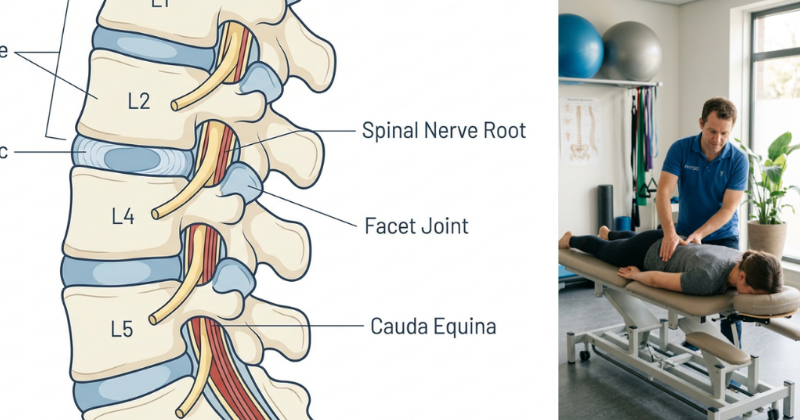
Lower back pain is one of the most common complaints worldwide, affecting up to 80% of adults at some point in their lives. Whether it stems from long hours at a desk, heavy lifting, poor posture, or everyday stress, that nagging ache can make simple tasks like bending, sitting, or even sleeping feel exhausting. The good news? Most cases of lower back pain are mechanical (related to muscles, joints, and movement) and respond very well to simple physiotherapy-guided strategies you can do at home.
In this practical guide you’ll learn the main causes of lower back pain, the key do’s and don’ts backed by physiotherapy principles, easy exercises you can start today, posture fixes, daily habits that prevent flare-ups, and when it’s time to see a professional. Everything here is safe for most people, easy to follow, and focused on real, lasting relief — no expensive equipment or complicated routines required.
Common Causes of Lower Back Pain
Understanding the “why” helps you target the right fixes. The most frequent triggers include:
- Muscle strain or ligament sprain from sudden movements or poor lifting technique
- Poor posture and prolonged sitting that weakens core and glute muscles
- Tight hip flexors and hamstrings that pull on the lower back
- Weak core stability, leading to extra stress on the spine
- Disc irritation or mild bulging (often from repetitive bending or twisting)
- Stress and tension that cause the back muscles to tighten and guard
Physiotherapists note that 90% of lower back pain improves within 6 weeks when addressed with movement, posture correction, and gentle strengthening — rather than complete rest or medication alone.
Do’s: Physiotherapy Tips That Actually Help
Focus on these evidence-based actions to reduce pain and prevent recurrence.
1. Move Gently Every Day Complete bed rest can actually make back pain worse by weakening muscles. Instead, aim for short, frequent walks and gentle movement. How to do it: Walk for 10–15 minutes several times a day. Keep it comfortable — movement increases blood flow and releases natural pain-relieving chemicals.
2. Strengthen Your Core and Glutes A strong core supports the spine like a natural brace. Easy exercises:
- Pelvic Tilts: Lie on your back with knees bent. Gently tilt your pelvis to flatten your lower back against the floor. Hold 5 seconds, repeat 10 times.
- Glute Bridges: Lie on your back, feet flat. Lift hips toward the ceiling, squeeze glutes at the top. Hold 3 seconds, lower slowly. Do 10–12 reps.
- Bird-Dog: On all fours, extend opposite arm and leg while keeping your back flat. Hold 5 seconds, alternate sides. 8 reps each side.
3. Stretch Tight Muscles Tight hip flexors and hamstrings pull on the lower back. Key stretches:
- Child’s Pose: Kneel, sit back on heels, and fold forward. Hold 30–60 seconds.
- Knees-to-Chest: Lie on your back and gently pull both knees toward your chest. Hold 20–30 seconds.
- Figure-Four Stretch: Cross one ankle over the opposite knee and gently pull the thigh toward you.
4. Practice Good Posture Poor posture is one of the biggest contributors to ongoing pain. Daily tips: Sit with feet flat, shoulders relaxed, and a small lumbar support (rolled towel) behind your lower back. Stand tall with weight evenly distributed.
5. Use Heat or Cold Therapy Wisely
- First 48 hours after a flare-up: Cold pack for 15 minutes to reduce inflammation.
- After that: Warm pack or heating pad for 15–20 minutes to relax muscles and improve blood flow.
6. Stay Active with Low-Impact Movement Swimming, cycling, or gentle yoga keeps the back mobile without extra strain.
Don’ts: Common Mistakes That Make Pain Worse
Avoid these habits that physiotherapists see every day:
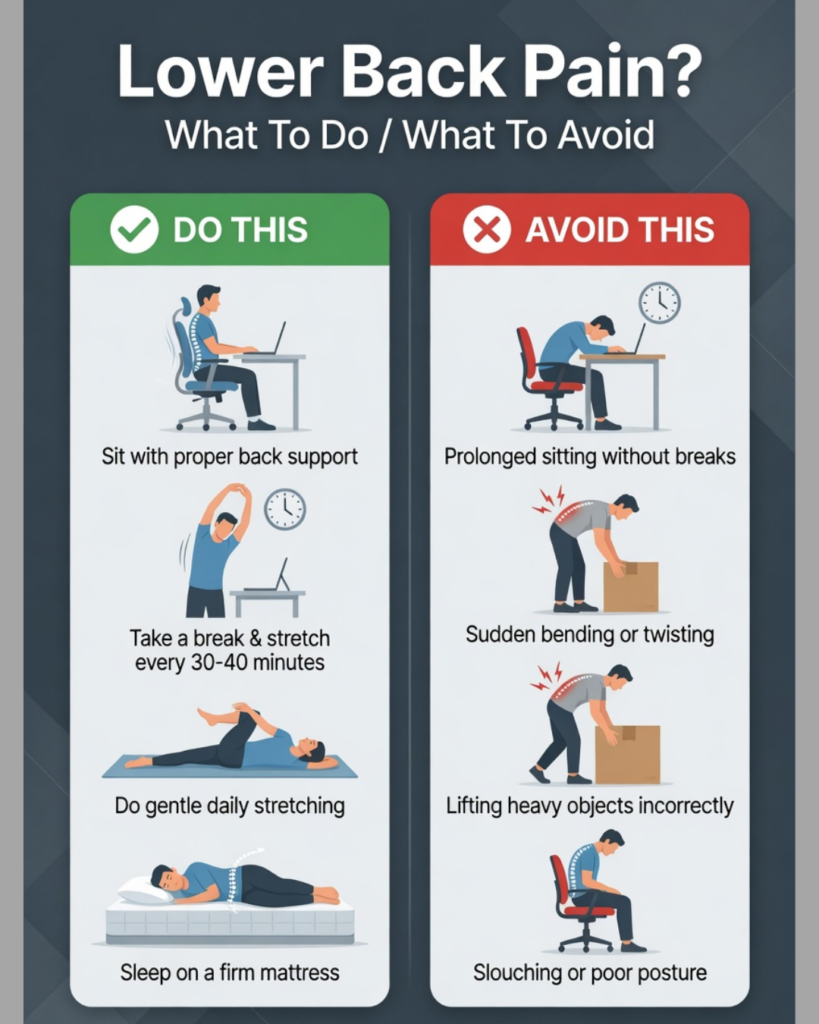
1. Don’t Sit or Stand in One Position Too Long Sitting for hours compresses discs and tightens muscles. Fix: Set a timer to stand, walk, or do pelvic tilts every 30–45 minutes.
2. Don’t Lift with Your Back Bending at the waist to lift heavy objects is the fastest way to strain muscles or discs. Fix: Bend at the knees, keep the object close to your body, and use your legs to lift.
3. Don’t Ignore Early Warning Signs Pushing through sharp pain or numbness can turn a minor issue into a bigger problem. Fix: Rest briefly and use the gentle exercises above when pain first appears.
4. Don’t Sleep on Your Stomach This position arches the lower back and strains muscles. Fix: Sleep on your back with a pillow under your knees or on your side with a pillow between your knees.
5. Don’t Rely Only on Painkillers They mask symptoms but don’t fix the underlying muscle weakness or poor movement patterns. Fix: Combine short-term relief (if needed) with the active physiotherapy strategies above.
When to See a Physiotherapist or Doctor
Most lower back pain improves with the do’s above, but seek professional help if you have:
- Pain that lasts longer than 4–6 weeks
- Numbness, tingling, or weakness in the legs
- Pain that radiates down one or both legs (possible sciatica)
- Loss of bladder or bowel control (emergency — seek immediate care)
- Pain after a fall or injury
A physiotherapist can assess your specific movement patterns and give personalized exercises.
Simple Daily Routine to Prevent Lower Back Pain
- Morning: 5 minutes of gentle stretches (cat-cow + child’s pose)
- Midday: Stand and walk every 45 minutes
- Evening: 10 minutes of core and glute strengthening
- Night: Sleep with proper support and do a quick knee-to-chest stretch
Consistency is more important than intensity. Start small and build up.
Conclusion
Lower back pain doesn’t have to control your life. By focusing on the right do’s — gentle movement, core and glute strengthening, good posture, and targeted stretches — while avoiding the common don’ts, most people see significant improvement within weeks. Physiotherapy principles show that staying active, moving correctly, and building strength are far more effective than rest or medication alone.
Start today with just one or two of the exercises above and notice how your back feels tomorrow. Small, consistent changes create real relief and help you move freely again. You’ve got this — your back will thank you for the smart, simple care.