Meta Description: Learn to recognize excess estrogen indicators with clear signs and symptoms. Spot high hormone levels early to improve well-being naturally and safely.
Introduction
Are you experiencing unexplained fatigue, mood swings, or stubborn weight gain? These could be subtle signs of excess estrogen, a common hormonal imbalance that affects both women and men. Understanding the indicators of high estrogen is crucial for taking control of your health, boosting energy, and preventing long-term complications.
In this article, you’ll discover how to spot high hormone symptoms, why estrogen imbalances occur, and practical strategies to support your body naturally. By becoming familiar with these signs, you can take proactive steps to restore hormonal harmony, improve vitality, and feel more like yourself again.
Section 1: Foundation – Understanding Estrogen and Its Role
Before recognizing the warning signs, it’s important to understand what estrogen does and why its balance matters.
H3: What Is Estrogen?
Estrogen is a key hormone primarily associated with reproductive health, though it also influences:
- Bone density and cardiovascular health
- Brain function and mood regulation
- Skin, hair, and metabolism
Maintaining the right estrogen levels is essential for overall well-being.
H3: Causes of Excess Estrogen
High estrogen can result from various factors, including:
- Endocrine-disrupting chemicals: found in plastics, personal care products, and pesticides
- Poor liver function: the liver helps metabolize estrogen
- Hormonal therapies or birth control: some medications can elevate estrogen levels
- Lifestyle factors: high body fat, poor diet, and stress can contribute
H3: Who Is at Risk?
Both men and women can experience high estrogen, but women, particularly during perimenopause, are more susceptible. Men may notice symptoms with age or due to obesity and certain medications.
Section 2: Step-by-Step Process – Recognizing High Estrogen Symptoms
Spotting excess estrogen early can help prevent complications like PMS worsening, weight gain, and mood disorders.
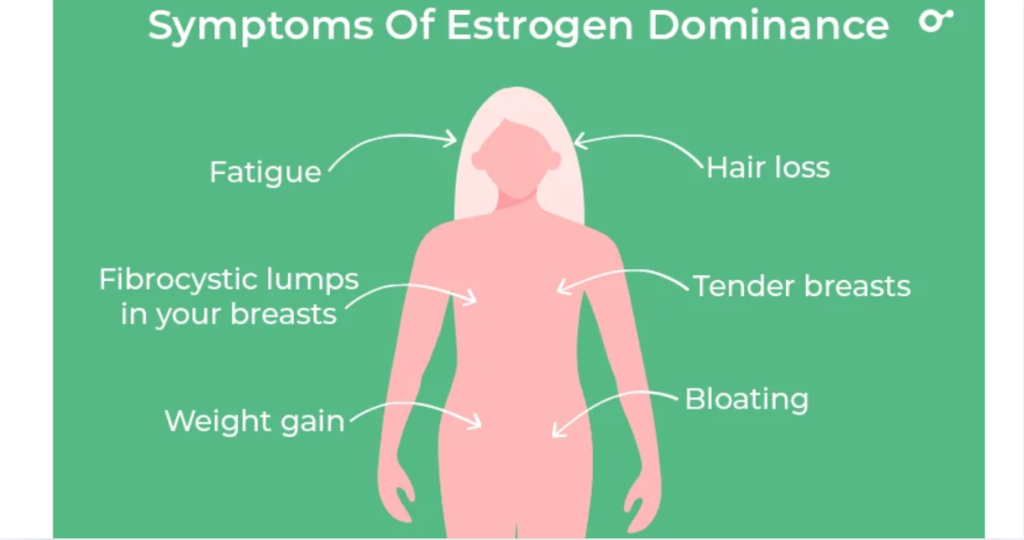
H3: 1. Weight Gain and Fat Distribution
Excess estrogen often leads to:
- Unexplained weight gain, especially around the hips, thighs, and abdomen
- Difficulty losing weight despite diet and exercise
- Water retention and bloating
H3: 2. Mood Changes
Hormonal imbalances can affect neurotransmitters, causing:
- Irritability and anxiety
- Mood swings and depression
- Difficulty focusing or memory lapses
H3: 3. Menstrual Irregularities
Women may notice:
- Heavy or irregular periods
- Severe PMS symptoms
- Breast tenderness or swelling
H3: 4. Fatigue and Low Energy
High estrogen can interfere with sleep and energy metabolism, leading to:
- Persistent tiredness
- Difficulty waking up in the morning
- Reduced motivation
H3: 5. Skin and Hair Issues
Some common signs include:
- Acne flare-ups, particularly on the lower face or jawline
- Hair thinning or unwanted hair growth in unusual areas
- Oily skin due to hormonal fluctuations
H3: 6. Digestive and Liver Support Signals
Excess estrogen may stress the liver, showing up as:
- Bloating or constipation
- Difficulty metabolizing fats and detoxifying
- Sensitivity to certain foods
Section 3: Advanced Strategies – Pro Tips for Managing Estrogen
After identifying the indicators, these approaches can help balance your hormones naturally.
H3: Lifestyle and Diet Adjustments
- Increase fiber intake to support estrogen metabolism
- Eat cruciferous vegetables like broccoli, cauliflower, and Brussels sprouts, which contain compounds that help the liver break down estrogen
- Limit alcohol and sugar to reduce hormonal strain
H3: Stress Reduction
Chronic stress can exacerbate estrogen dominance. Practices like yoga, meditation, or deep breathing exercises help regulate cortisol and maintain hormonal balance.
H3: Exercise for Hormonal Harmony
Regular physical activity can:
- Reduce body fat, lowering excess estrogen production
- Improve insulin sensitivity and metabolism
- Enhance mood through endorphin release
H3: Supporting Liver Function
Your liver plays a key role in processing estrogen. You can support it by:
- Drinking adequate water
- Consuming antioxidant-rich foods (berries, green tea)
- Considering gentle liver-support supplements like milk thistle (with medical guidance)
Section 4: Troubleshooting Common Challenges
Even with knowledge and effort, some obstacles may arise.
H4: Difficulty Identifying Symptoms
Many estrogen-related signs overlap with other conditions. Keep a symptom diary and consider consulting a healthcare provider for hormone testing.
H4: Maintaining Consistent Lifestyle Changes
- Set achievable goals, like adding one cruciferous vegetable daily
- Use habit tracking or accountability partners
- Make gradual adjustments instead of drastic changes
H4: Dealing With Setbacks
- Hormonal balance takes time; don’t get discouraged by temporary fluctuations
- Address stress and sleep issues first—they impact hormones the most
- Seek guidance for persistent or severe symptoms
Section 5: Maximizing Results – Long-Term Hormonal Health
To sustain balanced estrogen levels and overall vitality:
H3: Ongoing Monitoring
- Track symptoms over time to recognize patterns
- Use regular lab tests to evaluate estrogen, progesterone, and liver markers
H3: Complementary Strategies
- Gut health: supports estrogen elimination
- Healthy fats: omega-3s help modulate hormone production
- Sleep optimization: 7–9 hours of quality rest improves hormonal regulation
H3: Internal Linking Opportunities
- “Natural Ways to Balance Hormones and Boost Energy”
- “Foods That Support Liver Detox and Hormone Metabolism”
- “Stress Reduction Techniques for Hormonal Health”
- “Exercise Routines for Women’s Hormonal Balance”
- “Sleep Hacks to Optimize Endocrine Function”
Featured Snippet: How Do I Know If My Estrogen Is High?
Excess estrogen often manifests as weight gain (especially around hips and abdomen), mood swings, fatigue, heavy or irregular periods, breast tenderness, acne, and bloating. Monitoring these symptoms, supporting liver health, managing stress, and consulting a healthcare provider can help confirm and address high estrogen levels.
Conclusion
Recognizing excess estrogen indicators empowers you to take control of your health and well-being. By paying attention to your body, making targeted lifestyle changes, and supporting liver and hormonal function, you can restore balance, boost energy, and improve mood.
Start with small, manageable adjustments—like adding cruciferous vegetables, practicing stress reduction, and optimizing sleep—and build from there. With consistent effort, you can regain hormonal harmony and enjoy a more vibrant, energized life.
Remember, your body is adaptable, and by learning to spot and manage high hormone symptoms, you can take actionable steps toward long-term wellness and vitality.
Important Disclaimer: This article is for informational purposes only and should not replace professional advice. For health-related topics, consult healthcare providers. Individual results may vary, and personal circumstances should always be considered when implementing any suggestions.