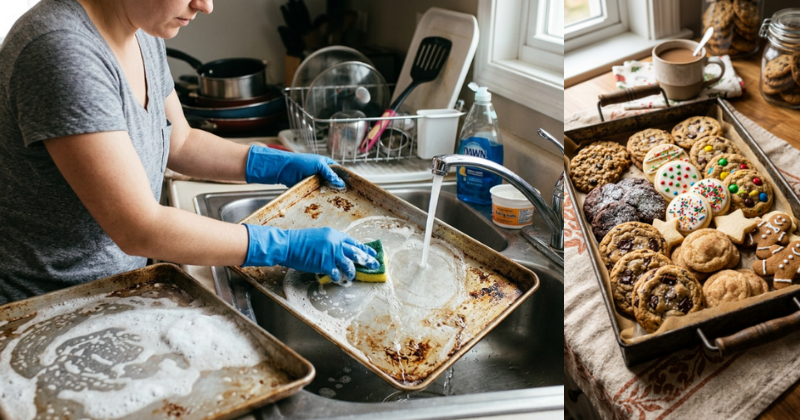
Cookie sheets are workhorses in the kitchen, but after repeated use they often end up with stubborn grease, baked-on residue, and dark discoloration that no ordinary sponge can touch. The good news? You don’t need harsh chemical cleaners or expensive specialty products to restore them. With simple pantry staples like baking soda, vinegar, hydrogen peroxide, and lemon, you can deep-clean even the dirtiest sheets safely and effectively — often in under 30 minutes. In this guide, you’ll learn the best natural methods for different types of cookie sheets (aluminum, non-stick, stainless steel), step-by-step instructions that actually work, prevention tips to keep them looking new longer, and common mistakes to avoid. These techniques are budget-friendly, eco-friendly, and gentle enough for regular use.
Why Cookie Sheets Get So Dirty (And Why Natural Cleaning Works Better)
Grease and food particles bake onto the surface at high temperatures, creating a tough, carbonized layer. Over time, aluminum sheets oxidize and darken, while non-stick coatings can become sticky if not cleaned properly. Commercial oven cleaners contain strong alkalis that can damage non-stick surfaces and leave toxic residue. Natural methods using mild abrasives and acids (like baking soda and vinegar) break down grease and lift stains through gentle fizzing and scrubbing — without harming the pan or your health. Many people report sheets looking brand-new after just one or two treatments.
Method 1: Baking Soda + Vinegar Fizz (Best for Everyday Grease & Burnt-On Food)
This is the go-to method for most people because it’s safe for all sheet types and requires no soaking overnight.
Step-by-step:
- Sprinkle a generous layer of baking soda over the entire sheet (about ¼ cup for a standard sheet).
- Spray or pour white vinegar evenly over the baking soda — it will fizz and bubble immediately.
- Let the mixture sit for 15–30 minutes (longer for heavy buildup).
- Scrub gently with a non-scratch sponge or soft brush in circular motions.
- Rinse thoroughly with hot water and wipe dry.
Why it works: The acid-base reaction lifts grease and carbonized bits without scratching the surface. Best for: Aluminum, stainless steel, and non-stick sheets. Pro tip: For extra power, place the sheet in a warm oven (200°F) for 10 minutes before scrubbing.
Method 2: Hydrogen Peroxide + Baking Soda Paste (Best for Tough, Dark Stains)
This paste is excellent for stubborn discoloration on aluminum sheets.
Step-by-step:
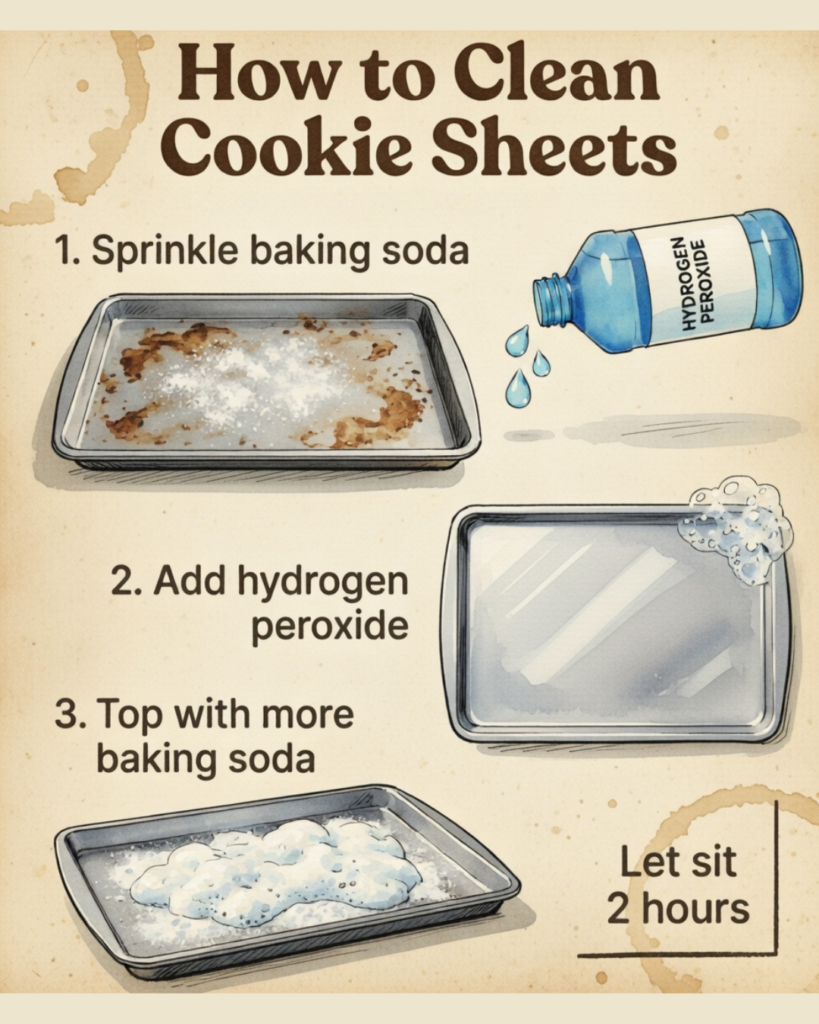
- Mix ½ cup baking soda with 3–4 tablespoons of 3% hydrogen peroxide to form a thick paste.
- Spread the paste evenly over the stained areas.
- Let it sit for 1–2 hours (or overnight for very bad stains).
- Scrub with a sponge and rinse well.
Why it works: Hydrogen peroxide is a natural bleaching agent that breaks down organic stains while baking soda provides gentle abrasion. Best for: Heavily darkened or burnt aluminum sheets. Pro tip: For non-stick sheets, use a thinner paste and shorter sit time to protect the coating.
Method 3: Lemon + Salt Scrub (Best for Quick, Fresh-Smelling Clean)
Perfect for light cleaning or when you want a natural citrus scent.
Step-by-step:
- Cut a lemon in half and sprinkle coarse salt on the cut side.
- Use the lemon half like a scrubber, rubbing salt directly onto the sheet.
- Let it sit for 5–10 minutes, then rinse and wipe dry.
Why it works: Lemon’s citric acid dissolves grease and acts as a mild bleach; salt provides natural scrubbing power. Best for: All sheet types, especially for quick touch-ups.
Method 4: Bar Keepers Friend or Cream of Tartar (For Stainless Steel & Heavy Buildup)
For sheets that need extra power.
Step-by-step:
- Wet the sheet and sprinkle Bar Keepers Friend or cream of tartar liberally.
- Scrub with a damp sponge or soft cloth.
- Rinse thoroughly.
Why it works: These mild abrasives remove oxidation and baked-on residue without damaging metal. Best for: Stainless steel and aluminum (avoid on non-stick).
Method 5: Overnight Soak for Severely Burnt Sheets
When nothing else works.
Step-by-step:
- Fill a large sink or tub with hot water and add ½ cup baking soda + ½ cup vinegar.
- Submerge the sheet and let it soak overnight.
- Scrub and rinse in the morning.
Why it works: The long soak loosens even the toughest residue.
Daily Prevention Habits to Keep Cookie Sheets Clean Longer
- Line sheets with parchment paper or silicone mats for messy bakes.
- Wipe sheets with a damp cloth while still warm after use.
- Never use metal utensils on non-stick sheets.
- Wash by hand instead of the dishwasher when possible (dishwasher detergents can cause discoloration).
- Store sheets stacked with a paper towel between them to prevent scratches.
Common Mistakes That Make Cleaning Harder
- Using steel wool or abrasive pads on non-stick surfaces (ruins the coating).
- Washing in the dishwasher too often (harsh detergents corrode metal).
- Letting grease sit for days before cleaning.
- Using oven cleaners on sheets (too harsh and leaves residue).
- Scrubbing too aggressively while the sheet is dry.
When to Replace Your Cookie Sheets
If a sheet is warped, heavily pitted, or the non-stick coating is peeling, it’s time for a new one. Quality aluminum or stainless steel sheets last years with proper care.
Conclusion: Keep Your Cookie Sheets Looking (and Working) Like New
Cleaning cookie sheets doesn’t have to be a chore or require toxic chemicals. With these natural DIY methods using baking soda, vinegar, lemon, and peroxide, you can remove even the toughest grease and burnt-on stains safely and effectively. The key is acting quickly, choosing the right method for your sheet type, and building simple prevention habits. Try the baking soda + vinegar fizz today — you’ll be amazed how easily the grime lifts. Your kitchen will stay cleaner, your baked goods will taste better, and you’ll save money on replacements. Save this guide, share your favorite hack with friends, and enjoy spotless, long-lasting cookie sheets for years to come.