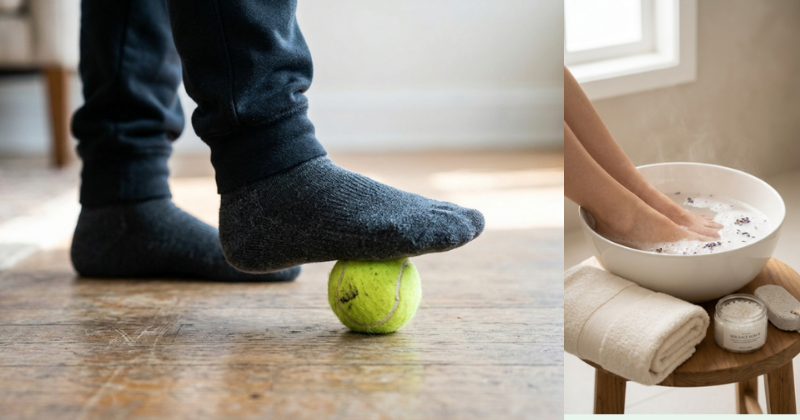
Feeling tight, achy feet after a long day? That constant tension in your arches, heels, or calves can affect everything from your posture to your back pain. The good news is you don’t need expensive massage tools or appointments to get relief. Rolling a tennis ball under your foot is one of the easiest, most effective self-care hacks for releasing tight muscles, improving mobility, and even reducing back pain — all from the comfort of your own home. In this guide, you’ll learn why this simple trick works so well, the science behind it, exactly how to do it step-by-step, variations for different needs, and daily tips to make it part of your routine. Whether you stand all day, run, or just want to unwind, this small habit delivers big relief in minutes.
Why Rolling a Tennis Ball Under Your Foot Works
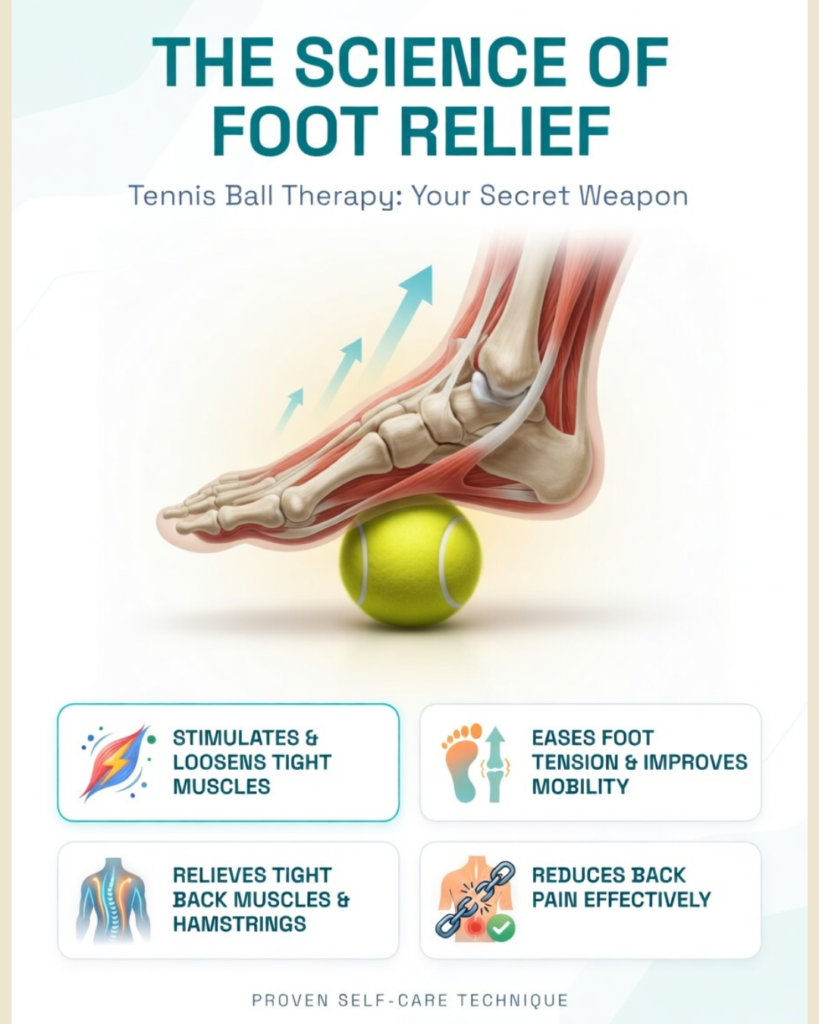
Your feet contain over 7,000 nerve endings and 26 bones connected to the rest of your body through fascia — the connective tissue that runs from your toes all the way up to your head. When your feet are tight, that tension travels upward, contributing to lower back pain, hip tightness, and poor posture. A tennis ball acts as a natural massage tool: its firm yet slightly flexible surface applies targeted pressure to trigger points (knots) in the feet, breaking up adhesions in the fascia and releasing built-up tension. This technique is a form of self-myofascial release, a method widely used in physical therapy. Studies in the Journal of Bodywork and Movement Therapies show that regular foot rolling improves flexibility, reduces pain, and enhances circulation. Because the feet are a foundation for the entire kinetic chain, relieving tension here often eases discomfort in the calves, hips, and lower back too.
8 Powerful Benefits of This Simple Habit
- Releases Tight Foot Muscles The ball targets the plantar fascia and smaller muscles, easing soreness from standing or exercise.
- Improves Mobility & Flexibility Regular rolling increases range of motion in the ankles and toes, making walking and running feel easier.
- Reduces Back Pain By loosening the feet, it helps correct posture and reduce compensatory tension in the lower back.
- Boosts Circulation The pressure stimulates blood flow, reducing swelling and helping flush out lactic acid after activity.
- Relieves Stress & Promotes Relaxation The feet have thousands of nerve endings connected to the whole body — massaging them triggers a calming response in the nervous system.
- Prevents Common Foot Problems Helps prevent or ease plantar fasciitis, heel spurs, and bunion discomfort.
- Enhances Athletic Performance Athletes use it as a warm-up or recovery tool to keep feet strong and flexible.
- Supports Better Sleep Many people roll their feet before bed and notice they fall asleep faster due to reduced tension.
How to Roll a Tennis Ball Under Your Foot – Step-by-Step
You only need a regular tennis ball (or a lacrosse ball for deeper pressure).
Basic Technique:
- Sit in a chair or stand (use a wall for balance if standing).
- Place the tennis ball under the arch of one foot.
- Apply gentle pressure and slowly roll the ball from heel to toes and back.
- Spend extra time on any tight or sore spots — pause and breathe for 10–20 seconds.
- Roll for 1–2 minutes per foot.
- Repeat daily, ideally morning and evening.
Pro Tips for Best Results:
- Start gently if your feet are very tight — pressure should feel good, not painful.
- Roll barefoot for maximum effect, or wear thin socks if the surface feels too intense.
- Breathe deeply while rolling — exhale as you press into tight spots.
- Do it while watching TV or during work calls for effortless consistency.
Variations for Specific Needs
- Plantar Fasciitis Relief: Focus more on the heel and arch; use a frozen tennis ball for extra cooling.
- Athlete Recovery: Roll after runs or workouts to release calf and foot tension.
- Desk Workers: Roll while sitting at your desk to counteract hours of sitting.
- Deeper Pressure: Swap the tennis ball for a lacrosse or golf ball.
- Gentle Version for Seniors: Use a softer ball or roll while seated with lighter pressure.
Common Mistakes to Avoid
- Rolling too aggressively (can cause bruising or irritation).
- Ignoring one foot — always do both sides for balance.
- Skipping the warm-up — roll gently for the first 20 seconds.
- Using the wrong ball (avoid soft foam balls that don’t provide enough pressure).
- Doing it only when pain appears — daily prevention is more effective.
How to Make This a Daily Habit
- Keep a tennis ball by your favorite chair or desk.
- Pair it with your evening wind-down routine or morning coffee.
- Set a 2-minute phone reminder until it becomes automatic.
- Track how your feet (and back) feel after 7 days — most people notice less tension quickly.
Conclusion: One Small Ball, Big Daily Relief
Rolling a tennis ball under your foot is one of the simplest yet most effective at-home tricks for releasing tight muscles, improving mobility, and even reducing back pain. It takes just minutes, costs nothing, and fits into any busy schedule. The science and real results speak for themselves — better circulation, less tension, and a calmer body from the ground up. Try it tonight before bed and feel the difference tomorrow. Your feet (and the rest of you) will thank you for this small habit with big relief. Save this guide, share it with anyone who stands or walks a lot, and enjoy the simple joy of moving through your day with lighter, happier feet.