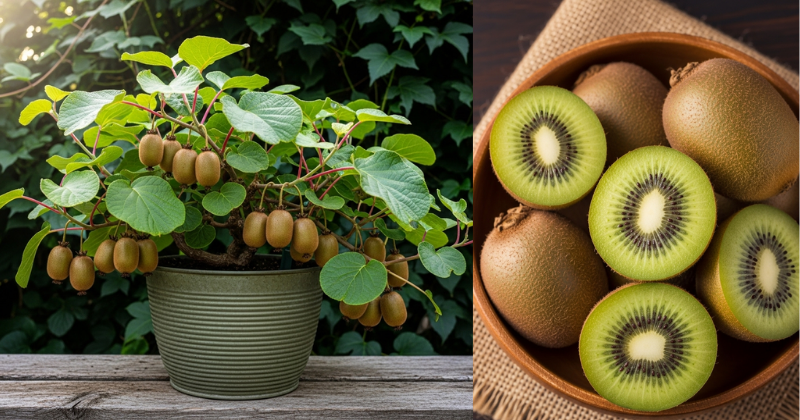
Meta Description: Learn how to grow kiwi plants in containers at home with this easy step-by-step guide. Discover how to plant, care for, and harvest delicious homegrown kiwis.
Introduction
Imagine plucking fresh, fuzzy kiwis from your own patio or balcony — no sprawling orchard required! Growing kiwi plants in containers might sound ambitious, but with the right setup, it’s not only achievable but incredibly rewarding. Container gardening gives you full control over soil, watering, and sunlight, allowing you to enjoy homegrown tropical flavor even in smaller spaces.
In this complete guide, you’ll discover how to grow kiwis successfully in pots, from choosing the right variety to pruning, pollination, and long-term care. Whether you live in a mild or cold region, this tutorial will help you transform your patio into a lush kiwi haven bursting with sweet, vitamin-rich fruits.

Understanding the Kiwi Plant
Before you get your hands dirty, let’s get familiar with what makes kiwi vines unique.
The Basics of Kiwi Plants
Kiwis (genus Actinidia) are vigorous, climbing vines native to China, loved worldwide for their tangy sweetness and high vitamin C content. They grow best in temperate climates and thrive in well-drained, slightly acidic soil.
There are two main types:
- Fuzzy Kiwi (Actinidia deliciosa): The classic brown, fuzzy fruit.
- Hardy Kiwi (Actinidia arguta): Smaller, smooth-skinned fruits that tolerate colder climates.
Why Grow Kiwi in Containers?
Growing kiwi plants in containers offers several benefits:
- Perfect for small spaces like patios and balconies.
- Easier to control soil pH, drainage, and watering.
- Portable — you can move them indoors during cold winters.
- Beautiful climbing foliage adds a tropical touch to your home.
Even if you’re a beginner, container-grown kiwi vines can thrive with the right attention and care.
Getting Started: Setting the Foundation
A healthy kiwi plant starts with the right variety, container, and soil setup. Let’s break down the essentials.
Choosing the Right Kiwi Variety
If you plan to grow kiwi in containers, choose compact or hardy varieties.
- Hardy Kiwi (Actinidia arguta): Best for cold climates (zones 4–8).
- Arctic Kiwi (Actinidia kolomikta): Extremely cold-tolerant, smaller fruits.
- ‘Jenny’ Kiwi: A self-fertile fuzzy variety, perfect for small gardens and beginners.
✅ Pro Tip: Most kiwi plants are dioecious (separate male and female vines), so you’ll need one male for every 6–8 female plants — unless you grow a self-pollinating variety like ‘Jenny.’
Selecting the Perfect Container
Your kiwi vine will need space to stretch its roots.
- Minimum size: 18–24 inches in diameter and depth.
- Material: Use a sturdy, non-porous pot (plastic, ceramic, or wood).
- Drainage: Ensure multiple holes at the bottom to prevent waterlogging.
As the plant matures, you may need to transplant it into a larger container every 2–3 years.
The Ideal Soil Mix
Kiwis love loose, fertile, well-draining soil. A premium potting mix is ideal. Combine:
- 40% high-quality potting soil
- 30% compost or aged manure
- 20% perlite or coarse sand
- 10% peat moss or coco coir for moisture retention
Aim for a slightly acidic pH of 6.0–6.5.
Step-by-Step: How To Grow Kiwi Plants in Containers
Now let’s get to the fun part — planting and growing your kiwi vine.
Step 1: Planting Your Kiwi
- Fill the container with your soil mix, leaving about 3 inches from the rim.
- Plant your kiwi cutting or young vine so that the root crown is level with the soil surface.
- Water thoroughly after planting.
- Place the pot in a sunny location (at least 6–8 hours of sunlight daily).
Step 2: Supporting the Vine
Kiwis are vigorous climbers. Without support, they can become tangled and stressed.
- Use a trellis, pergola, or sturdy pole system to train the vine upward.
- Tie the shoots gently using garden ties or soft twine.
- Regularly guide new growth to prevent overcrowding.
Step 3: Watering and Feeding
Kiwi vines need consistent moisture, especially during the growing season.
- Water: Keep soil moist but never soggy. Water deeply once or twice a week.
- Fertilize: Use a balanced fertilizer (10-10-10) every 4–6 weeks during spring and summer.
- Mulch: Add organic mulch to help retain soil moisture and regulate temperature.
Step 4: Pollination
If you’re not growing a self-pollinating variety, you’ll need both male and female vines for fruit production.
Hand Pollination Technique
- Collect pollen from a male flower using a small brush or cotton swab.
- Gently brush it onto the stigma of a female flower.
- Repeat for several flowers for best results.
This process mimics natural pollination and ensures your vines produce healthy fruits.
Step 5: Pruning and Training
Proper pruning improves airflow and fruit yield.
- Winter (dormant season): Remove dead or weak stems.
- Summer: Trim back vigorous shoots and maintain vine shape.
Focus on encouraging fruiting canes — the branches that will bear fruit the next season.
Advanced Strategies and Expert Tips
Once your kiwi vines are established, a few expert techniques can help you boost fruit production and maintain plant health.
Managing Light and Temperature
- Kiwi plants prefer full sun with some afternoon shade in hot climates.
- If you live in a cold region, bring your containers indoors or into a greenhouse during winter.
- Maintain temperatures between 10°C and 29°C (50°F–85°F) for optimal growth.
Extending Growing Seasons
To encourage early fruiting:
- Start your plants indoors 4–6 weeks before spring.
- Use grow lights if natural light is limited.
- Gradually acclimate plants to outdoor conditions before moving them outside permanently.
Organic Pest Management
Keep your kiwi plants pest-free naturally:
- Aphids: Spray with neem oil or insecticidal soap.
- Spider mites: Mist regularly to maintain humidity.
- Root rot: Avoid overwatering and ensure proper drainage.
Troubleshooting Common Challenges
Even the best gardeners face issues. Here’s how to solve the most common kiwi-growing problems.
Yellow Leaves
Cause: Overwatering or nutrient deficiency.
Fix: Check drainage and add a slow-release fertilizer.
No Fruits or Flowers
Cause: Lack of pollination or insufficient light.
Solution: Ensure you have both male and female plants or hand-pollinate. Move the container to a sunnier spot.
Slow Growth
Cause: Small container or compacted roots.
Fix: Repot into a larger container and refresh the soil mix.
Leaf Curl or Drooping
Cause: Heat stress or inconsistent watering.
Solution: Provide afternoon shade and maintain even moisture levels.
Maximizing Results and Long-Term Care
Once your kiwi plants start fruiting, proper maintenance ensures long-term success.
Harvesting Your Kiwis
- Fruits are usually ready 3–4 years after planting.
- Harvest in late summer or early autumn when the skin turns slightly soft.
- Pick before frost arrives and let them ripen indoors for sweeter flavor.
Year-Round Maintenance
- Replace the top few inches of soil each spring to replenish nutrients.
- Continue pruning annually to promote healthy new growth.
- Fertilize regularly and refresh mulch as needed.
Expanding Your Kiwi Garden
You can propagate more plants by:
- Taking stem cuttings from mature vines.
- Layering — bending a low vine and burying a section in soil until roots form.
These techniques let you grow multiple kiwi vines without buying new plants each time.
Conclusion
Growing kiwi plants in containers is an exciting way to enjoy tropical fruits right from your patio or balcony. With patience, sunlight, and consistent care, you’ll be rewarded with vigorous vines, lush foliage, and deliciously sweet fruits. Don’t let limited space hold you back — container-grown kiwis prove that big rewards can come from small gardens.
Start with a single pot, nurture it with love, and soon you’ll be savoring the taste of your very own homegrown kiwi harvest.