Meta Description: Discover the best foods that may help lower triglycerides naturally, support heart health, improve metabolism, and reduce cardiovascular risk.
High triglycerides are a common lipid imbalance linked to increased cardiovascular risk. They often result from excess sugar intake, refined carbohydrates, sedentary lifestyle, and metabolic disorders.
The good news: dietary changes can significantly influence triglyceride levels. Certain foods help improve fat metabolism, reduce inflammation, and support healthier blood lipid profiles.
Featured Snippet: What foods help lower triglycerides naturally?
Foods that may help lower triglycerides include fatty fish, oats, nuts, olive oil, legumes, leafy greens, berries, garlic, chia seeds, and avocado.
Understanding Triglycerides
Triglycerides are a type of fat found in the blood.
- They store unused calories
- High levels increase cardiovascular risk
- Often linked to insulin resistance and poor diet
Featured Snippet: What are triglycerides?
Triglycerides are fats in the blood that store excess energy; high levels are associated with increased risk of heart disease and metabolic disorders.
1. Fatty Fish (Omega-3 Rich)
Examples: salmon, sardines, mackerel
Benefits
- Lower blood triglyceride levels
- Reduce liver fat production
- Improve heart rhythm stability
Omega-3 fatty acids are one of the most effective natural triglyceride-lowering nutrients.
2. Oats and Whole Grains
Benefits
- High in soluble fiber (beta-glucan)
- Reduce sugar absorption spikes
- Improve lipid metabolism
3. Nuts
Examples: walnuts, almonds, pistachios
Benefits
- Improve lipid profile balance
- Provide healthy fats that replace saturated fats
- Support insulin sensitivity
4. Olive Oil
Benefits
- Rich in monounsaturated fats
- Reduces inflammation
- Improves overall cholesterol balance
5. Legumes
Examples: lentils, chickpeas, beans
Benefits
- Slow-digesting carbohydrates
- High fiber content reduces triglyceride spikes
- Improve satiety and glucose control
6. Leafy Green Vegetables
Examples: spinach, kale, arugula
Benefits
- Low calorie, nutrient dense
- Improve vascular function
- Support antioxidant defense
7. Berries
Examples: blueberries, strawberries, raspberries
Benefits
- High in polyphenols
- Reduce oxidative stress
- Improve lipid metabolism
8. Garlic
Benefits
- May reduce triglyceride synthesis in the liver
- Supports blood vessel health
- Anti-inflammatory effects
9. Chia Seeds
Benefits
- Rich in omega-3 (ALA)
- High fiber content
- Helps regulate fat absorption
10. Avocado
Benefits
- Rich in monounsaturated fats
- Supports HDL (“good cholesterol”)
- Helps reduce triglyceride levels indirectly
Featured Snippet: Which foods reduce triglycerides the most?
Fatty fish, chia seeds, oats, nuts, and olive oil are among the most effective foods for lowering triglycerides due to their omega-3 fatty acids, fiber, and healthy fats.
Foods That Increase Triglycerides
Reducing certain foods is just as important.
Limit or avoid:
- Sugary drinks
- Refined carbohydrates (white bread, pastries)
- Alcohol
- Fried foods
- Ultra-processed snacks
Why they matter
These foods increase liver fat production and raise blood triglyceride levels quickly.
How Diet Lowers Triglycerides
1. Reducing sugar load
Less sugar → less liver fat production.
2. Increasing fiber intake
Fiber slows carbohydrate absorption.
3. Replacing bad fats
Healthy fats replace saturated and trans fats.
4. Improving insulin sensitivity
Better insulin control reduces fat storage.
Featured Snippet: How can you lower triglycerides naturally?
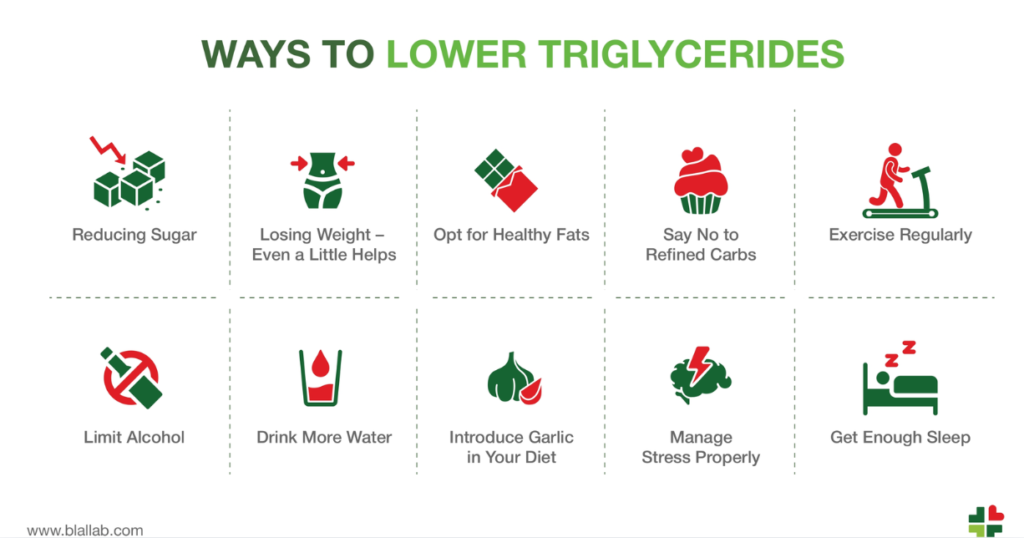
Triglycerides can be lowered naturally by reducing sugar and refined carbs, increasing fiber intake, eating omega-3-rich foods, and maintaining a healthy weight.
Lifestyle Factors That Matter
1. Physical activity
- Burns triglycerides as energy
- Improves metabolism
2. Weight management
Even modest weight loss can significantly reduce levels.
3. Alcohol reduction
Alcohol strongly increases triglyceride production.
4. Sleep quality
Poor sleep disrupts metabolic regulation.
When to Seek Medical Advice
High triglycerides may require medical attention if:
- Levels remain elevated despite diet changes
- There is a family history of heart disease
- Other lipid abnormalities are present
- Symptoms of metabolic syndrome appear
Internal Linking Opportunities
This topic connects well with:
- Insulin resistance and metabolic syndrome
- Cardiovascular disease prevention
- Liver fat metabolism (NAFLD)
- Cholesterol regulation
- Anti-inflammatory nutrition
Conclusion
Lowering triglycerides naturally is strongly influenced by dietary choices and lifestyle habits. Foods rich in omega-3 fatty acids, fiber, and healthy fats—such as fatty fish, oats, nuts, and olive oil—play a key role in improving lipid metabolism and supporting cardiovascular health.
Combined with reduced sugar intake, regular activity, and healthy weight management, these strategies can significantly improve heart health over time.
Important Disclaimer: This article is for educational purposes only and should not replace professional medical advice. Individuals with high triglycerides or metabolic disorders should consult a healthcare provider for personalized treatment.