Nails are more than just a canvas for polish; they are windows into our overall health. That subtle ridge, unexpected white spot, or sudden brittleness isn’t just a cosmetic annoyance—it can be your body’s early warning system for nutrient gaps, stress, or underlying conditions. In a world obsessed with manicures and gel extensions, most people overlook what their nails are quietly signaling. This guide dives deep into the science of nail health, common changes that reveal internal issues, practical ways to read your nails, and natural remedies plus daily habits to keep them strong, smooth, and naturally beautiful. Whether you’re noticing changes after pregnancy, illness, or simply want to prevent problems, you’ll learn exactly what to watch for and how to support nail (and whole-body) wellness from the inside out. No scary diagnoses—just clear, actionable insights backed by dermatology and nutrition science.
What Healthy Nails Actually Look Like
Before spotting problems, know the baseline. Healthy nails are smooth, pinkish, and slightly curved. They grow about 3 mm per month on fingers and slightly slower on toes. The lunula—the white half-moon at the base—should be visible on most fingers and pale white. The cuticle forms a tight seal, and the nail surface has a natural sheen without deep grooves.
Dermatologists use the “nail exam” as a quick health snapshot because nails are made of keratin, the same protein in hair and skin. Any disruption in blood flow, nutrients, or hormones shows up here first since nails grow slowly and record changes over weeks or months.
Common Nail Changes and What They Reveal About Your Health
Your nails can highlight everything from vitamin shortages to more serious signals. Here’s what science says:
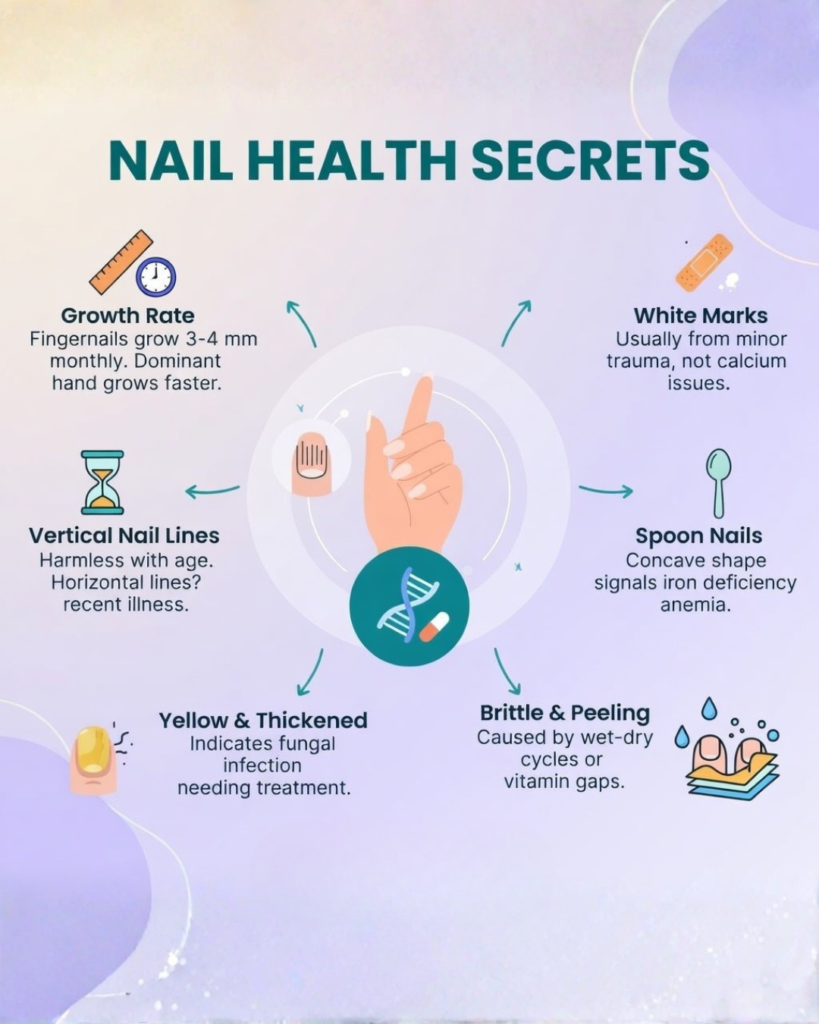
Brittle or Splitting Nails Often linked to low biotin, iron, or thyroid function. A 2019 study in the Journal of Cutaneous Medicine found that up to 40% of people with hypothyroidism notice nail brittleness. Dehydration and frequent hand-washing (common in caregivers or healthcare workers) make it worse.
White Spots (Leukonychia) Usually not serious—often from minor trauma or zinc deficiency. Persistent spots across multiple nails may point to low calcium or protein intake.
Yellow or Thickened Nails Can signal fungal infections, but also respiratory issues or chronic sinus problems in rare cases. Smokers frequently see yellowing from reduced circulation.
Beau’s Lines (Horizontal Grooves) These “stress lines” appear after high fever, chemotherapy, or severe illness. They mark the exact time your body paused nail growth—great for dating a health event.
Vertical Ridges Common with age due to slower cell turnover, but deep ridges can indicate poor nutrient absorption or dehydration. Arthritis or peripheral vascular issues sometimes contribute.
Spoon-Shaped Nails (Koilonychia) A classic sign of iron-deficiency anemia. The nail dips in the center like a spoon—reversible once iron levels normalize.
Clubbing (Rounded, Bulbous Tips) Linked to low oxygen levels in the blood, seen in lung or heart conditions. Always worth a medical check if new.
Pitting or Small Dents Often an early flag for psoriasis or alopecia areata—autoimmune conditions affecting skin and nails.
These changes appear before other symptoms, giving you time to act. Always pair nail observation with how you feel overall and consult a doctor for persistent issues.
The Science of Nail Growth and Why It Reflects Whole-Body Health
Nails grow from the matrix under the cuticle, fed by tiny blood vessels. Anything affecting circulation, protein synthesis, or inflammation shows here. Omega-3 fatty acids reduce inflammation that can weaken nails, while collagen and keratin-building nutrients (biotin, silica, zinc) directly support structure. A 2022 review in Nutrients confirmed that correcting deficiencies improves nail strength in 80% of cases within 3–6 months.
Hormones play a role too—pregnancy often speeds growth and strengthens nails thanks to increased blood flow, while menopause can thin them due to dropping estrogen.
Natural Remedies and DIY Treatments for Stronger, Healthier Nails
Support your nails from the inside and outside with these simple, evidence-based remedies. All use ingredients you likely have at home.
1. Biotin-Rich Overnight Nail Mask
Biotin (vitamin B7) is the most researched nutrient for nail health.
Ingredients
- 1 tablespoon coconut oil
- 3 drops tea tree oil (antifungal)
- Contents of 1 biotin capsule (or 2,500 mcg liquid)
Step-by-Step
- Warm coconut oil until liquid.
- Mix in tea tree oil and biotin.
- Massage into clean, dry nails and cuticles.
- Slip on cotton gloves and leave overnight.
- Rinse in the morning. Use 3–4 times weekly.
2. Apple Cider Vinegar Soak for Cuticle Health
Balances pH and fights bacteria.
Ingredients
- ½ cup warm water
- ¼ cup raw apple cider vinegar
- 1 teaspoon honey (soothing)
Step-by-Step
- Mix ingredients in a small bowl.
- Soak fingertips 10 minutes.
- Gently push back cuticles with a wooden stick.
- Moisturize immediately. Do twice weekly.
3. Eggshell and Olive Oil Strengthener
Eggshells provide natural calcium and silica.
Ingredients
- Powder from 1 clean, dried eggshell
- 2 tablespoons olive oil
Step-by-Step
- Bake eggshell at 200°F for 10 minutes, then grind to powder.
- Stir into olive oil to form a paste.
- Apply to nails, massage 2 minutes.
- Leave 15 minutes, then rinse. Use once weekly.
4. Green Tea Rinse for Anti-Inflammatory Shine
Antioxidants protect the nail matrix.
Ingredients
- 1 green tea bag
- 1 cup hot water
Step-by-Step
- Steep tea 5 minutes and cool.
- Soak nails 10 minutes daily.
- Pat dry and apply cuticle oil.
Daily Habits to Keep Nails as Healthy as Your Overall Wellness
- Eat a rainbow plate: leafy greens, nuts, eggs, salmon, and sweet potatoes supply biotin, zinc, iron, and protein.
- Wear gloves for wet work and gardening to prevent trauma.
- Moisturize cuticles twice daily with jojoba or argan oil—never cut them.
- File in one direction only to avoid splitting.
- Stay hydrated (aim for half your body weight in ounces of water daily).
- Limit gel manicures to every 3–4 weeks and always use a base coat.
- Get bloodwork annually to catch deficiencies early.
When to See a Doctor About Nail Changes
If you notice sudden clubbing, dark streaks under the nail (possible melanoma), or changes with fatigue, weight loss, or joint pain, schedule an appointment. Dermatologists or primary-care doctors can run simple tests that often resolve the issue quickly.
Common Mistakes That Harm Nail Health
- Overusing acetone removers—they dry out nails.
- Picking at cuticles—increases infection risk.
- Ignoring diet while chasing topical fixes.
- Wearing tight shoes (for toenails)—leads to ingrown or fungal issues.
- Skipping sunscreen on hands—UV damage weakens nails over time.
Customizing Nail Care for Your Life Stage
- Pregnancy: Add extra protein and prenatal vitamins; nails often improve naturally.
- Athletes: Silica-rich horsetail tea (1 cup daily) supports keratin.
- Vegans: Focus on plant sources of iron (pair with vitamin C) and consider a B-complex.
- Over 50: Collagen peptides (10 g daily in coffee) improve nail thickness per clinical studies.
Conclusion: Listen to What Your Nails Are Telling You
Nails are more than just a canvas for polish; they are windows into our overall health that deserve attention beyond color trends. By understanding common changes, supporting them with nutrient-rich foods and simple DIY remedies, and building smart daily habits, you can turn potential warning signs into opportunities for better wellness. Strong, healthy nails aren’t just beautiful—they’re proof your body is thriving from the inside out. Start tonight with one remedy or dietary tweak and notice the difference in weeks. Your nails (and the rest of you) will thank you. Save this guide, share it with friends comparing manicure selfies, and keep using your nails as the powerful health check they truly are.