Meta Description: Learn the silent warning signs of high cholesterol, early symptoms, risk factors, and how to detect cholesterol issues before serious cardiovascular disease develops.
High cholesterol is often called a “silent condition” because it rarely causes obvious symptoms in its early stages. Many people discover it only after a routine blood test or when complications such as heart disease begin to appear.
Understanding the silent warning signs of high cholesterol is essential because early detection can significantly reduce the risk of heart attack, stroke, and other cardiovascular problems.
In this article, you’ll learn how high cholesterol develops, subtle signs to watch for, key risk factors, and how it is diagnosed and managed.
What Is High Cholesterol?
Cholesterol is a waxy, fat-like substance found in the blood. The body needs it to build cells and produce hormones, but too much can become harmful.
Types of cholesterol
- LDL (low-density lipoprotein): “bad” cholesterol that builds up in arteries
- HDL (high-density lipoprotein): “good” cholesterol that removes excess cholesterol
- Triglycerides: another type of fat that contributes to cardiovascular risk
Why high cholesterol is dangerous
Excess LDL cholesterol can:
- Build up in artery walls
- Form plaques
- Narrow blood vessels
- Reduce blood flow to organs
Featured Snippet: What are the early signs of high cholesterol?
High cholesterol usually has no obvious early symptoms, but subtle warning signs may include chest discomfort, fatigue, yellowish skin deposits, and circulation problems that indicate plaque buildup in arteries.
Why High Cholesterol Is Often “Silent”
Unlike infections or injuries, high cholesterol does not usually cause pain or immediate discomfort.
Reasons it goes unnoticed
- Develops slowly over years
- Does not directly affect nerve endings
- Symptoms appear only after complications develop
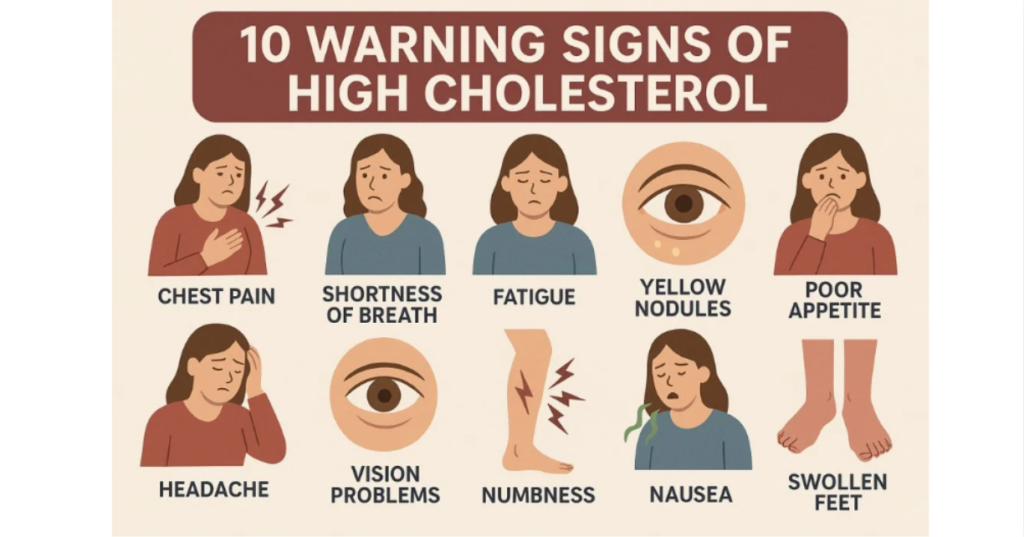
Silent Warning Signs of High Cholesterol
Although often asymptomatic, there are indirect signs that may indicate elevated cholesterol levels.
1. Chest discomfort or pressure
This may occur when cholesterol plaques narrow coronary arteries.
- May feel like heaviness
- Can worsen with physical activity
2. Fatigue or reduced energy
Poor circulation can reduce oxygen delivery to tissues.
- Feeling unusually tired
- Reduced exercise tolerance
3. Yellowish skin deposits (xanthomas)
Fat deposits under the skin may appear as:
- Yellow bumps around eyes
- Thickened skin areas
- Deposits on elbows or knees
4. Numbness or tingling in extremities
Reduced blood flow may affect nerve function.
- Tingling in hands or feet
- Cold extremities
5. Vision changes (rare cases)
Cholesterol deposits can sometimes affect small blood vessels in the eyes.
Featured Snippet: Can high cholesterol cause symptoms?
High cholesterol usually does not cause symptoms in early stages, but in advanced cases it may lead to chest pain, fatigue, poor circulation, and visible fatty deposits under the skin.
Major Risk Factors for High Cholesterol
1. Diet high in unhealthy fats
- Fried foods
- Processed meats
- Trans fats
- Excess sugar
2. Sedentary lifestyle
Lack of physical activity lowers HDL (“good”) cholesterol.
3. Genetics
Some individuals inherit a condition called familial hypercholesterolemia.
4. Obesity
Excess body fat increases LDL and triglyceride levels.
5. Smoking and alcohol
- Smoking damages blood vessels
- Alcohol can increase triglycerides
How High Cholesterol Develops
Step 1: Increased LDL levels
Bad cholesterol begins to rise in the bloodstream.
Step 2: Arterial plaque formation
LDL deposits stick to artery walls.
Step 3: Narrowing of blood vessels
Blood flow becomes restricted.
Step 4: Cardiovascular risk increases
Higher risk of:
- Heart attack
- Stroke
- Peripheral artery disease
Featured Snippet: What causes high cholesterol?
High cholesterol is caused by a combination of unhealthy diet, lack of exercise, genetics, obesity, smoking, and metabolic conditions that increase LDL and triglyceride levels in the blood.
Diagnosis of High Cholesterol
1. Blood test (lipid profile)
Measures:
- Total cholesterol
- LDL levels
- HDL levels
- Triglycerides
2. Risk assessment
Doctors evaluate:
- Age
- Family history
- Blood pressure
- Lifestyle factors
Prevention and Management
1. Dietary changes
Focus on:
- Fruits and vegetables
- Whole grains
- Healthy fats (olive oil, nuts)
- Omega-3 rich foods
2. Physical activity
- At least 150 minutes of moderate exercise weekly
- Improves HDL levels
3. Weight management
Even small weight loss can improve cholesterol levels.
4. Medication (if needed)
Doctors may prescribe:
- Statins
- Cholesterol absorption inhibitors
- Other lipid-lowering agents
Internal Linking Opportunities
This topic connects well with:
- Cardiovascular disease prevention
- Blood circulation and artery health
- Healthy diet and nutrition for heart health
- Metabolic syndrome and obesity
- Stroke and heart attack risk factors
Conclusion
High cholesterol is a silent but serious condition that often develops without obvious symptoms. However, subtle warning signs such as fatigue, chest discomfort, poor circulation, and fatty skin deposits may indicate underlying cholesterol imbalance.
Because it progresses quietly, regular blood testing is essential for early detection. With lifestyle changes, proper diet, and medical support when needed, cholesterol levels can often be effectively managed, reducing the risk of severe cardiovascular disease.
Recognizing these silent warning signs early gives you a powerful advantage in protecting your long-term heart health.