Meta Description: Learn about hemoglobin structure, function, oxygen transport, and its clinical importance in anemia, blood disorders, and overall health assessment.
Hemoglobin is one of the most essential molecules in the human body, yet many people only hear about it during a blood test. This iron-rich protein plays a central role in life itself by transporting oxygen from the lungs to tissues and carrying carbon dioxide back for elimination.
Understanding hemoglobin structure, function, and clinical importance helps explain why even small changes in its levels can significantly affect energy, health, and organ function.
In this article, we’ll explore how hemoglobin is built, how it works, and why it is so important in medical diagnosis and disease detection.
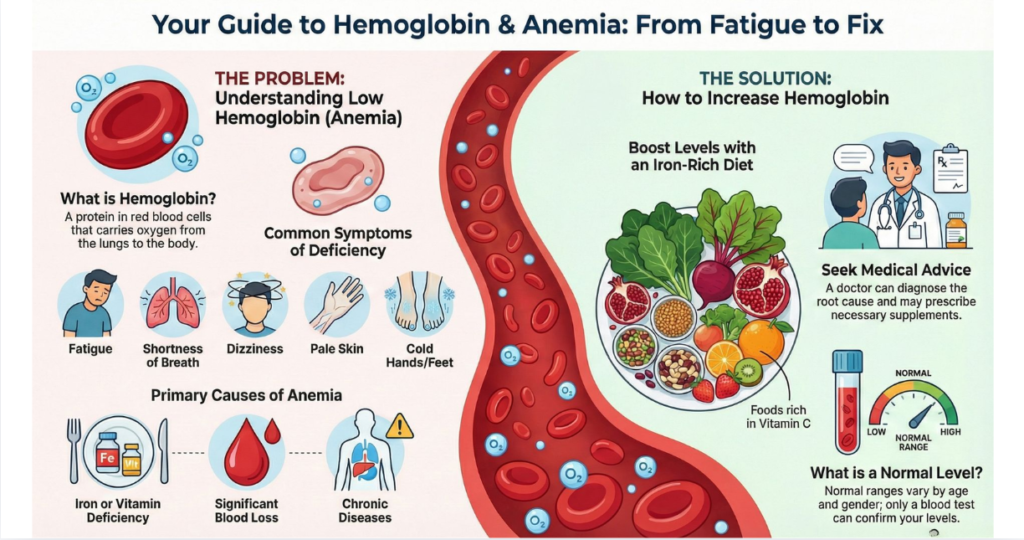
What Is Hemoglobin?
Hemoglobin is a protein found in red blood cells (erythrocytes) that binds and transports oxygen throughout the body.
Basic composition
Hemoglobin is made of:
- Four protein subunits (globin chains)
- Four heme groups containing iron (Fe²⁺)
Why iron is important
Iron allows hemoglobin to:
- Bind oxygen reversibly
- Give blood its red color
- Support efficient oxygen transport
Featured Snippet: What is the main function of hemoglobin?
Hemoglobin’s main function is to transport oxygen from the lungs to body tissues and carry carbon dioxide back to the lungs for exhalation.
Structure of Hemoglobin
Hemoglobin has a highly specialized structure that enables efficient gas exchange.
1. Globin chains
- Two alpha chains
- Two beta chains (in adult hemoglobin HbA)
These chains form a stable protein structure.
2. Heme groups
Each globin chain contains a heme group with:
- One iron atom (Fe²⁺)
- Oxygen-binding site
3. Quaternary structure
Hemoglobin is a tetramer, meaning it has four subunits working together cooperatively.
How Hemoglobin Works in the Body
Hemoglobin functions through a continuous cycle of oxygen loading and unloading.
Step 1: Oxygen uptake in the lungs
- Oxygen enters the bloodstream
- Hemoglobin binds oxygen molecules
Step 2: Transport through blood
- Oxygen-rich blood circulates to tissues
- Hemoglobin carries oxygen efficiently
Step 3: Oxygen release in tissues
- Oxygen is released where it is needed
- Cells use oxygen for energy production
Step 4: Carbon dioxide transport
- Hemoglobin carries some CO₂ back to lungs
- CO₂ is exhaled
Featured Snippet: How does hemoglobin transport oxygen?
Hemoglobin transports oxygen by binding it to iron in its heme groups in the lungs and releasing it in body tissues where oxygen levels are lower.
Types of Hemoglobin
Different forms of hemoglobin exist depending on development and health status.
1. Adult hemoglobin (HbA)
- Most common form in adults
- Composed of alpha and beta chains
2. Fetal hemoglobin (HbF)
- Present in fetuses and newborns
- Has higher oxygen affinity
3. Abnormal hemoglobins
Examples include:
- HbS (sickle cell hemoglobin)
- HbC
- Thalassemia variants
Clinical Importance of Hemoglobin
Hemoglobin levels are a key indicator of overall health.
1. Anemia detection
Low hemoglobin may indicate:
- Iron deficiency anemia
- Vitamin B12 deficiency
- Chronic disease
2. Polycythemia
High hemoglobin levels may suggest:
- Dehydration
- Bone marrow disorders
- Chronic hypoxia
3. Oxygen transport efficiency
Hemoglobin levels directly affect:
- Energy levels
- Brain function
- Muscle performance
Featured Snippet: Why is hemoglobin important in blood tests?
Hemoglobin is important in blood tests because it helps detect anemia, assess oxygen-carrying capacity, and identify blood disorders or chronic diseases.
Symptoms of Abnormal Hemoglobin Levels
Low hemoglobin (anemia symptoms)
- Fatigue
- Pale skin
- Dizziness
- Shortness of breath
- Weakness
High hemoglobin symptoms
- Headache
- Dizziness
- Blurred vision
- Increased blood viscosity
How Hemoglobin Levels Are Measured
1. Complete blood count (CBC)
Measures:
- Hemoglobin concentration
- Red blood cell count
- Hematocrit levels
2. Normal ranges (approximate)
- Men: 13.5–17.5 g/dL
- Women: 12.0–15.5 g/dL
- Children: varies by age
Factors Affecting Hemoglobin Levels
1. Nutrition
- Iron intake
- Vitamin B12
- Folate
2. Oxygen demand
- High altitude
- Physical activity
3. Medical conditions
- Kidney disease
- Chronic inflammation
- Blood disorders
Advanced Insights: Hemoglobin and Oxygen Affinity
1. Cooperative binding
When one oxygen molecule binds, hemoglobin becomes easier to bind with more oxygen.
2. Bohr effect
- Lower pH (more acidic) = oxygen released more easily
- Higher CO₂ levels = increased oxygen delivery
3. Allosteric regulation
Hemoglobin changes shape to optimize oxygen transport.
Internal Linking Opportunities
This topic connects well with:
- Anemia and iron deficiency
- Blood circulation and oxygen transport
- Complete blood count (CBC) interpretation
- Respiratory system and gas exchange
- Nutritional deficiencies and fatigue
Conclusion
Hemoglobin is a vital protein that ensures oxygen reaches every cell in the body while supporting carbon dioxide removal. Its unique structure of iron-containing heme groups and cooperative globin chains allows efficient gas transport that sustains life.
Clinically, hemoglobin levels provide important insights into conditions like anemia, polycythemia, and chronic disease. Understanding how it works helps you better interpret blood tests and recognize early signs of imbalance.
By supporting healthy nutrition, oxygenation, and medical monitoring when needed, you can maintain optimal hemoglobin levels and overall energy and health.