Meta Description: Explore insulin resistance, its biological cycle, causes, mechanisms, and long-term health effects including diabetes and metabolic disorders.
Insulin resistance is a metabolic condition in which the body’s cells become less responsive to insulin, the hormone responsible for regulating blood glucose levels. Over time, this dysfunction can disrupt energy balance and increase the risk of chronic diseases such as type 2 diabetes and cardiovascular disease.
Understanding the insulin resistance cycle helps explain how early metabolic imbalance progresses into more serious health conditions.
What Is Insulin Resistance?
Insulin resistance occurs when muscle, fat, and liver cells do not respond properly to insulin, forcing the pancreas to produce more of it to maintain normal blood sugar levels.
Normal insulin function
- Insulin helps glucose enter cells
- Blood sugar levels remain stable
- Excess glucose is stored as glycogen or fat
Featured Snippet: What is insulin resistance?
Insulin resistance is a condition where the body’s cells do not respond effectively to insulin, causing higher blood sugar levels and increased insulin production.
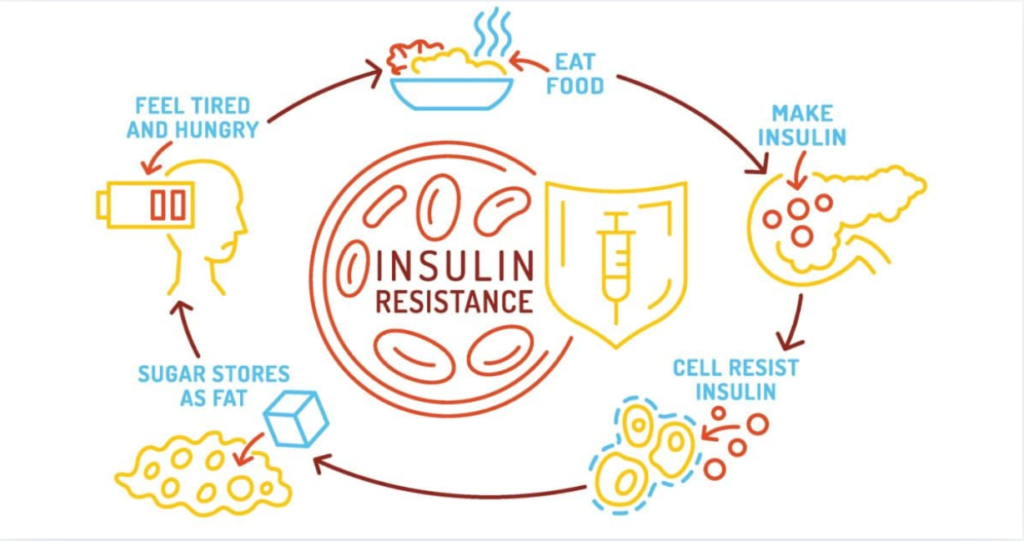
The Insulin Resistance Cycle (Step-by-Step)
Step 1: Excess glucose intake or metabolic stress
Common triggers include:
- High-sugar diets
- Ultra-processed foods
- Sedentary lifestyle
- Excess body fat
Step 2: Increased insulin production
The pancreas compensates by releasing more insulin to control blood sugar.
Step 3: Cellular desensitization
Cells gradually become less responsive to insulin due to constant exposure.
Step 4: Persistent high insulin levels (hyperinsulinemia)
The body maintains elevated insulin levels to manage glucose.
Step 5: Blood sugar imbalance
Eventually:
- Blood glucose begins to rise
- Pancreas becomes overworked
Step 6: Progression toward type 2 diabetes
If unresolved, this leads to:
Type 2 diabetes
Featured Snippet: How does insulin resistance develop?
Insulin resistance develops when repeated high insulin demand leads cells to become less responsive, causing the pancreas to overproduce insulin and eventually disrupting blood sugar control.
Major Causes of Insulin Resistance
1. Excess body fat (especially visceral fat)
Fat tissue releases inflammatory signals that interfere with insulin signaling.
2. Poor diet
High intake of:
- Sugary drinks
- Refined carbohydrates
- Processed foods
3. Physical inactivity
Muscle activity helps glucose uptake; inactivity reduces this effect.
4. Chronic inflammation
Low-grade inflammation disrupts insulin receptor function.
5. Hormonal imbalance
Conditions such as:
- Polycystic ovary syndrome (PCOS)
- Cortisol dysregulation (stress)
6. Genetic susceptibility
Family history increases risk.
Featured Snippet: What causes insulin resistance?
Insulin resistance is caused by excess body fat, poor diet, inactivity, chronic inflammation, hormonal imbalance, and genetic predisposition.
Mechanisms Behind Insulin Resistance
1. Impaired insulin receptor signaling
Cells reduce responsiveness to insulin signals.
2. Glucose transport dysfunction
Reduced movement of glucose transporters (GLUT-4) into cell membranes.
3. Liver glucose overproduction
The liver continues releasing glucose despite high insulin levels.
4. Mitochondrial dysfunction
Reduced energy metabolism efficiency in cells.
5. Inflammatory cytokines
Inflammation interferes with insulin pathways.
Featured Snippet: What happens in insulin resistance?
In insulin resistance, cells fail to respond properly to insulin, leading to impaired glucose uptake, increased blood sugar, and overproduction of insulin by the pancreas.
Health Consequences of Insulin Resistance
1. Type 2 diabetes progression
Sustained insulin resistance can exhaust pancreatic function.
2. Cardiovascular disease
Associated with:
- High triglycerides
- High blood pressure
- Atherosclerosis risk
3. Fatty liver disease
Excess glucose is stored as fat in the liver.
4. Hormonal disorders
- Irregular menstrual cycles
- PCOS symptoms
5. Weight gain cycle
High insulin levels promote fat storage.
Featured Snippet: Why is insulin resistance dangerous?
Insulin resistance is dangerous because it increases the risk of type 2 diabetes, cardiovascular disease, fatty liver disease, and hormonal imbalance.
Early Signs of Insulin Resistance
Common symptoms
- Fatigue after meals
- Increased hunger
- Weight gain (especially abdominal)
- Brain fog
- Sugar cravings
Skin-related signs
- Darkened skin folds (acanthosis nigricans)
- Skin tags
Featured Snippet: What are signs of insulin resistance?
Signs of insulin resistance include fatigue, weight gain, sugar cravings, brain fog, and darkened skin patches in body folds.
Diagnosis of Insulin Resistance
1. Blood glucose testing
- Fasting glucose
- HbA1c levels
2. Insulin levels
- Fasting insulin measurement
3. HOMA-IR index
Used to estimate insulin resistance severity.
4. Lipid profile
Often shows elevated triglycerides.
Management and Reversal Strategies
1. Dietary changes
- Reduce refined sugar and processed carbs
- Increase fiber intake
- Focus on whole foods
2. Physical activity
- Resistance training
- Aerobic exercise
- Daily movement
3. Weight management
Even modest weight loss improves insulin sensitivity.
4. Sleep optimization
Poor sleep worsens insulin regulation.
5. Stress management
Chronic stress increases cortisol, which affects glucose metabolism.
Featured Snippet: Can insulin resistance be reversed?
Yes, insulin resistance can often be improved or reversed through lifestyle changes such as diet modification, regular exercise, weight management, and stress reduction.
Prevention Strategies
Key habits
- Balanced low-glycemic diet
- Regular exercise
- Adequate sleep
- Avoiding excessive sugar intake
- Routine health monitoring
Internal Linking Opportunities
This topic connects well with:
- Type 2 diabetes mechanisms
- Metabolic syndrome
- Obesity and fat metabolism
- Hormonal disorders (PCOS)
- Cardiovascular risk factors
Conclusion
The insulin resistance cycle is a progressive metabolic process where cells gradually lose sensitivity to insulin, leading to increased insulin production and eventually disrupted blood sugar control. Without intervention, it can progress to type 2 diabetes and other chronic diseases.
However, with early recognition and lifestyle modifications, insulin sensitivity can often be significantly improved, helping restore metabolic balance and long-term health.
Important Disclaimer: This article is for educational purposes only and should not replace professional medical advice. If you suspect insulin resistance or metabolic disorders, consult a qualified healthcare provider.