Meta Description: Learn the key differences between Type 1 and Type 2 diabetes, including causes, symptoms, risk factors, and how each condition affects blood sugar regulation.
Diabetes mellitus is one of the most common long-term health conditions worldwide. Although people often refer to it as a single disease, there are different types with distinct causes and management approaches—most commonly Type 1 and Type 2 diabetes.
Understanding the differences is essential for early recognition, proper management, and prevention of complications.
Featured Snippet: What is the difference between Type 1 and Type 2 diabetes?
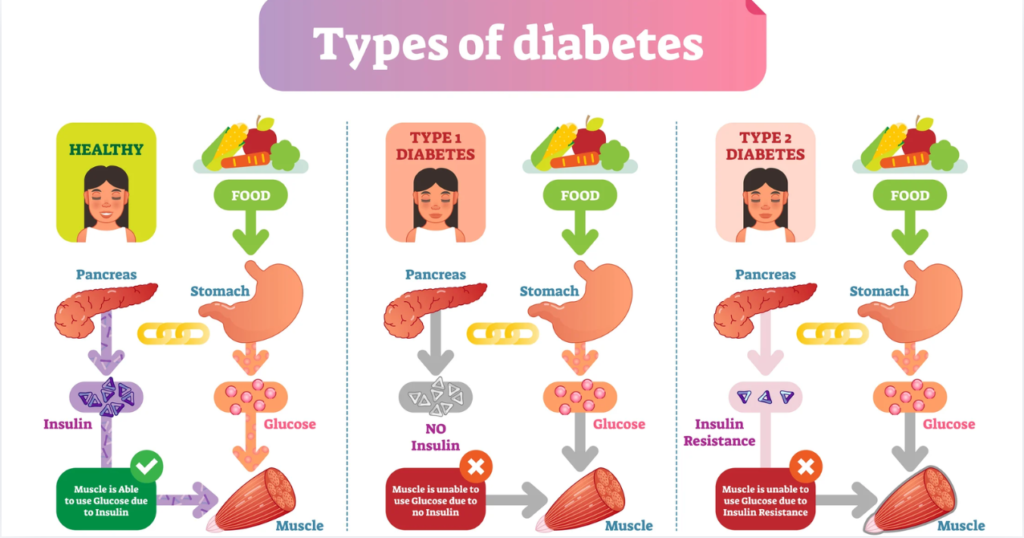
Type 1 diabetes is an autoimmune condition where the body stops producing insulin, while Type 2 diabetes is a metabolic condition where the body becomes resistant to insulin or does not produce enough of it.
The Role of Insulin in Blood Sugar Control
Insulin helps move glucose from the bloodstream into cells for energy.
When insulin is absent or ineffective, blood sugar levels rise, leading to diabetes.
Type 1 Diabetes
Type 1 diabetes
Key characteristics
- Usually develops in childhood or young adulthood (but can occur at any age)
- Autoimmune destruction of pancreatic beta cells
- Little to no insulin production
Common symptoms
- Frequent urination
- Excessive thirst
- Unexplained weight loss
- Extreme fatigue
- Blurred vision
Management
- Lifelong insulin therapy
- Blood glucose monitoring
- Careful carbohydrate management
Featured Snippet: Can Type 1 diabetes be prevented?
No. Type 1 diabetes is an autoimmune condition and currently cannot be prevented.
Type 2 Diabetes
Type 2 diabetes
Key characteristics
- More common in adults, but increasingly seen in younger people
- Strongly linked to lifestyle and genetic factors
- Develops gradually over time
Risk factors
- Overweight or obesity
- Physical inactivity
- Family history
- Poor diet high in processed foods
- Metabolic syndrome
Related condition
Metabolic syndrome
Common symptoms
- Increased thirst
- Frequent urination
- Fatigue
- Slow wound healing
- Recurrent infections
Management
- Lifestyle changes (diet and exercise)
- Oral medications
- Sometimes insulin therapy
Featured Snippet: Can Type 2 diabetes be reversed?
Type 2 diabetes may be managed effectively and, in some cases, put into remission through weight loss, diet changes, and lifestyle interventions under medical supervision.
Key Differences Between Type 1 and Type 2 Diabetes
| Feature | Type 1 Diabetes | Type 2 Diabetes |
|---|---|---|
| Cause | Autoimmune destruction of insulin cells | Insulin resistance and/or reduced insulin production |
| Insulin production | Very low or none | Initially normal/high, later reduced |
| Onset | Sudden | Gradual |
| Age group | Often childhood/young adults | Mostly adults (increasing in youth) |
| Prevention | Not preventable | Often preventable/delayable |
| Treatment | Insulin required | Lifestyle + medication ± insulin |
Complications of Uncontrolled Diabetes
If blood sugar remains high over time, both types can lead to complications.
Possible complications
- Cardiovascular disease
- Kidney damage
- Nerve damage (neuropathy)
- Vision problems
- Poor wound healing
Related condition
Diabetic neuropathy
Warning Signs That Should Not Be Ignored
Seek medical attention if symptoms include:
- Extreme thirst and frequent urination
- Unexplained weight loss
- Persistent fatigue
- Blurred vision
- Slow-healing wounds
Lifestyle Factors That Support Blood Sugar Health (Especially Type 2)
Balanced diet
Focus on:
- Whole grains
- Lean proteins
- Fiber-rich vegetables
- Healthy fats
Regular physical activity
Helps improve insulin sensitivity.
Weight management
Even modest weight loss can improve glucose control in Type 2 diabetes.
Stress management
Chronic stress can affect blood sugar regulation.
Common Misconceptions
Myth: Eating sugar directly causes diabetes
Sugar alone does not cause diabetes, but excessive intake can contribute to weight gain and insulin resistance.
Myth: People with diabetes cannot eat carbohydrates
Carbohydrates can be included in a balanced diet with proper portion control.
Myth: Only older adults get diabetes
Type 1 can occur in children, and Type 2 is increasingly seen in younger populations.
Internal Linking Opportunities
This topic connects well with:
- Metabolic health and inflammation
- Insulin resistance and diet
- Cardiovascular risk factors
- Kidney health and complications
- Nutrition and lifestyle prevention strategies
Conclusion
Type 1 and Type 2 diabetes are distinct conditions with different causes, progression patterns, and treatment approaches. While Type 1 is an autoimmune disorder requiring lifelong insulin therapy, Type 2 is largely influenced by lifestyle and metabolic factors and can often be managed or improved with early intervention.
Understanding these differences helps improve awareness, early detection, and better long-term health outcomes.
Important Disclaimer: This article is for educational purposes only and should not replace professional medical advice. Anyone experiencing symptoms of diabetes should consult a qualified healthcare professional for proper diagnosis and care.