Meta Description: Discover how sensory play supports your baby’s brain development, learning, motor skills, and emotional growth during the critical early years of life.
From touching soft fabrics to splashing in water and exploring different sounds, babies learn about the world through their senses. Sensory play is more than just fun—it is a powerful tool that helps shape brain development during the earliest stages of life.
Research shows that sensory experiences help build neural connections, support cognitive growth, and encourage the development of motor, language, and social skills.
Featured Snippet: How does sensory play help a baby’s brain?
Sensory play stimulates multiple areas of a baby’s brain, helping strengthen neural connections involved in learning, memory, language, motor skills, and emotional development.
What Is Sensory Play?
Sensory play refers to activities that engage one or more of the senses.
The senses involved
- Touch
- Sight
- Hearing
- Smell
- Taste (when age-appropriate and safe)
- Movement and body awareness
Through sensory exploration, babies gather information about their environment and learn how to interact with it.
Why Early Experiences Matter
A baby’s brain develops rapidly during the first years of life.
Related concept
Neuroplasticity
During infancy, millions of neural connections are formed as babies interact with the world around them.
Every sensory experience helps strengthen important pathways that support future learning.
1. Builds Neural Connections
Sensory experiences activate different regions of the brain simultaneously.
What happens?
When babies:
- Touch objects
- Hear sounds
- Observe colors
- Explore textures
their brains process and integrate information, helping create stronger neural networks.
Featured Snippet: Why is sensory play important for brain development?
Sensory play helps strengthen neural pathways by encouraging the brain to process and connect information from multiple senses at the same time.
2. Supports Cognitive Development
Sensory play encourages babies to:
- Explore
- Experiment
- Observe cause and effect
These early experiences form the foundation for later problem-solving and learning skills.
Examples
A baby shaking a rattle learns:
- Movement creates sound
- Actions produce outcomes
- Objects have predictable properties
3. Encourages Language Development
Language learning begins long before a child speaks their first words.
Sensory experiences support
- Listening skills
- Sound recognition
- Vocabulary development
- Communication
Parents and caregivers who describe sensory experiences help reinforce language pathways.
4. Enhances Motor Skills
Many sensory activities involve movement.
Fine motor skills
Examples:
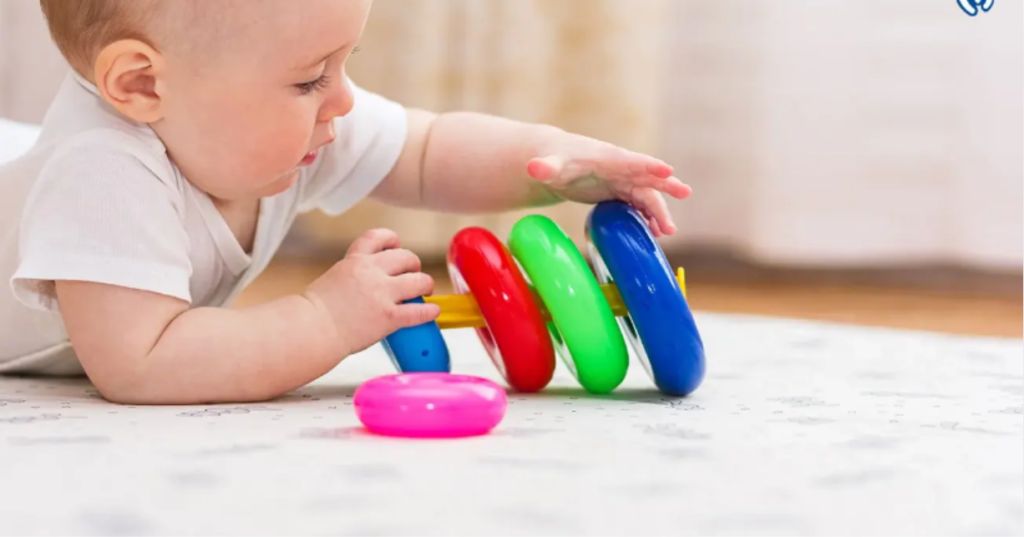
- Grasping toys
- Picking up objects
- Exploring textures
Gross motor skills
Examples:
- Crawling
- Reaching
- Rolling
- Balancing
Related concept
Motor development
5. Supports Emotional Development
Sensory experiences can help babies learn about comfort, self-regulation, and emotional responses.
Benefits may include
- Increased confidence
- Reduced stress
- Improved adaptability
- Positive caregiver interaction
6. Promotes Curiosity and Exploration
Babies are natural scientists.
Sensory play encourages:
- Investigation
- Discovery
- Creativity
- Independent learning
These experiences help develop curiosity that supports lifelong learning.
Examples of Sensory Play Activities
Touch-based activities
- Soft fabrics
- Textured toys
- Water play
Visual activities
- High-contrast images
- Colorful objects
- Safe mirrors
Auditory activities
- Music
- Singing
- Rattles
Movement-based activities
- Tummy time
- Crawling games
- Gentle bouncing
Safety Considerations
Sensory play should always be:
- Age-appropriate
- Closely supervised
- Free from choking hazards
- Safe and non-toxic
Babies explore with their mouths, making safety especially important.
Common Myths About Sensory Play
Myth: Sensory play is only about entertainment
Sensory activities provide important opportunities for brain development and learning.
Myth: Expensive toys are necessary
Simple household items and everyday experiences often provide excellent sensory learning opportunities.
Myth: More stimulation is always better
Babies also need periods of rest and quiet time. Excessive stimulation can be overwhelming.
Signs of Healthy Sensory Development
Many babies demonstrate healthy sensory engagement by:
- Showing curiosity
- Exploring new objects
- Responding to sounds
- Following visual stimuli
- Enjoying interactive play
Individual developmental timelines can vary.
Internal Linking Opportunities
This topic connects well with:
- Infant brain development
- Early childhood learning
- Language development
- Motor skill milestones
- Parent-child bonding
Conclusion
Sensory play is a powerful part of early childhood development. By engaging the senses, babies build neural connections that support learning, language, movement, emotional regulation, and cognitive growth.
Simple, safe, and age-appropriate sensory experiences can help create a rich environment that supports healthy brain development during one of the most important periods of life.
Important Disclaimer: This article is for educational purposes only and should not replace professional medical advice. Parents with concerns about a child’s development should consult a qualified pediatric healthcare professional.