Rinsing raw chicken before cooking may feel like a natural way to clean it, but the truth is, it can actually spread harmful bacteria like Salmonella and Campylobacter around your kitchen. Understanding the risks and adopting safer handling techniques is crucial for protecting your health and preventing foodborne illness.
In this article, you’ll discover why rinsing raw poultry is dangerous, learn safer alternatives, and gain practical strategies to minimize contamination in your kitchen. By following expert advice and simple steps, you can enjoy delicious, safely prepared meals without putting yourself or your loved ones at risk.
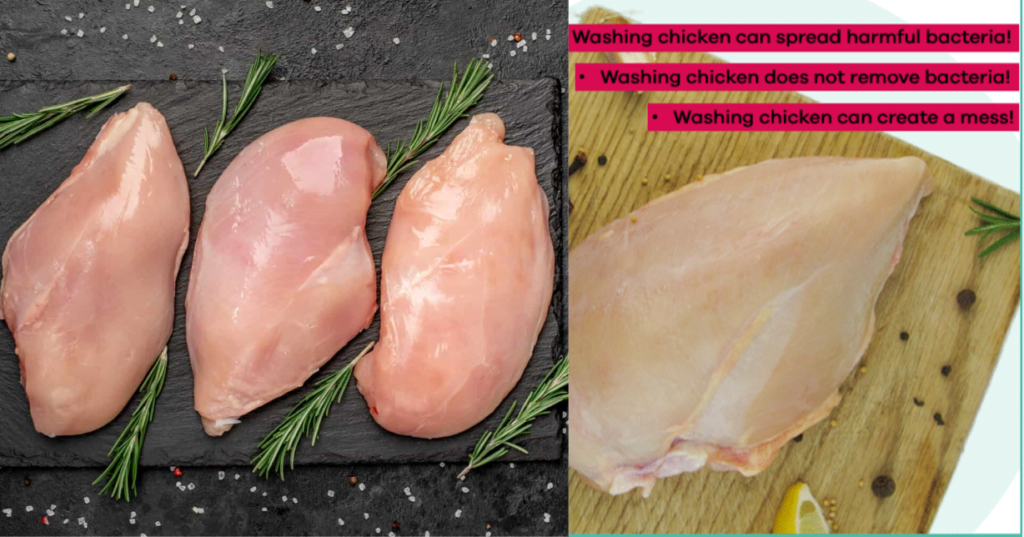
Foundation: Understanding the Risk
Handling raw chicken requires awareness because it can harbor bacteria that cause serious illness.
Why Rinsing Chicken Is Risky
Rinsing chicken may seem harmless, but studies show that water splashing can:
- Spread bacteria up to three feet around the sink
- Contaminate countertops, utensils, and other foods
- Increase the risk of cross-contamination
Even a quick rinse can aerosolize bacteria, making your kitchen surfaces unsafe.
Common Bacteria in Raw Chicken
- Salmonella: Causes diarrhea, fever, and abdominal cramps
- Campylobacter: Leads to gastrointestinal illness and, in rare cases, long-term complications
- E. coli (less common but possible): Can trigger severe infections
These pathogens are not removed by rinsing; cooking to the proper temperature is the only reliable way to kill them.
Safe Handling Practices
Adopting hygienic practices protects you and your household from foodborne illnesses.
Proper Storage
- Keep raw chicken in sealed containers on the bottom shelf of the fridge
- Avoid leaving chicken at room temperature for more than 2 hours
- Separate raw meat from ready-to-eat foods
Hand Hygiene
- Wash hands thoroughly with soap and warm water before and after handling chicken
- Avoid touching other surfaces without cleaning your hands first
Kitchen Surface Safety
- Disinfect cutting boards, countertops, and utensils after contact with raw poultry
- Use separate cutting boards for meat and vegetables
Cooking Chicken Safely
Cooking chicken to the right temperature is more effective than rinsing for killing bacteria.
Temperature Guidelines
- Cook all poultry to an internal temperature of 165°F (74°C)
- Use a reliable meat thermometer to check the thickest part of the chicken
- Avoid partially cooking chicken, which allows bacteria to survive
Cooking Techniques
- Baking, grilling, or pan-frying are safe when proper temperatures are reached
- Avoid washing or pre-cooking chicken in water, as it does not reduce bacteria risk
Resting Period
- Allow cooked chicken to rest for a few minutes to ensure even heat distribution
- Slice only after the internal temperature is safe
Troubleshooting: Avoiding Cross-Contamination
Even with proper cooking, cross-contamination can occur if precautions aren’t taken.
Common Mistakes
- Placing cooked chicken on plates that previously held raw chicken
- Using the same utensils for raw and cooked meat without washing
- Touching refrigerator handles or faucet knobs after handling raw chicken
Preventive Measures
- Designate specific utensils and cutting boards for raw meat
- Clean and sanitize surfaces immediately after use
- Educate all household members about safe poultry handling
Quick Tips
- Use disposable paper towels to clean up juices instead of sponges
- Keep raw meat away from salads, fruits, and ready-to-eat foods
- Store raw chicken in plastic bags to prevent leaks
Next-Level Tips: Enhancing Kitchen Safety
Once you master the basics, you can further reduce risk and boost kitchen hygiene.
Routine Kitchen Hygiene
- Regularly sanitize your sink and faucet handles
- Maintain a clean dish towel rotation to prevent bacterial buildup
- Store disinfectants and sanitizers in accessible locations
Smart Shopping Habits
- Purchase chicken last during grocery trips to minimize time at room temperature
- Check expiration dates carefully
- Prefer vacuum-sealed or properly packaged poultry
Education and Awareness
- Stay updated on food safety guidelines from reliable sources like the CDC or USDA
- Teach children and new cooks the importance of safe poultry handling
- Encourage mindful practices during food prep to instill lasting habits
Conclusion: Safe Practices Save Lives
Rinsing raw chicken may seem harmless, but it significantly increases the risk of spreading harmful bacteria. The safest approach is to handle chicken carefully, cook it to the correct temperature, and practice strict kitchen hygiene.
By adopting these methods, you can protect your household from foodborne illness, enjoy safely prepared meals, and feel confident in your cooking practices. Remember, the key to safe poultry is not rinsing but responsible handling, proper cooking, and vigilant cleaning. Take control of your kitchen safety today and make harmful bacteria a thing of the past.
Important Disclaimer: This article is for informational purposes only and should not replace professional advice. Consult healthcare providers or food safety experts for guidance, especially if you have concerns about foodborne illness or immunocompromised household members.