Collagen is the structural protein that keeps your skin firm, joints flexible, and tissues strong—but its natural production declines with age and lifestyle stressors. The good news? Your daily diet can play a powerful role in rebuilding and protecting collagen levels.
In this guide, you’ll discover how foods for rebuilding collagen can support your skin, joints, and overall tissue health. From essential nutrients to practical meal strategies, you’ll learn how to nourish your body from within and unlock long-term vitality.
Meta description (150–160 characters): Discover the best foods for rebuilding collagen and learn nutritional strategies to support healthy skin, joints, and tissue repair naturally.
Understanding Collagen and Why It Matters
Before diving into foods, it’s important to understand what collagen is and why your body depends on it.
What Is Collagen?
Collagen is the most abundant protein in the human body. It forms the structural framework of:
- Skin (elasticity and firmness)
- Joints and cartilage (mobility and cushioning)
- Bones and connective tissues (strength and stability)
Why Collagen Declines
Collagen production naturally decreases due to:
- Aging
- Sun exposure
- Poor diet
- Smoking and pollution
- Chronic stress
This decline can lead to wrinkles, joint discomfort, and slower tissue repair.
How Nutrition Supports Collagen
Your body doesn’t absorb collagen directly from most foods—it builds it using nutrients like amino acids, vitamin C, and minerals. That’s why focusing on collagen-supporting foods is essential.
Step-by-Step Guide: Building Collagen Through Diet
Creating a collagen-friendly diet doesn’t require complexity. Follow these simple steps to get started.
1. Include Protein-Rich Foods Daily
Collagen is made from amino acids like glycine, proline, and hydroxyproline.
- Lean meats (chicken, turkey)
- Fish and seafood
- Eggs
- Legumes and plant-based proteins
2. Add Vitamin C for Collagen Synthesis
Vitamin C is essential for collagen formation.
- Citrus fruits (oranges, lemons)
- Bell peppers
- Strawberries and kiwi
- Leafy greens
3. Support With Healthy Fats
Healthy fats help maintain skin hydration and elasticity.
- Avocados
- Nuts and seeds
- Olive oil
4. Stay Hydrated
Water is crucial for maintaining skin structure and supporting nutrient transport.
- Aim for consistent hydration throughout the day
- Include hydrating foods like cucumbers and watermelon
Best Foods for Rebuilding Collagen
Certain foods stand out for their ability to support collagen production effectively.
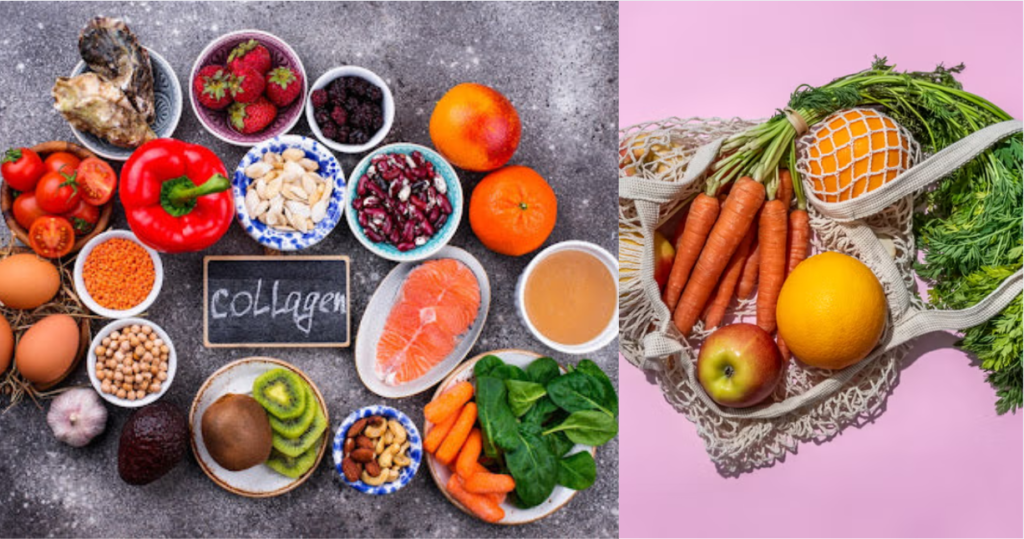
Collagen-Boosting Animal-Based Foods
- Bone broth: Rich in collagen and amino acids
- Chicken skin and fish skin: Natural collagen sources
- Egg whites: High in proline
Plant-Based Collagen Supporters
- Leafy greens: Spinach and kale contain chlorophyll, which may support collagen synthesis
- Berries: Packed with antioxidants that protect collagen from damage
- Garlic: Contains sulfur, essential for collagen production
Key Nutrient-Rich Additions
- Zinc-rich foods: Pumpkin seeds, chickpeas
- Copper sources: Nuts, whole grains
- Silica-containing foods: Bananas, oats
These nutrients act as cofactors in collagen production and tissue repair.
Advanced Strategies to Maximize Collagen Production
Once you’ve built a solid foundation, these strategies can enhance your results.
Combine Nutrients Strategically
Pair foods to maximize absorption and effectiveness:
- Iron-rich foods with vitamin C for better uptake
- Protein sources with vegetables for complete nutrient profiles
Support Gut Health
A healthy gut improves nutrient absorption, which is crucial for collagen synthesis.
- Include probiotics like yogurt or kefir
- Add prebiotic fibers such as garlic, onions, and oats
Reduce Collagen Breakdown
Avoid habits that accelerate collagen loss:
- Limit sugar and processed foods
- Reduce excessive sun exposure
- Avoid smoking
These steps protect existing collagen while supporting new production.
Troubleshooting Common Challenges
Even with the right foods, you may encounter obstacles. Here’s how to address them.
Slow Results
Collagen rebuilding takes time. Be patient and consistent with your diet.
- Track improvements in skin texture and joint comfort
- Focus on long-term habits rather than quick fixes
Dietary Restrictions
If you follow a vegetarian or vegan diet:
- Emphasize plant-based protein and vitamin C-rich foods
- Consider collagen-supporting supplements if needed
Busy Lifestyle
- Prepare simple meals in advance
- Keep nutrient-dense snacks like nuts and fruits accessible
- Choose whole foods over processed options whenever possible
Maximizing Results for Long-Term Health
Sustainable collagen support goes beyond diet alone.
Build a Daily Routine
- Start your day with a nutrient-rich breakfast
- Include balanced meals throughout the day
- Stay consistent with hydration and nutrient intake
Combine With Lifestyle Habits
- Regular exercise improves circulation and tissue repair
- Quality sleep supports hormone balance and collagen synthesis
- Stress management reduces inflammation that can degrade collagen
Explore Related Topics
To deepen your understanding, consider learning about:
- Anti-aging nutrition strategies
- Skin barrier health and hydration
- Joint support and mobility exercises
- Gut health and nutrient absorption
- The role of antioxidants in tissue repair
These interconnected areas enhance your overall results.
Conclusion
Rebuilding collagen isn’t about a single superfood—it’s about a consistent, nutrient-rich approach to eating. By focusing on protein, vitamin C, healthy fats, and supportive minerals, you can naturally enhance your body’s collagen production and protect what you already have.
Start small: add collagen-supporting foods to your meals, stay hydrated, and adopt healthy lifestyle habits. Over time, you’ll notice improvements in your skin, joint comfort, and overall vitality. Your body has the ability to repair and renew—give it the right tools, and you’ll unlock lasting health and resilience.
Important Disclaimer: This article is for informational purposes only and should not replace professional advice. For health-related topics, consult healthcare providers. Individual results may vary.