Meta Description: Learn about hemoglobin, its role in oxygen transport, normal levels, causes of abnormal values, and its clinical importance in health and disease.
Hemoglobin is a vital protein found inside red blood cells that is responsible for transporting oxygen from the lungs to tissues and carrying carbon dioxide back to the lungs for exhalation.
Because of its central role in oxygen delivery, hemoglobin is one of the most important indicators of overall blood health and is routinely measured in medical testing.
What Is Hemoglobin?
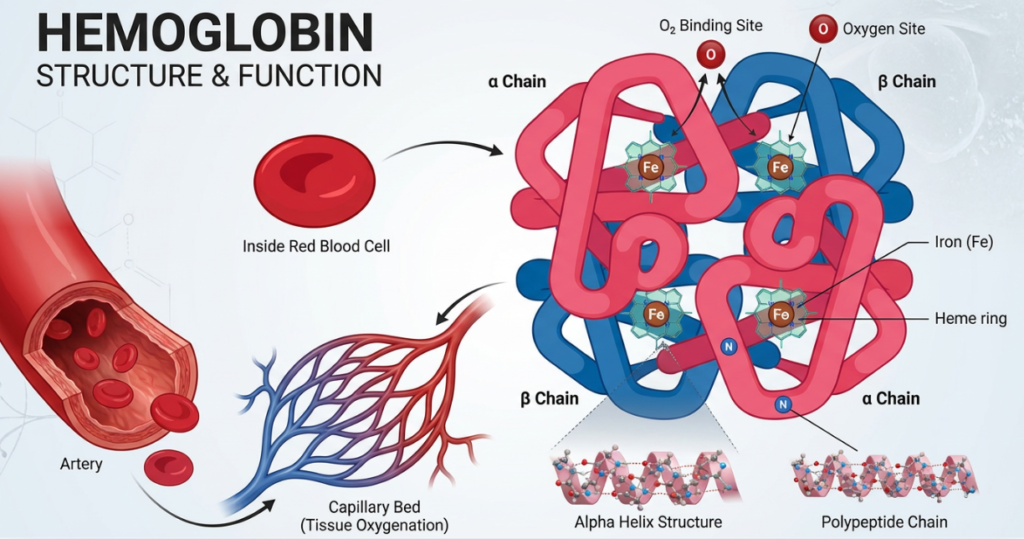
Hemoglobin is an iron-containing protein composed of four subunits, each capable of binding oxygen molecules.
Where it is found
- Red blood cells (erythrocytes)
- Circulating blood
Featured Snippet: What is hemoglobin?
Hemoglobin is a protein in red blood cells that carries oxygen from the lungs to tissues and helps transport carbon dioxide back to the lungs.
Main Functions of Hemoglobin
1. Oxygen transport
Hemoglobin binds oxygen in the lungs and delivers it to tissues throughout the body.
2. Carbon dioxide transport
It helps carry carbon dioxide from tissues back to the lungs for removal.
3. Blood pH regulation
Hemoglobin helps maintain acid–base balance in the blood.
4. Tissue oxygen delivery
Ensures organs receive enough oxygen for energy production.
Featured Snippet: What does hemoglobin do?
Hemoglobin transports oxygen to body tissues, carries carbon dioxide to the lungs, and helps regulate blood pH balance.
Normal Hemoglobin Levels
Hemoglobin levels vary depending on age, sex, and physiological state.
General reference ranges
- Adult men: ~13.5–17.5 g/dL
- Adult women: ~12.0–15.5 g/dL
- Children: varies by age
Factors influencing levels
- Altitude
- Hydration status
- Pregnancy
- Chronic disease
Low Hemoglobin (Anemia)
Low hemoglobin levels are commonly associated with Anemia.
Common causes
- Iron deficiency
- Vitamin B12 or folate deficiency
- Chronic disease
- Blood loss
Symptoms
- Fatigue
- Pale skin
- Shortness of breath
- Dizziness
- Weakness
Featured Snippet: What causes low hemoglobin?
Low hemoglobin is usually caused by iron deficiency, vitamin deficiencies, chronic disease, or blood loss, leading to reduced oxygen delivery in the body.
High Hemoglobin Levels
Elevated hemoglobin may occur due to:
Causes
- Dehydration
- Living at high altitude
- Smoking
- Polycythemia vera (blood disorder)
Possible symptoms
- Headache
- Dizziness
- Increased blood viscosity
- Risk of clotting
Featured Snippet: What causes high hemoglobin?
High hemoglobin can be caused by dehydration, high altitude, smoking, or blood disorders that increase red blood cell production.
Clinical Importance of Hemoglobin
Hemoglobin is a key diagnostic marker in many conditions.
1. Detecting anemia
Helps identify:
- Iron deficiency
- Chronic disease anemia
- Nutritional deficiencies
2. Monitoring chronic diseases
Used in conditions like:
- Kidney disease
- Cancer
- Inflammatory disorders
3. Assessing oxygen delivery
Low hemoglobin reduces oxygen supply to tissues.
4. Surgical and emergency care
Important for evaluating:
- Blood loss
- Transfusion needs
- Recovery status
Featured Snippet: Why is hemoglobin important?
Hemoglobin is important because it indicates the blood’s ability to carry oxygen, helping diagnose anemia, monitor diseases, and assess overall health.
Hemoglobin Structure (Simple Overview)
Hemoglobin consists of:
- 4 protein chains (globin)
- 4 heme groups containing iron
Each iron atom binds one oxygen molecule.
How Hemoglobin Works
Step 1: Oxygen loading
In the lungs, hemoglobin binds oxygen.
Step 2: Transport
Red blood cells circulate through the bloodstream.
Step 3: Oxygen release
Oxygen is delivered to tissues based on need.
Step 4: Carbon dioxide return
Waste CO₂ is transported back to the lungs.
Factors Affecting Hemoglobin Levels
Nutritional factors
- Iron intake
- Vitamin B12
- Folate
Medical conditions
- Chronic kidney disease
- Bone marrow disorders
- Infections
Lifestyle factors
- Smoking
- Diet quality
- Physical activity
Featured Snippet: What affects hemoglobin levels?
Hemoglobin levels are affected by diet, iron and vitamin intake, chronic diseases, lifestyle factors, and overall blood health.
How to Improve Hemoglobin Levels
1. Iron-rich diet
- Red meat
- Lentils
- Spinach
- Legumes
2. Vitamin support
- Vitamin C (enhances iron absorption)
- Vitamin B12
- Folate
3. Treat underlying conditions
- Manage chronic disease
- Address blood loss
- Treat infections
4. Medical supplementation
- Iron supplements (when prescribed)
- Vitamin therapy
Internal Linking Opportunities
This topic connects well with:
- Iron deficiency anemia
- Oxygen transport physiology
- Cardiovascular health
- Nutrition and micronutrients
- Blood disorders and hematology
Conclusion
Hemoglobin is a crucial protein responsible for oxygen transport, carbon dioxide removal, and overall cellular energy support. Abnormal hemoglobin levels—whether too low or too high—can indicate underlying health conditions that require evaluation.
Regular monitoring and proper nutritional balance are key to maintaining healthy hemoglobin levels and ensuring efficient oxygen delivery throughout the body.
Important Disclaimer: This article is for educational purposes only and should not replace professional medical advice. If you suspect abnormal hemoglobin levels or symptoms of anemia, consult a healthcare provider.