Meta Description: Learn what bilirubin in urine may indicate, its possible causes, associated symptoms, and why it can be an important marker of liver or bile duct disorders.
Bilirubin is a yellow pigment formed when the body breaks down old red blood cells. Under normal conditions, bilirubin is processed by the liver and excreted into bile, not urine.
When bilirubin appears in urine, it may signal an underlying problem involving the liver, bile ducts, or bilirubin metabolism.
Featured Snippet: What does bilirubin in urine mean?
Bilirubin in urine may indicate liver dysfunction, bile duct obstruction, or disorders affecting bilirubin processing and excretion.
What Is Bilirubin?
Bilirubin is produced during the breakdown of hemoglobin from aging red blood cells.
The process involves:
- Red blood cell breakdown
- Formation of unconjugated bilirubin
- Processing in the liver
- Conversion to conjugated bilirubin
- Excretion into bile and stool
Why Bilirubin Normally Does Not Appear in Urine
Unconjugated bilirubin is not water-soluble and cannot pass into urine.
Only conjugated bilirubin can appear in urine because it is water-soluble.
Therefore, bilirubin detected in urine usually suggests abnormal liver or biliary function.
Common Causes of Bilirubin in Urine
1. Liver Diseases
The liver plays the central role in bilirubin metabolism.
Possible liver-related causes
- Hepatitis
- Liver inflammation
- Cirrhosis
- Liver injury
Related condition
Cirrhosis
2. Bile Duct Obstruction
Bilirubin may accumulate when bile flow is blocked.
Possible causes
- Gallstones
- Tumors
- Bile duct narrowing
Symptoms may include
- Dark urine
- Pale stools
- Jaundice
Featured Snippet: Why does bilirubin appear in urine?
Bilirubin appears in urine when conjugated bilirubin builds up in the bloodstream due to liver disease or blocked bile flow.
3. Hepatitis
Hepatitis
Inflammation impairs the liver’s ability to process bilirubin efficiently.
Common associated symptoms
- Fatigue
- Abdominal discomfort
- Yellowing of skin and eyes
4. Certain Medications or Toxins
Some substances may impair liver function or bile flow.
Examples include
- Certain antibiotics
- Alcohol-related liver injury
- Drug-induced liver stress
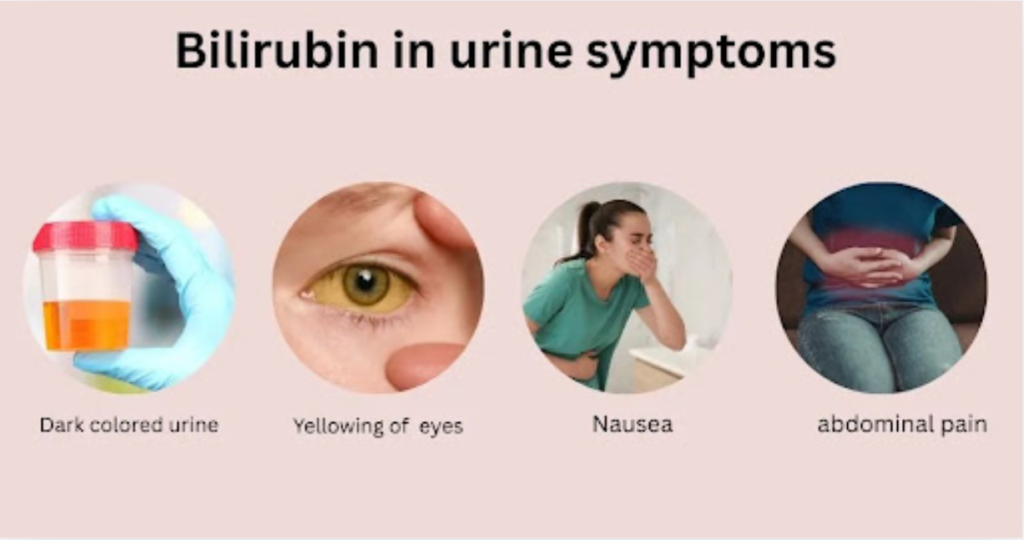
Symptoms That May Occur Alongside Bilirubin in Urine
1. Dark-colored urine
One of the most common signs.
2. Jaundice
Yellowing of:
- Skin
- Eyes
3. Pale stools
Occurs when bilirubin is not reaching the intestines normally.
4. Itching
Can occur with bile accumulation.
Featured Snippet: What symptoms occur with bilirubin in urine?
Symptoms may include dark urine, jaundice, pale stools, fatigue, abdominal pain, and itching depending on the underlying condition.
How Bilirubin in Urine Is Detected
Urinalysis
A urine dipstick test may detect bilirubin.
Blood tests
Healthcare providers often measure:
- Total bilirubin
- Liver enzymes
- Liver function markers
Imaging tests
May include:
- Ultrasound
- CT scan
- MRI
To evaluate liver and bile ducts.
Clinical Importance of Bilirubin in Urine
Finding bilirubin in urine can help detect:
- Early liver dysfunction
- Obstructive biliary disease
- Hepatic inflammation
It may appear before severe symptoms develop.
When to Seek Medical Evaluation
Consult a healthcare provider if bilirubin in urine is accompanied by:
- Jaundice
- Persistent fatigue
- Severe abdominal pain
- Fever
- Persistent dark urine
Featured Snippet: Is bilirubin in urine dangerous?
Bilirubin in urine itself is not the disease, but it may indicate serious underlying liver or bile duct disorders that require medical evaluation.
Prevention and Liver Health Support
Helpful lifestyle habits
- Limit excessive alcohol intake
- Maintain healthy weight
- Avoid unnecessary liver-toxic substances
- Eat a balanced diet
- Stay physically active
Internal Linking Opportunities
This topic connects well with:
- Liver function and detoxification
- Jaundice and bilirubin metabolism
- Gallbladder and bile duct disorders
- Blood biomarkers and urinalysis
- Hepatic inflammation and hepatitis
Conclusion
Bilirubin in urine is an important clinical finding that may indicate problems with liver function or bile flow. While urine bilirubin itself is not a disease, it can provide an early clue to underlying conditions such as hepatitis, bile duct obstruction, or liver injury.
Prompt medical evaluation and appropriate testing are essential for identifying the underlying cause and protecting long-term liver health.
Important Disclaimer: This article is for educational purposes only and should not replace professional medical advice. Individuals with jaundice, dark urine, or persistent symptoms should seek professional medical evaluation promptly.