
Salut les gourmands!
There exists a threshold in chocolate baking—a precise intersection of technique, ingredient proportion, and intuitive understanding—where mere dessert transcends into something approaching the sacred. Brownies, when executed with reverence and attention, occupy this rarified territory, delivering an experience that speaks not just to taste buds but to something deeper: our primal connection to chocolate, our longing for texture that yields yet resists, our desire for sweetness tempered by complexity.
My initiation into true brownie consciousness occurred not in a professional kitchen but in the cramped apartment of a friend’s grandmother, a woman who had survived war, displacement, and loss yet maintained an unshakable belief that perfect brownies could restore order to chaos. I watched her gnarled hands—hands that had kneaded bread through decades, that had soothed fevered foreheads, that had written letters to absent loved ones—measure chocolate and butter with the confidence of someone who understood that precision and intuition are not opposites but partners. That first bite revealed what brownies could be: not cakey, not underbaked, but occupying that perfect middle ground where fudgy interior meets delicate crust, where chocolate intensity borders on overwhelming yet remains perfectly balanced.
What distinguishes transcendent brownies from merely good ones lies not in exotic ingredients or complex techniques but in understanding the delicate chemistry governing chocolate, fat, sugar, and flour ratios. The balance between these elements determines whether you achieve dense fudginess, cake-like springiness, or that coveted middle ground where texture varies from shatteringly crisp edges to molten center. This recipe guides you toward that ideal, honoring both the science underlying brownie architecture and the intuitive feel that separates confident bakers from tentative ones.
Présentation de la Recette: Understanding Brownie Philosophy
Preparation time: 20 minutes of mindful ingredient assembly and mixing
Baking time: 25-30 minutes of patient waiting while your kitchen transforms into a chocolate sanctuary
Cooling time: 30-45 minutes of discipline rewarded with perfect texture
Total time: Approximately 1 hour 30 minutes from impulse to indulgence
Yield: 16 generous squares or 24 modest portions, depending on your relationship with restraint
Difficulty level: Intermediate—requires attention to detail and willingness to trust the process
Origin: American baking tradition, born from a failed chocolate cake that became something better
Brownies occupy a unique position in the pantheon of American desserts—simultaneously humble and luxurious, accessible yet capable of extraordinary refinement. Their origin story, like many culinary innovations, involves fortunate accident: a baker in the late 19th or early 20th century (accounts vary) either forgot to add baking powder to chocolate cake or deliberately created a denser confection, discovering that this “failed” cake possessed its own remarkable appeal.
The brownie’s evolution reflects broader trends in American baking: the increasing availability of chocolate as it transitioned from luxury to staple, the development of chemical leavening that gave bakers more control over texture, and the American preference for dense, rich desserts that emphasize indulgence over restraint. Unlike European chocolate cakes that often incorporate ground nuts or emphasize airy texture, brownies celebrate unabashed density, the concentrated essence of chocolate and butter bound together with just enough structure to hold its shape.
This particular recipe represents my synthesis of countless experiments, informed by both scientific understanding and empirical testing. The goal: achieving what bakers call “fudgy” texture—brownies that are dense and moist yet fully cooked, never gummy or underbaked. The secret lies in carefully calibrated ratios: high chocolate and butter content relative to flour, moderate eggs that provide structure without excessive rise, and a specific baking temperature and time that sets the exterior while leaving the interior gloriously soft.
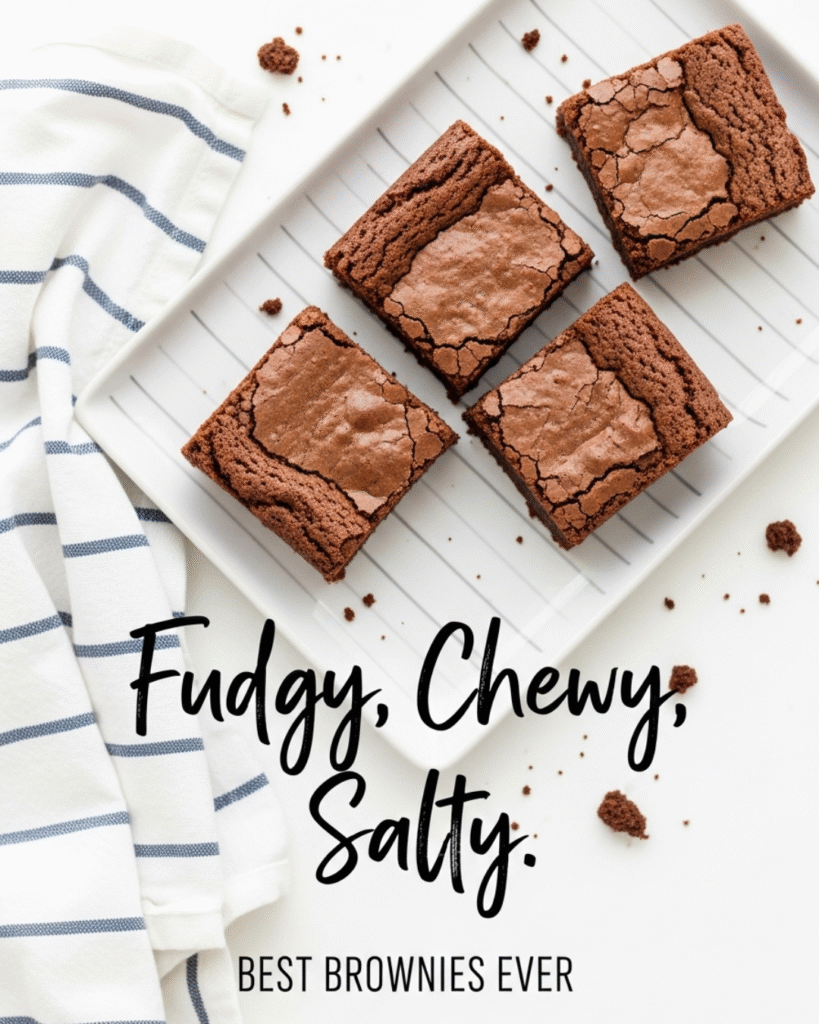
Ingrédients: The Architecture of Chocolate Intensity
The Chocolate Foundation:
- 8 ounces (225g) high-quality dark chocolate (60-70% cacao), roughly chopped—this is not the place for chocolate chips or inferior chocolate; choose chocolate you’d happily eat plain
- ¾ cup (170g) unsalted butter, cut into tablespoon-sized pieces—European-style butter with higher fat content produces even richer results
- 1¼ cups (250g) granulated sugar—this precise amount balances sweetness against chocolate’s natural bitterness
- ½ cup (100g) light brown sugar, packed—adds subtle molasses notes and contributes to chewiness
- 4 large eggs, at room temperature—cold eggs shock the chocolate mixture and compromise emulsification
The Structural Elements:
- ¾ cup (95g) all-purpose flour, spooned and leveled—not scooped, which packs in too much flour
- ¼ cup (25g) Dutch-process cocoa powder, sifted—this is one place where Dutch-process excels, providing deep color and mellow chocolate flavor
- ¾ teaspoon fine sea salt—essential for balancing sweetness and amplifying chocolate
- ¼ teaspoon baking powder—just a whisper, providing subtle lift without compromising density
The Flavor Enhancers:
- 2 teaspoons pure vanilla extract—Madagascar bourbon vanilla preferred for its rich, creamy notes
- 1 teaspoon instant espresso powder (optional but transformative)—dissolved in a teaspoon of hot water, this doesn’t make brownies taste like coffee but profoundly deepens chocolate perception
Optional Textural Additions:
- 1 cup (150g) chocolate chips or chunks—for additional pockets of molten chocolate
- ¾ cup (90g) toasted walnuts or pecans, roughly chopped—adds welcome textural contrast
- Flaky sea salt for finishing—transforms good brownies into revelation
Petit conseil pro: The chocolate you choose determines your brownies’ fundamental character. This is the moment to invest in quality—Valrhona, Callebaut, Guittard, or high-end supermarket brands like Lindt or Ghirardelli. Avoid “chocolate-flavored” baking products or anything labeled as “compound chocolate” or “chocolate coating”—these contain oils rather than cocoa butter and produce inferior flavor and texture. The chocolate should list cocoa/cacao as the first ingredient, with cocoa butter appearing before any other fats. Read the label as carefully as you’d examine wine before purchasing—your brownies can only be as good as the chocolate you begin with.
Préparation: The Ritual of Transformation
Step 1: Creating the Sacred Space and Preparing Your Vessel
Before touching ingredients, establish both external order and internal presence. Clear your workspace, removing distractions and creating the physical and mental environment for focused attention. This preparation represents more than efficiency—it’s a conscious decision to be fully present for the creative act ahead, to honor the ingredients and the tradition you’re about to participate in.
Preheat your oven to 350°F (175°C)—not approximately, but precisely. Oven thermometers cost less than a bag of premium chocolate and represent one of the best investments in baking success. Even a 25-degree variation dramatically affects outcomes, the difference between fudgy perfection and disappointing dryness or gummy undercooked centers.
Select a 9×13-inch metal baking pan—metal conducts heat more effectively than glass, creating those coveted crispy edges. Line it with parchment paper, allowing excess to overhang the pan’s sides—this creates handles that will make removal effortless once your brownies cool. Some bakers advocate for greasing the pan before adding parchment to ensure adhesion, but I find this unnecessary if you crease the parchment at the corners to fit snugly.
Alternatively, use an 8×8-inch pan for thicker brownies requiring 35-40 minutes baking time, or a 9×9-inch pan for something between standard and thick (30-35 minutes). Thickness affects not just baking time but texture and the ratio of crispy edges to fudgy center—one of those personal preference decisions where no answer is objectively correct.
Step 2: The Chocolate-Butter Alchemy—Creating Your Base
This step represents the foundation upon which everything else builds. Place your chopped dark chocolate and butter pieces in a large, heatproof bowl. The temptation exists to rush this melting process, but restraint proves essential—excessive heat damages chocolate’s delicate structure, causing it to seize or develop grainy texture.
Choose your melting method based on available equipment and personal preference:
The double boiler method (traditional and foolproof): Fill a medium saucepan with an inch or two of water, bringing it to a bare simmer—you want steam, not vigorous boiling. Place your bowl over the saucepan, ensuring the bowl’s bottom doesn’t touch the water (direct contact creates excessive heat). Stir occasionally with a silicone spatula as the chocolate and butter gradually melt into glossy unity. This process takes patience—perhaps 5-7 minutes—but the gentle heat ensures perfect melting without risk of scorching.
The microwave method (faster but requiring vigilance): Combine chocolate and butter in a microwave-safe bowl. Heat in 30-second intervals at 50% power, stirring thoroughly between each interval. As melting progresses, reduce to 20-second intervals then 10-second intervals as you approach complete melting. The chocolate will retain its shape even when fully melted, so stirring is essential to assess progress. The goal is melting chocolate through residual heat after removing from microwave rather than continuing to heat until liquid—this prevents overheating.
Once melted and smooth, remove from heat and let the mixture cool for 5 minutes. This cooling period proves critical—adding eggs to very hot chocolate cooks them prematurely, creating scrambled egg bits rather than smooth emulsification. The mixture should feel warm to the touch but not hot, roughly body temperature or slightly warmer.
As you stir the cooling chocolate, observe its transformation: the separate identities of chocolate and butter merge into singular glossy unity, the color deepening from chocolate’s brown and butter’s yellow into rich, uniform darkness. This visual beauty represents the chemical reality underneath—fat molecules from butter incorporating into chocolate’s complex structure, creating a stable emulsion that will define your brownies’ texture.
Step 3: Building Sweetness and Structure—The Sugar Integration
To your cooled chocolate-butter mixture, add both granulated and brown sugars. The combination proves important: granulated sugar provides straightforward sweetness and helps create the shiny, crackly top crust that distinguishes exceptional brownies, while brown sugar contributes molasses complexity and hygroscopic properties that keep brownies moist even days after baking.
Whisk vigorously for about 1 minute. This isn’t gentle folding but genuine whisking that incorporates air while fully dissolving sugar crystals. The mixture will lighten slightly in color and increase in volume—you’re creating what pastry chefs call a “ribbon stage,” where the mixture becomes glossy and slightly thickened. This aeration contributes to the delicate top crust while the dissolved sugars help create tender texture by interfering with gluten development once you add flour.
If using espresso powder, add it now, whisking until fully incorporated. Watch how this tiny addition—invisible in the finished product—transforms the mixture’s aroma from purely chocolate to something deeper, more complex, as if the chocolate has been dialed up to a frequency previously inaudible.
Step 4: The Egg Emulsion—Creating Cohesion and Structure
Add your room-temperature eggs one at a time, whisking thoroughly after each addition. This gradual incorporation allows proper emulsification—the eggs’ proteins and lecithin help bind together the fat from chocolate and butter with the aqueous components, creating stable suspension that won’t separate during baking.
After adding the first egg, the mixture may look briefly separated or curdled—this is normal and will resolve as you continue whisking. Keep whisking until smooth and glossy before adding the next egg. After the final egg, whisk for an additional 30-45 seconds, incorporating air that will contribute to texture while ensuring complete emulsification.
Add the vanilla extract, whisking to incorporate. The vanilla’s aromatic compounds interact with chocolate, creating what flavor scientists call “potentiation”—each ingredient makes the other taste more like itself through chemical synergy rather than either dominating.
The mixture at this stage should appear thick, glossy, and completely homogeneous—no streaks of egg white, no separated fat, just unified chocolate luxury that already smells like promise.
Step 5: Gentle Flour Integration—Preserving Fudginess
In a separate small bowl, whisk together your flour, sifted cocoa powder, salt, and baking powder. This dry mixture blending ensures even distribution, preventing pockets of flour or leavening that would create texture inconsistencies.
Add these dry ingredients all at once to your chocolate mixture. Now comes perhaps the most critical technical moment in brownie preparation: you must mix just until no dry flour remains visible, and not one stroke beyond. Use a silicone spatula and fold with broad, gentle strokes—cutting down through the center, sweeping across the bottom, and bringing batter up the sides.
Every stroke beyond the minimum necessary develops gluten—the protein network that gives bread its chewy structure but creates toughness in brownies. The high fat content in this recipe inhibits gluten development naturally, but excessive mixing overcomes this protection. You’re seeking homogeneity, not smoothness—a few small lumps are preferable to overworking.
The batter will be thick, glossy, and almost seem too dense to spread. This dense consistency is correct and intentional. If you’ve added nuts or chocolate chips, fold them in now with just a few strokes, distributing them throughout without additional mixing.
Step 6: The Pan and the Patience—Baking to Fudgy Perfection
Scrape your batter into the prepared pan, using your spatula to spread it evenly into corners and smooth the top. The batter’s thickness means it won’t self-level like cake batter, so take a moment to ensure even distribution—this affects both appearance and baking uniformity.
Place the pan on your oven’s center rack and immediately set a timer for 25 minutes. Now begins the hardest part: leaving it alone. Resisting the urge to check progress, to open the oven door, to peek at whether that characteristic crackly top has formed. Every door opening drops oven temperature dramatically and releases steam that affects crust development.
At 25 minutes, perform your first assessment. Open the oven and gently shake the pan—the brownies’ edges should appear set and pulling slightly away from pan sides, while the center should show the barest wobble, like not-quite-set Jello. Insert a toothpick about 2 inches from the edge (not dead center, which remains fudgier): it should emerge with moist crumbs clinging to it, not wet batter but definitely not clean.
This is the critical judgment call that determines texture. For fudgy brownies, you want that toothpick showing moist crumbs. If batter still appears wet, give it another 3-5 minutes and test again. The brownies will continue cooking from residual heat after removal—what bakers call “carryover cooking”—so slightly underbaked in the oven means perfectly done after cooling.
If you’ve opted for thicker brownies in a smaller pan, extend baking time by 5-10 minutes, testing frequently toward the end to avoid overbaking.
Step 7: The Cooling Discipline—Structural Setting and Flavor Development
Remove your pan from the oven and place it on a wire cooling rack. Resist—and I cannot emphasize this strongly enough—resist the urge to cut into warm brownies. This moment tests your character more than any other step. The brownies need at least 30 minutes, preferably 45, to cool and set properly.
During cooling, multiple critical processes occur: the structure firms as starches crystallize and proteins complete their coagulation, fat resolidifies slightly creating that fudgy-not-gummy texture, and flavors meld and develop as various compounds interact chemically. Warm brownies, while admittedly delicious, are structurally unstable—they’ll tear when you try to cut them, creating ragged edges and compromised presentation.
If you possess heroic patience, let them cool completely—even refrigerate for an hour—before cutting. Cold brownies cut into the cleanest squares with the most beautiful cross-sections revealing that ideal fudgy interior. You can always return them to room temperature before serving, or serve them chilled if you prefer firmer texture.
When ready to cut, use the parchment paper overhang to lift the entire brownie slab from the pan onto a cutting board. This maneuver alone justifies the parchment paper investment—no struggling with spatulas, no broken corners, just clean removal. Use a large, sharp knife, wiping it clean between each cut to ensure neat edges. Cut into 16 large squares, 24 smaller rectangles, or even 36 petite bites depending on your serving needs and philosophy regarding portion size.
Petit Conseil Pro: The Science and Soul of Brownie Mastery
The chocolate percentage question: You might wonder whether to use 60%, 70%, or even 85% cacao chocolate. This choice profoundly affects both flavor and texture. Lower percentage chocolate (60%) contains more sugar, creating sweeter, smoother brownies with perhaps less complex chocolate flavor. Higher percentage (70-85%) creates more intensely chocolate brownies with potential bitterness that some adore and others find excessive. My sweet spot sits at 60-70%—enough cocoa solids for genuine chocolate complexity, sufficient sugar for balance. If using chocolate above 70%, consider reducing granulated sugar by 2-3 tablespoons to compensate.
Understanding the elusive crackly top: That shiny, crackled surface distinguishes exceptional brownies, and it’s not accidental—it results from specific chemistry. As brownies bake, sugar-rich batter at the surface dries faster than interior. Sugar crystallizes, creating a thin crust. Simultaneously, rising batter pushes against this forming crust, creating cracks. High sugar content relative to flour maximizes this effect, as does vigorous whisking when adding sugar (incorporating air that expands during baking). If your brownies consistently lack this top, you may be undermixing sugar or using insufficient sugar for your chocolate’s bitterness.
The temperature precision imperative: Brownies demand more precise temperature control than many desserts because the margin between underbaked-gummy and overbaked-dry is remarkably narrow—sometimes as little as 2-3 minutes. Oven thermometers eliminate the guesswork, revealing the sometimes shocking discrepancies between dial settings and actual temperatures. Positioning matters too: center rack ensures even heat circulation; too low and bottoms burn before centers cook; too high and tops darken excessively.
The room temperature egg principle: This seemingly fussy instruction matters more than many realize. Cold eggs added to chocolate mixture can cause chocolate to seize—suddenly transforming from smooth liquid to grainy, broken mass—as the temperature shock causes cocoa butter to solidify around sugar crystals. Additionally, cold eggs don’t emulsify as effectively, creating batter more prone to separation or uneven texture. The solution requires minimal planning: remove eggs from refrigerator 30-60 minutes before baking, or place them in a bowl of warm water for 10 minutes if you forgot.
Altitude adjustments for mountain bakers: High altitude baking presents unique challenges as reduced atmospheric pressure affects leavening and moisture evaporation. Above 3,000 feet, reduce baking powder to a scant ⅛ teaspoon, increase flour by 1-2 tablespoons, and reduce sugar by 1-2 tablespoons. Increase oven temperature by 15-25°F and monitor carefully as brownies may bake faster. These adjustments seem counterintuitive but reflect the physics of baking at altitude.
The overnight transformation: Freshly baked brownies are delicious, but brownies that have rested overnight develop deeper, more complex flavor through a process called “flavor maturation.” As the brownies cool and rest, moisture redistributes more evenly throughout, fats crystallize into more stable configurations, and various aromatic compounds continue reacting and developing. Many professional bakers intentionally bake brownies a day ahead, understanding that patience yields dividends.
Accompagnements Suggérés: Elevating the Brownie Experience
While brownies possess complete deliciousness independently, thoughtful accompaniments create experiences greater than the sum of parts, transforming a brownie from snack into event.
Vanilla ice cream creates temperature and texture magic: The classic pairing endures because it’s perfect—cold, creamy ice cream melting into warm (or even room-temperature) brownies creates textural contrast that makes each bite endlessly interesting. The vanilla’s subtle perfume complements rather than competes with chocolate’s complexity. Choose real vanilla ice cream made with cream, eggs, and vanilla bean rather than artificial “frozen dessert”—quality matters when pairing with quality brownies.
Whipped cream offers luxurious lightness: Real whipped cream—heavy cream beaten with just enough sugar to sweeten and vanilla extract for aromatic complexity—provides airiness that balances brownie density. The cream’s fat content carries chocolate flavor across your palate while its ethereal texture offers relief from fudgy intensity. Whip to soft peaks only; overbeaten cream develops grainy texture unpleasant against smooth brownies.
Espresso or strong coffee creates synergy: Coffee and chocolate share numerous aromatic compounds—roasted, caramelized, slightly bitter—that amplify each other through chemical resonance. A small cup of espresso, strong French press coffee, or even well-made drip coffee alongside brownies enhances chocolate perception while providing flavor breaks that reset your palate between bites. The coffee’s bitterness also balances brownies’ sweetness, preventing sensory fatigue.
Fresh raspberries provide essential acidity: The one element brownies lack is acidity—that bright, sharp note that cuts through richness and prevents palate fatigue. Fresh raspberries (or strawberries, or a mix) offer this crucial counterpoint. Their tartness resets your taste buds between bites, allowing you to fully appreciate each brownie square rather than experiencing diminishing returns as sweetness accumulates. A few berries arranged beside each brownie creates visual appeal while serving functional purpose.
Salted caramel sauce creates decadent complexity: Drizzle warm salted caramel over brownies for a combination that tastes like luxury distilled. The caramel’s butter-sugar richness complements chocolate while salt enhances both elements. Make your own by carefully melting sugar until amber, whisking in cream and butter, and adding generous salt, or use quality store-bought caramel. The warm sauce slightly melts the brownie’s surface, creating visual gloss and textural interest.
Flaky sea salt as finishing touch: Just before serving, scatter a few flakes of high-quality sea salt (Maldon, fleur de sel, or similar) across each brownie. These salt crystals create tiny explosions of mineral intensity that make chocolate taste more chocolate-like through contrast. They suppress excessive sweetness perception, allowing chocolate’s complex notes to emerge. This restaurant technique requires seconds yet elevates presentation and flavor dramatically.
The Emotional Archaeology of Brownies: Why This Dessert Matters
Brownies occupy unique territory in our collective food consciousness, triggering associations and memories that transcend their status as mere dessert. Understanding this emotional dimension reveals why brownies persist across generations despite constantly evolving food trends.
Research in sensory psychology demonstrates that chocolate—especially in concentrated forms like brownies—triggers genuine neurochemical responses beyond simple taste pleasure. Chocolate contains compounds that stimulate production of endorphins and serotonin, neurotransmitters associated with mood elevation and pleasure. The combination of fat, sugar, and chocolate creates what food scientists call “hedonic eating”—consumption driven by pleasure rather than hunger, activating reward centers in the brain.
But brownies’ significance extends beyond chemistry into the realm of memory and association. For many, brownies connect to specific moments: childhood birthday parties, bake sales, college study sessions fueled by care packages from home, quiet evenings shared with loved ones. These associations become encoded in memory alongside the sensory experience, so that tasting brownies as adults resurrects not just flavor but the entire emotional landscape of those earlier moments.
The act of baking brownies—particularly baking them for others—carries its own significance. In an era where convenience dominates and purchasing prepared food has become normalized, homemade brownies represent deliberate effort, time invested, attention given. When you present someone with homemade brownies, you’re offering more than calories—you’re offering your time, your skill, the intention behind the gift. This gift economy operates outside monetary exchange, creating bonds and expressing care in ways that purchased items, regardless of their quality or expense, cannot replicate.
Storage, Longevity, and the Art of Extended Enjoyment
Properly stored, these brownies maintain quality for several days, allowing you to extend enjoyment rather than consuming them all immediately (though no judgment if you choose otherwise).
At room temperature, store brownies in an airtight container, separating layers with parchment paper to prevent sticking. They’ll remain excellent for 3-4 days—the high fat content prevents rapid staling that affects lower-fat baked goods. Some people prefer room-temperature brownies for their soft, fudgy texture; others enjoy the way room temperature allows flavors to express fully.
Refrigeration extends longevity to 5-7 days but affects texture significantly: the cold temperature firms the brownies, creating denser mouthfeel and muted flavor. If you refrigerate, remove brownies at least 30 minutes before serving to allow them to return to room temperature where their texture softens and flavors bloom.
For longer storage, brownies freeze exceptionally well—better than most baked goods because their high fat content prevents freezer burn and textural degradation. Wrap individual brownies or the entire uncut slab tightly in plastic wrap, then in aluminum foil, and freeze for up to 3 months. Thaw overnight in the refrigerator, then bring to room temperature. The texture will be virtually indistinguishable from fresh brownies.
Interestingly, many bakers find that brownies actually improve slightly after 24 hours at room temperature, as moisture redistributes throughout and flavors meld—a phenomenon called “flavor maturation” that occurs in many baked goods. This suggests that baking brownies the day before you need them, rather than rushing to serve them fresh from the oven, might actually produce superior results.
À Vos Tabliers: Embracing Your Brownie Journey
You now possess the knowledge, technique, and understanding to create brownies that transcend the ordinary—brownies that honor chocolate’s complexity, that achieve that elusive fudgy-not-cakey texture, that develop the characteristic crackly top, that satisfy on levels beyond mere sweetness. These instructions represent generations of accumulated baking wisdom, countless experiments, and the collective knowledge of bakers who understood that great brownies result not from secret ingredients but from respecting fundamental principles.
Yet recipes are only frameworks—invitations to engage with ingredients and process, to develop the intuitive understanding that transforms mechanical execution into creative mastery. Your first batch might not achieve perfection. Edges might bake slightly more than ideal, or centers might remain a touch underdone. The crackly top might not form as dramatically as you’d hoped, or cutting might create slightly ragged edges. None of this constitutes failure. This is learning, practice, the necessary journey every accomplished baker has walked.
Each time you make these brownies, you’ll notice new details, develop small efficiencies, understand the process more deeply. The moment when chocolate and butter achieve perfect glossy unity will become recognizable not just visually but intuitively. You’ll develop a sense for when batter has reached proper consistency, when brownies need another minute in the oven, when they’ve cooled sufficiently for cutting. This development of skill and intuition is itself valuable, independent of any particular batch’s outcome.
Most importantly, remember why brownies exist—not to impress or compete, not to achieve social media-worthy perfection, but to provide pleasure, comfort, indulgence. Whether you’re baking for celebration, for comfort during difficult times, for sharing with loved ones, or simply because some days demand chocolate, these brownies fulfill their purpose through the care and attention you bring to their creation.
What memories will these brownies help create? What conversations will unfold around them? What comfort will they provide, what celebrations will they sweeten? These questions have no answers yet—they await your living of them, your baking this recipe and discovering what it means in your own life and relationships.
Begin today. Gather your ingredients, particularly that beautiful dark chocolate that will become the soul of your brownies. Preheat your oven. And as you melt chocolate, fold batter, and wait patiently for baking to complete, remember that you’re participating in something larger than a single recipe—a tradition of home baking, of creating comfort and joy with your own hands, of transforming simple ingredients into edible meaning.
Bon appétit, and may your brownies always emerge from the oven with that perfect fudgy texture, may your kitchen always smell of melting chocolate and vanilla, and may you always find joy in the simple act of creating something delicious to share—or to keep entirely for yourself.