Meta Description: Learn how to recognize cellulitis, a potentially serious skin infection, including early symptoms, risk factors, complications, and when urgent medical care is needed.
Cellulitis is a bacterial skin infection that affects the deeper layers of the skin and underlying tissue. It can spread quickly if not treated and may lead to serious complications. Early recognition is essential for prompt treatment and recovery.
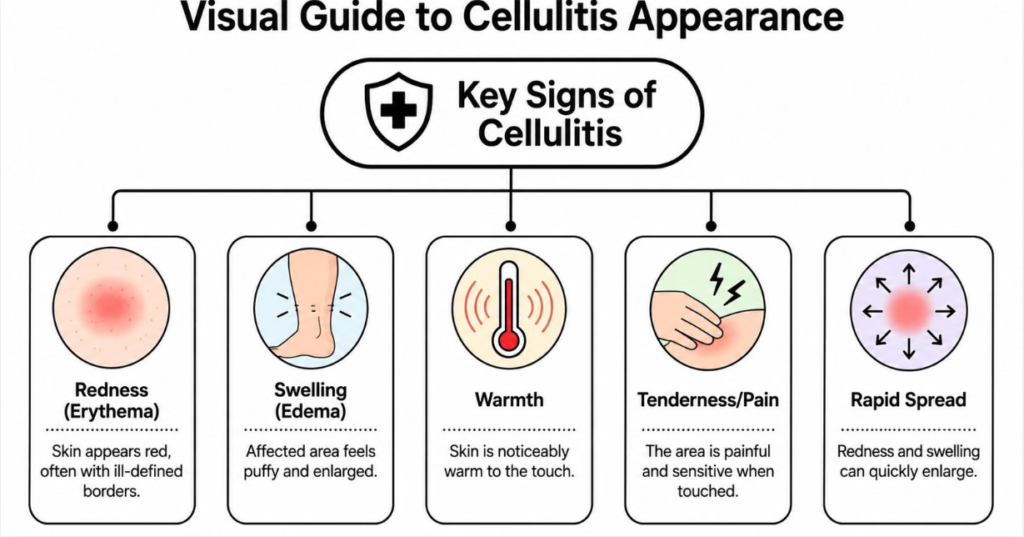
Featured Snippet: What are the symptoms of cellulitis?
Cellulitis symptoms include redness, warmth, swelling, tenderness, and pain in the skin, often spreading rapidly and sometimes accompanied by fever and chills.
What Is Cellulitis?
Cellulitis occurs when bacteria enter the skin through cuts, wounds, insect bites, or cracks in the skin barrier.
The infection most commonly involves:
- Legs
- Arms
- Face
Early Signs of Cellulitis
Recognizing early symptoms can prevent progression.
1. Skin redness (erythema)
- Expands over time
- Often warm to touch
2. Swelling
- Affected area becomes visibly enlarged
- Tight or stretched skin appearance
3. Pain or tenderness
- Discomfort increases with touch or movement
- Can feel deep and throbbing
4. Warmth in the skin
- Localized heat compared to surrounding areas
Featured Snippet: What is the first sign of cellulitis?
The first sign of cellulitis is usually a localized area of redness and warmth on the skin that gradually spreads and becomes painful.
Progressive Symptoms
If untreated, symptoms may worsen:
1. Rapid spreading redness
- Infection expands outward quickly
2. Fever and chills
- Indicate systemic immune response
3. Fatigue
- General feeling of illness
4. Swollen lymph nodes
- Especially near the infected area
Severe or Urgent Warning Signs
Seek immediate medical attention if:
- Rapidly spreading redness
- High fever
- Severe pain
- Blistering or skin discoloration
- Confusion or weakness
- Signs of sepsis
Featured Snippet: When is cellulitis an emergency?
Cellulitis becomes an emergency when it spreads quickly, causes high fever, severe pain, or signs of systemic infection like confusion or low blood pressure.
Causes of Cellulitis
Common bacteria involved
- Streptococcus species
- Staphylococcus aureus
Entry points for infection
- Cuts or scrapes
- Insect bites
- Surgical wounds
- Skin conditions (eczema, athlete’s foot)
Risk Factors
1. Skin barrier damage
- Wounds
- Cracks or dryness
2. Chronic diseases
- Diabetes
- Peripheral vascular disease
3. Weakened immunity
- Immunosuppressive conditions
- Certain medications
4. Poor circulation
- Reduced healing capacity
Complications of Untreated Cellulitis
1. Abscess formation
- Pus collection under the skin
2. Lymphatic damage
- Recurrent swelling (lymphedema)
3. Bloodstream infection (sepsis)
- Life-threatening condition
4. Tissue destruction
- Rare but severe cases
Diagnosis of Cellulitis
Clinical evaluation
- Visual inspection of skin
- Assessment of spread and severity
Additional tests (if needed)
- Blood tests (infection markers)
- Imaging (if abscess suspected)
- Wound cultures
Treatment Approaches
1. Antibiotics
Main treatment for bacterial infection.
2. Pain management
- Analgesics for discomfort
- Anti-inflammatory medications
3. Skin care
- Elevation of affected limb
- Rest and hydration
4. Hospital care (severe cases)
- IV antibiotics
- Monitoring for complications
Prevention Strategies
1. Wound care
- Clean cuts immediately
- Apply antiseptic and cover wounds
2. Skin protection
- Moisturize dry skin
- Treat fungal infections early
3. Manage chronic conditions
- Control diabetes
- Improve circulation
Featured Snippet: How can cellulitis be prevented?
Cellulitis can be prevented by proper wound care, maintaining skin hygiene, treating infections early, and managing conditions like diabetes that affect healing.
Internal Linking Opportunities
This topic connects well with:
- Skin barrier function and microbiome
- Immune response to bacterial infections
- Diabetes-related complications
- Wound healing and tissue repair
- Inflammatory responses and systemic infection
Conclusion
Cellulitis is a potentially serious bacterial skin infection that requires early recognition and prompt treatment. Key symptoms include redness, warmth, swelling, and pain that can spread quickly. In severe cases, fever and systemic illness may occur, requiring urgent medical attention.
Early care and proper skin hygiene are essential to prevent complications and ensure full recovery.
Important Disclaimer: This article is for educational purposes only and should not replace professional medical advice. Suspected cellulitis should be evaluated promptly by a healthcare professional.