Meta Description: Learn about common factors that may contribute to anxiety in autistic adults, including sensory overload, social demands, routine disruption, masking, and daily stressors.
Anxiety is commonly experienced among autistic adults and may significantly affect daily functioning, emotional well-being, and quality of life. While anxiety can occur in anyone, autistic individuals often face unique neurological, sensory, and social challenges that may increase stress and overwhelm.
Understanding these contributing factors can support greater awareness, accommodation, and emotional support.
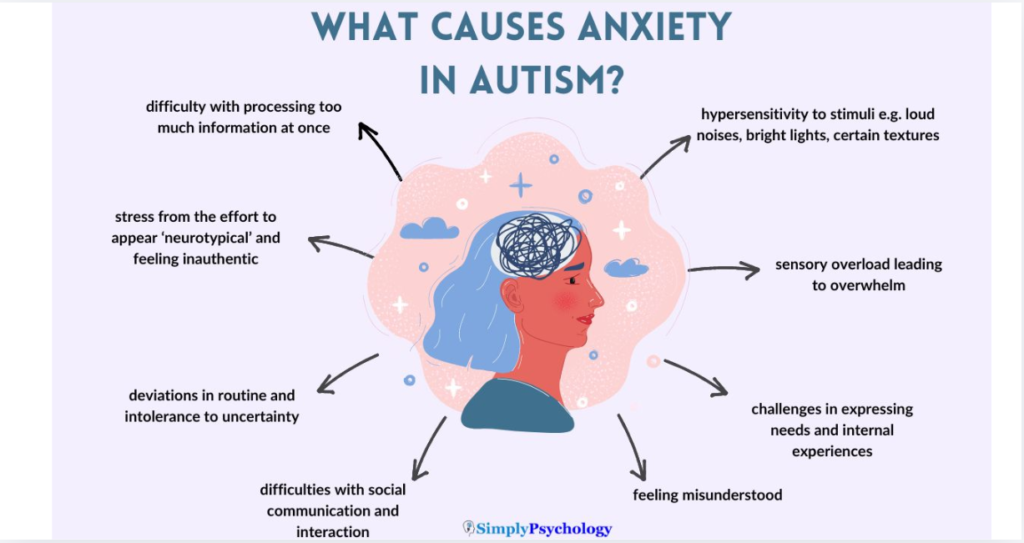
Featured Snippet: Why is anxiety common in autistic adults?
Anxiety in autistic adults may be linked to sensory overload, social uncertainty, routine disruption, masking behaviors, communication challenges, and chronic stress from navigating non-autistic environments.
Understanding Anxiety in Autism
Anxiety disorder may occur alongside Autism spectrum disorder, although anxiety experiences can vary widely between individuals.
For many autistic adults, anxiety is not simply “worry,” but a response to persistent cognitive, sensory, or environmental overload.
1. Sensory Overload
Many autistic individuals process sensory input differently.
Common triggers
- Loud sounds
- Bright lights
- Crowded environments
- Strong smells
- Multiple simultaneous stimuli
Possible effects
- Mental exhaustion
- Irritability
- Panic-like symptoms
- Shutdown or withdrawal
Featured Snippet: Can sensory overload cause anxiety?
Yes, overwhelming sensory input may activate stress responses and significantly contribute to anxiety in autistic individuals.
2. Social Communication Demands
Social environments may require rapid interpretation of verbal and nonverbal cues.
Challenges may include
- Reading facial expressions
- Understanding implied meaning
- Group conversations
- Fear of misunderstanding others
Result
Ongoing social uncertainty may increase stress and anticipatory anxiety.
3. Masking and Camouflaging
Some autistic adults consciously suppress autistic traits to fit social expectations.
Examples
- Forcing eye contact
- Mimicking social behavior
- Hiding sensory discomfort
Potential consequences
- Emotional exhaustion
- Burnout
- Increased chronic anxiety
Featured Snippet: What is autistic masking?
Masking refers to consciously hiding or suppressing autistic traits to appear socially typical, which may increase stress and anxiety over time.
4. Disruption of Routine and Predictability
Predictability often provides emotional stability.
Stressful situations may include
- Sudden schedule changes
- Unclear expectations
- Last-minute plans
- Unpredictable environments
Why it matters
Unexpected change can increase cognitive load and stress responses.
5. Executive Function Challenges
Executive functioning involves planning, organizing, and task management.
Difficulties may affect
- Time management
- Transitions between tasks
- Decision-making
- Daily responsibilities
Possible emotional impact
Feeling overwhelmed may contribute to chronic anxiety.
6. Past Negative Experiences
Repeated experiences of misunderstanding, bullying, exclusion, or invalidation may increase hypervigilance and social anxiety.
7. Emotional Regulation Difficulties
Some autistic adults experience intense emotional responses that are harder to regulate under stress.
Possible outcomes
- Panic episodes
- Emotional shutdown
- Meltdowns
- Persistent tension
Physical Symptoms of Anxiety
Anxiety may also produce physical symptoms.
Common examples
- Rapid heartbeat
- Muscle tension
- Digestive discomfort
- Sleep disturbances
- Fatigue
Featured Snippet: What physical symptoms can anxiety cause?
Anxiety may cause rapid heartbeat, sweating, muscle tension, stomach discomfort, sleep problems, and feelings of restlessness or exhaustion.
Supportive Strategies That May Help
1. Sensory accommodations
Examples include:
- Noise-reducing headphones
- Calm environments
- Predictable routines
2. Structured routines
Consistent schedules may reduce uncertainty and stress.
3. Mental health support
Therapy approaches adapted for autistic individuals may be beneficial.
4. Self-advocacy and boundaries
Recognizing personal limits can reduce overload.
5. Rest and recovery time
Downtime after stressful environments may help prevent burnout.
Importance of Understanding Individual Differences
Not all autistic adults experience anxiety the same way. Triggers, coping styles, and support needs vary significantly between individuals.
When Professional Support May Be Important
Seek professional guidance if anxiety:
- Interferes with daily functioning
- Causes persistent distress
- Affects sleep, work, or relationships
- Leads to panic symptoms or burnout
Internal Linking Opportunities
This topic connects well with:
- Stress and cortisol regulation
- Sensory processing and nervous system health
- Sleep and mental wellness
- Emotional regulation strategies
- Cognitive fatigue and burnout
Conclusion
Anxiety in autistic adults is often shaped by a combination of sensory sensitivity, social pressure, unpredictability, masking, and daily cognitive demands. Recognizing these contributing factors can foster greater understanding, accommodation, and compassionate support.
Creating environments that reduce overload and improve predictability may help autistic individuals experience greater emotional well-being and quality of life.
Important Disclaimer: This article is for educational purposes only and should not replace professional mental health advice. Individuals experiencing severe anxiety or emotional distress should seek support from qualified healthcare professionals.