Meta Description: Learn what skin tags are, why they develop, common myths, and safe management options for these benign skin growths.
Skin tags are soft, harmless growths that often appear on areas where skin rubs against skin or clothing. They are very common, especially in adults, and are generally not dangerous or cancerous.
Although skin tags are medically benign, they may become irritating due to friction or cosmetic concerns.
Featured Snippet: What causes skin tags?
Skin tags are caused by skin friction, hormonal changes, genetics, and sometimes metabolic factors such as insulin resistance or obesity.
What Are Skin Tags?
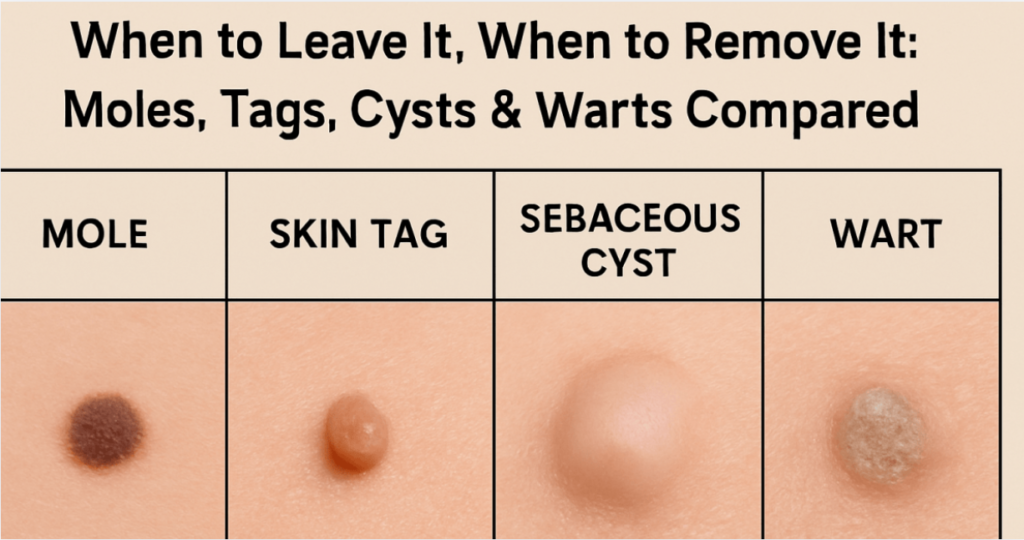
Skin tags are small, flesh-colored or slightly darker growths that hang from the skin by a thin stalk.
Common locations
- Neck
- Armpits
- Eyelids
- Groin area
- Under breasts
Causes of Skin Tags
1. Skin Friction
Repeated rubbing is one of the most common triggers.
Examples
- Skin folds rubbing together
- Tight clothing
- Jewelry friction
2. Genetics
Family history may increase likelihood of developing skin tags.
3. Hormonal Changes
Hormonal fluctuations may influence skin growth.
Common situations
- Pregnancy
- Hormonal shifts in adulthood
4. Metabolic Factors
Skin tags are more common in individuals with certain metabolic conditions.
Related condition
Insulin resistance
Associated condition
Diabetes mellitus
Are Skin Tags Dangerous?
Skin tags are benign and do not turn into cancer.
Featured Snippet: Are skin tags harmful?
No, skin tags are harmless benign growths and do not become cancerous.
Common Myths About Skin Tags
Myth 1: Skin tags are contagious
They are not caused by infection and cannot spread from person to person.
Myth 2: Skin tags indicate poor hygiene
There is no link between hygiene and skin tag formation.
Myth 3: Skin tags are dangerous
They are typically harmless and non-cancerous.
When Skin Tags May Need Attention
Most skin tags do not require treatment, but evaluation is recommended if:
- They bleed frequently
- They change color or shape
- They become painful
- They grow rapidly
Management Options
1. Medical Removal
Performed by healthcare professionals using:
- Cryotherapy (freezing)
- Cauterization
- Surgical excision
- Ligation
2. Do Not Attempt Unsafe Removal at Home
Avoid cutting or tying off skin tags without medical guidance due to infection risk.
3. Cosmetic Considerations
Removal may be chosen for:
- Irritation from clothing
- Cosmetic appearance
- Frequent friction
Prevention and Risk Reduction
While not always preventable, certain habits may help reduce risk:
Helpful strategies
- Maintain a healthy weight
- Reduce skin friction
- Wear loose-fitting clothing
- Manage blood sugar levels if needed
Related Skin Conditions
Skin tags may be confused with other growths, including:
- Warts
- Moles
- Seborrheic keratoses
Featured Snippet: Should skin tags be removed?
Skin tags do not need removal unless they cause irritation, discomfort, or cosmetic concerns.
Internal Linking Opportunities
This topic connects well with:
- Diabetes and insulin resistance
- Skin health and benign lesions
- Obesity and metabolic health
- Dermatological conditions overview
- Hormonal changes and skin growths
Conclusion
Skin tags are common, harmless skin growths often linked to friction, genetics, and metabolic factors. While they are not dangerous, they may be removed for comfort or cosmetic reasons.
Understanding their causes and dispelling myths can help reduce unnecessary concern and support better skin health awareness.
Important Disclaimer: This article is for educational purposes only and should not replace professional medical advice. Any changing, painful, or unusual skin growth should be evaluated by a qualified healthcare professional.