Meta Description: Learn about the major types of arthritis, their symptoms, causes, and key differences to better understand joint pain, stiffness, and inflammation.
Arthritis is one of the most common causes of chronic pain and disability worldwide. Although often associated with aging, arthritis includes more than 100 different conditions that can affect people of all ages.
Understanding the different types of arthritis can help identify symptoms early and support appropriate treatment and management.
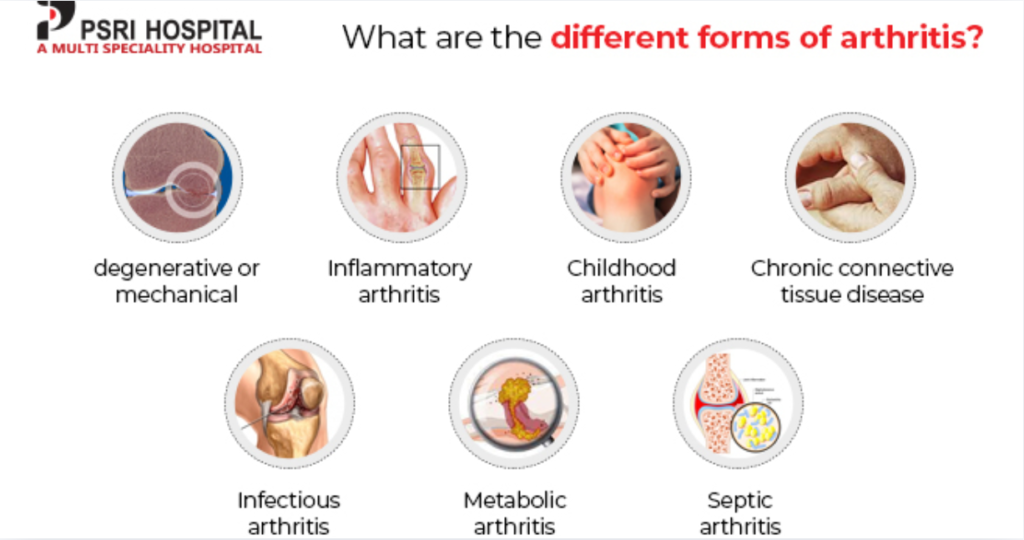
Featured Snippet: What are the most common types of arthritis?
The most common types of arthritis include osteoarthritis, rheumatoid arthritis, gout, psoriatic arthritis, and ankylosing spondylitis. Each affects the joints differently and has distinct causes and symptoms.
What Is Arthritis?
Arthritis is not a single disease but a broad term describing conditions that affect:
- Joints
- Cartilage
- Bones
- Connective tissues surrounding joints
Common symptoms include:
- Joint pain
- Stiffness
- Swelling
- Reduced range of motion
1. Osteoarthritis (OA)
Osteoarthritis
What happens?
Cartilage that cushions the ends of bones gradually wears down over time.
Common symptoms
- Joint pain during activity
- Morning stiffness lasting less than 30 minutes
- Reduced flexibility
- Joint creaking or grinding
Commonly affected joints
- Knees
- Hips
- Hands
- Spine
Featured Snippet: What is the most common form of arthritis?
Osteoarthritis is the most common type of arthritis and occurs when protective cartilage in the joints gradually deteriorates.
2. Rheumatoid Arthritis (RA)
Rheumatoid arthritis
What happens?
The immune system mistakenly attacks the joint lining.
Common symptoms
- Joint swelling
- Symmetrical joint pain
- Morning stiffness lasting longer than 30 minutes
- Fatigue
Frequently affected joints
- Fingers
- Wrists
- Feet
Related concept
Autoimmunity
3. Gout
Gout
What happens?
Uric acid crystals build up within a joint and trigger intense inflammation.
Common symptoms
- Sudden severe pain
- Redness
- Swelling
- Warmth around the joint
Most commonly affected area
- Base of the big toe
4. Psoriatic Arthritis
Psoriatic arthritis
Common symptoms
- Joint pain and swelling
- Finger and toe swelling
- Nail changes
- Skin plaques
Often associated with
Psoriasis
5. Ankylosing Spondylitis
Ankylosing spondylitis
Common symptoms
- Lower back pain
- Morning stiffness
- Reduced spinal flexibility
Potential complication
Progressive fusion of spinal joints in severe cases.
6. Juvenile Idiopathic Arthritis
Juvenile idiopathic arthritis
Common symptoms
- Joint swelling
- Pain
- Limping
- Fatigue
Important fact
Arthritis is not limited to adults.
Key Differences Between Common Types
| Type | Main Cause | Typical Feature |
|---|---|---|
| Osteoarthritis | Cartilage wear | Activity-related pain |
| Rheumatoid arthritis | Autoimmune attack | Symmetrical joint inflammation |
| Gout | Uric acid crystals | Sudden severe attacks |
| Psoriatic arthritis | Immune-mediated inflammation | Skin psoriasis involvement |
| Ankylosing spondylitis | Chronic spinal inflammation | Back stiffness and pain |
| Juvenile idiopathic arthritis | Childhood inflammatory disease | Occurs before adulthood |
Common Risk Factors
Age
Risk increases for certain forms, especially osteoarthritis.
Genetics
Family history can increase susceptibility.
Obesity
Excess body weight increases stress on joints.
Autoimmune disorders
Can contribute to inflammatory forms of arthritis.
When to Seek Medical Evaluation
Consult a healthcare professional if you experience:
- Persistent joint pain
- Joint swelling
- Morning stiffness
- Reduced mobility
- Recurrent painful flare-ups
Supporting Joint Health
Helpful strategies
- Maintain a healthy weight
- Stay physically active
- Perform joint-friendly exercises
- Eat a balanced diet
- Avoid smoking
Related concept
Joint mobility
Common Myths About Arthritis
Myth: Arthritis only affects older adults
Many forms can occur in young adults and children.
Myth: Joint pain always means arthritis
Joint pain may also result from injury, infection, or other conditions.
Myth: Exercise worsens arthritis
Appropriate physical activity often improves joint function and reduces stiffness.
Internal Linking Opportunities
This topic connects well with:
- Joint pain and mobility
- Gout management
- Autoimmune diseases
- Inflammation and chronic disease
- Musculoskeletal health
Conclusion
Arthritis encompasses a wide range of conditions that affect the joints through degeneration, inflammation, immune dysfunction, or crystal deposition. Recognizing the differences between osteoarthritis, rheumatoid arthritis, gout, psoriatic arthritis, and other forms can support earlier diagnosis and more effective management.
With proper treatment, lifestyle modifications, and medical guidance, many individuals with arthritis can maintain mobility and enjoy a high quality of life.
Important Disclaimer: This article is for educational purposes only and should not replace professional medical advice. Persistent joint pain, swelling, or stiffness should be evaluated by a qualified healthcare professional.