Meta Description: Learn about the most common types of bone fractures, their causes, symptoms, and treatment considerations. A practical guide to understanding bone injuries.
A Bone fracture occurs when a bone is subjected to more force than it can withstand. Fractures can range from small cracks to complete breaks and may vary greatly in severity depending on the location, pattern, and extent of the injury.
Understanding different fracture types can help improve awareness, support early recognition, and highlight the importance of timely medical care.
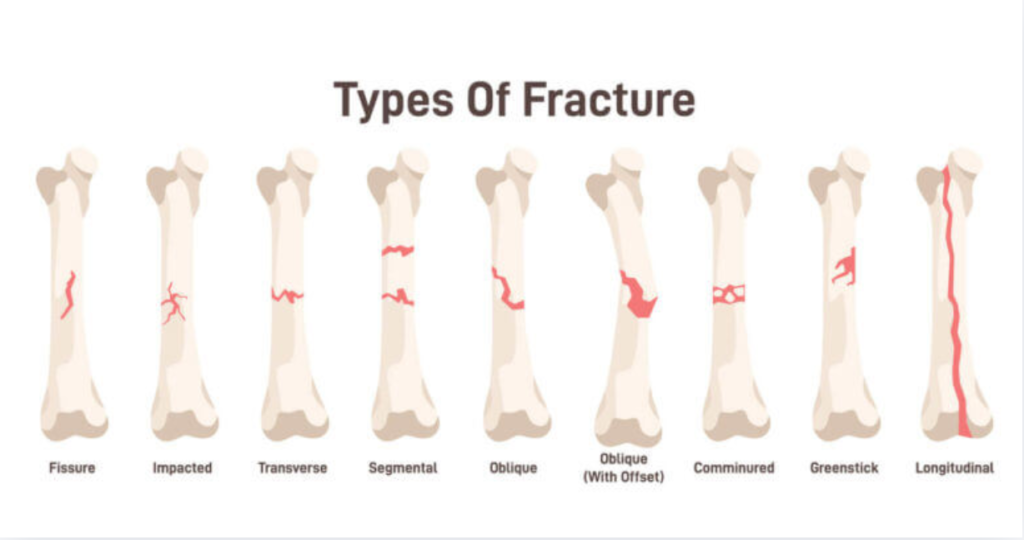
Featured Snippet: What are the main types of bone fractures?
Common fracture types include closed fractures, open fractures, transverse fractures, oblique fractures, spiral fractures, comminuted fractures, greenstick fractures, and stress fractures.
What Causes Bone Fractures?
Fractures may occur due to:
- Falls
- Sports injuries
- Motor vehicle accidents
- Repetitive stress
- Bone-weakening conditions
Related condition
Osteoporosis
Common Signs and Symptoms of a Fracture
Typical symptoms
- Sudden pain
- Swelling
- Bruising
- Deformity
- Difficulty moving the affected area
- Inability to bear weight
1. Closed (Simple) Fracture
A closed fracture occurs when the bone breaks but does not penetrate the skin.
Characteristics
- Skin remains intact
- Lower infection risk
- Most common fracture category
2. Open (Compound) Fracture
An open fracture involves a break in the skin overlying the fracture.
Characteristics
- Bone may be exposed
- Higher infection risk
- Requires urgent medical attention
Featured Snippet: Why are open fractures considered emergencies?
Open fractures increase the risk of infection because the broken bone and surrounding tissues are exposed to the external environment.
3. Transverse Fracture
A fracture line runs straight across the bone.
Common causes
- Direct trauma
- Significant impact injuries
4. Oblique Fracture
The break occurs at an angle across the bone.
Characteristics
- Diagonal fracture pattern
- Often caused by indirect force
5. Spiral Fracture
The fracture wraps around the bone in a spiral pattern.
Common causes
- Twisting injuries
- Sports-related trauma
6. Comminuted Fracture
The bone breaks into multiple fragments.
Characteristics
- Often associated with high-energy trauma
- May require surgical management
7. Greenstick Fracture
Most commonly seen in children.
Characteristics
- Bone bends and partially breaks
- Similar to bending a young tree branch
Why children are affected
Children’s bones are generally more flexible than adult bones.
8. Stress Fracture
A small crack develops due to repetitive stress.
Commonly affected areas
- Foot bones
- Tibia (shin bone)
- Metatarsals
Risk factors
- Running
- Repetitive impact sports
- Sudden increases in training intensity
9. Compression Fracture
Occurs when a bone collapses under pressure.
Common location
- Vertebrae of the spine
Related condition
Vertebral compression fracture
10. Impacted Fracture
One broken bone fragment is driven into another.
Typical causes
- Falls
- High-impact injuries
Fracture Diagnosis
Healthcare professionals may use:
Physical examination
Assessment of pain, swelling, and function.
Imaging studies
- X-rays
- CT scans
- MRI scans (when needed)
Related concept
Medical imaging
Treatment Approaches
Treatment depends on fracture type, location, and severity.
Common management options
Immobilization
- Casts
- Splints
- Braces
Reduction
Realignment of bone fragments.
Surgery
May involve:
- Plates
- Screws
- Rods
- External fixation devices
Supporting Bone Healing
Important factors
- Adequate protein intake
- Calcium-rich foods
- Vitamin D sufficiency
- Smoking avoidance
- Following rehabilitation recommendations
Potential Complications
Complications may include:
- Delayed healing
- Infection (especially open fractures)
- Malunion
- Reduced mobility
When to Seek Immediate Medical Care
Seek urgent evaluation if:
- Severe pain follows trauma
- Bone deformity is visible
- An open wound is present
- The affected limb cannot be moved
- Numbness or loss of circulation develops
Internal Linking Opportunities
This topic connects well with:
- Osteoporosis and bone health
- Calcium and vitamin D nutrition
- Sports injuries
- Medical imaging and diagnostics
- Rehabilitation and recovery
Conclusion
Bone fractures vary widely in severity and appearance, ranging from small stress fractures to complex comminuted injuries. Understanding the major fracture types can help improve recognition of symptoms and emphasize the importance of timely diagnosis and treatment.
Proper medical care, nutrition, and rehabilitation are key components of successful bone healing and long-term recovery.
Important Disclaimer: This article is for educational purposes only and should not replace professional medical advice. Suspected fractures require prompt evaluation by a qualified healthcare professional.**