Meta Description: Learn the major pulse points in the body, how to check them, and what pulse rate and rhythm can reveal about cardiovascular health and circulation.
The pulse is the rhythmic expansion of arteries caused by the heartbeat. Checking pulse sites is a simple but important clinical method used to assess heart rate, rhythm, and circulation quality.
Understanding where and how to feel the pulse can help in both basic first aid and general health monitoring.
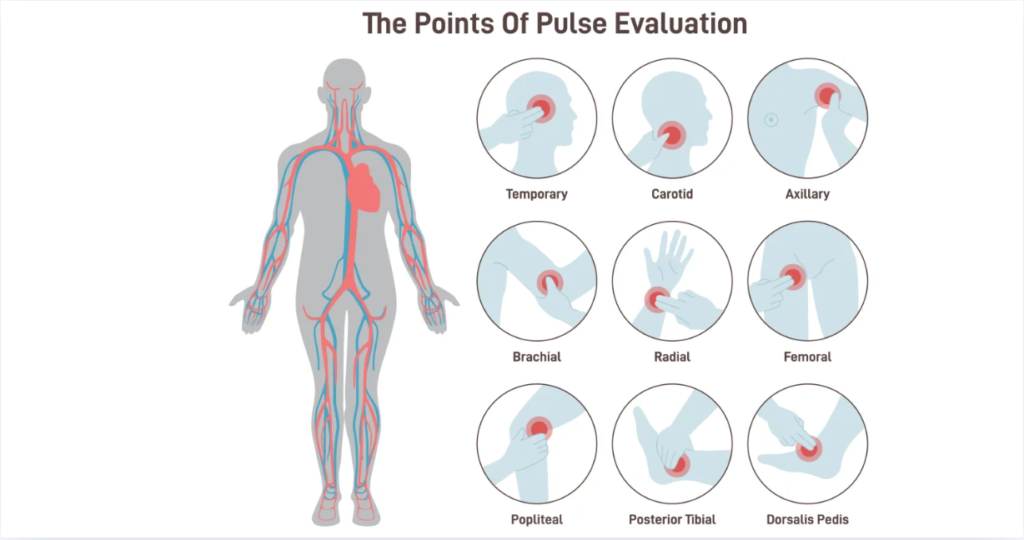
Featured Snippet: What are the main pulse points in the body?
The main pulse points include the radial (wrist), carotid (neck), brachial (arm), femoral (groin), popliteal (knee), posterior tibial (ankle), and dorsalis pedis (foot) arteries.
What Is the Pulse?
The pulse reflects the heartbeat transmitted through arterial walls. Each pulse corresponds to one heartbeat.
It helps evaluate:
- Heart rate (beats per minute)
- Heart rhythm (regular or irregular)
- Strength of circulation
How to Check a Pulse
Basic steps:
- Use index and middle fingers (not thumb)
- Press lightly over an artery
- Count beats for 30–60 seconds
- Note rhythm and strength
Normal resting pulse
- Adults: 60–100 beats per minute
- Athletes may have lower rates
Major Pulse Sites in the Body
1. Radial Pulse (Wrist)
Most commonly used site.
Radial artery
How to find it
- On the thumb side of the wrist
- Just below the base of the thumb
Clinical use
- Routine pulse checks
- First aid assessment
2. Carotid Pulse (Neck)
Carotid artery
How to find it
- Side of the neck, beside the trachea
Important note
- Check one side at a time only
- Used in emergencies
3. Brachial Pulse (Arm)
Brachial artery
How to find it
- Inside of the upper arm or elbow crease
Clinical use
- Blood pressure measurement
- Infants pulse checks
4. Femoral Pulse (Groin)
Femoral artery
How to find it
- In the groin area
- Midway between hip and pubic bone
Clinical use
- Assessing major circulation
- Emergency evaluation
5. Popliteal Pulse (Behind Knee)
Popliteal artery
How to find it
- Behind the knee when slightly bent
Clinical use
- Assessing leg circulation
6. Posterior Tibial Pulse (Ankle)
Posterior tibial artery
How to find it
- Behind the inner ankle bone
7. Dorsalis Pedis Pulse (Foot)
Dorsalis pedis artery
How to find it
- On the top of the foot
- Between the tendons of the big toe
What the Pulse Can Tell You
1. Heart rate
- Fast pulse → stress, fever, exercise
- Slow pulse → fitness or medication effect
2. Rhythm
- Regular rhythm → normal
- Irregular rhythm → possible arrhythmia
3. Strength
- Strong pulse → good circulation
- Weak pulse → poor circulation or shock
Featured Snippet: What does a weak pulse mean?
A weak pulse may indicate poor circulation, low blood pressure, dehydration, or cardiovascular compromise.
Clinical Importance of Pulse Monitoring
Pulse assessment helps in:
- Emergency situations
- Monitoring heart conditions
- Evaluating circulation in limbs
- Checking response to treatment
Factors That Affect Pulse Rate
1. Physical activity
Exercise increases heart rate.
2. Emotional state
Stress or anxiety can elevate pulse.
3. Body temperature
Fever increases pulse rate.
4. Medications
Some drugs slow or increase heart rate.
5. Health conditions
- Infection
- Dehydration
- Heart disease
When to Seek Medical Attention
Warning signs include:
- Very fast or very slow pulse
- Irregular heartbeat
- Dizziness or fainting
- Chest pain
- Weak or absent pulse in limbs
Featured Snippet: What is a normal pulse rate?
A normal resting adult pulse rate is typically between 60 and 100 beats per minute, depending on fitness and health status.
Internal Linking Opportunities
This topic connects well with:
- Cardiovascular health and blood pressure
- Emergency medicine and first aid
- Circulation and oxygen delivery
- Arrhythmias and heart rhythm disorders
- Vital signs monitoring
Conclusion
Pulse points provide essential insight into heart function and circulation. From the wrist and neck to the foot and ankle, each site offers valuable clinical information about cardiovascular health.
Learning how to check and interpret pulse can support early detection of health issues and improve basic health awareness.
Important Disclaimer: This article is for educational purposes only and should not replace professional medical advice. Persistent irregular pulse or cardiovascular symptoms should be evaluated by a qualified healthcare provider.