Meta Description: Understand the differences between osteoporosis and osteoarthritis, their symptoms, risk factors, and patient-centered strategies for prevention and management.
Musculoskeletal conditions are among the most common causes of pain, disability, and reduced quality of life worldwide. Two frequently confused conditions are osteoporosis and osteoarthritis, but they affect different structures and have distinct mechanisms.
Osteoporosis and Osteoarthritis may coexist in older adults, but their causes, symptoms, and treatments differ significantly.
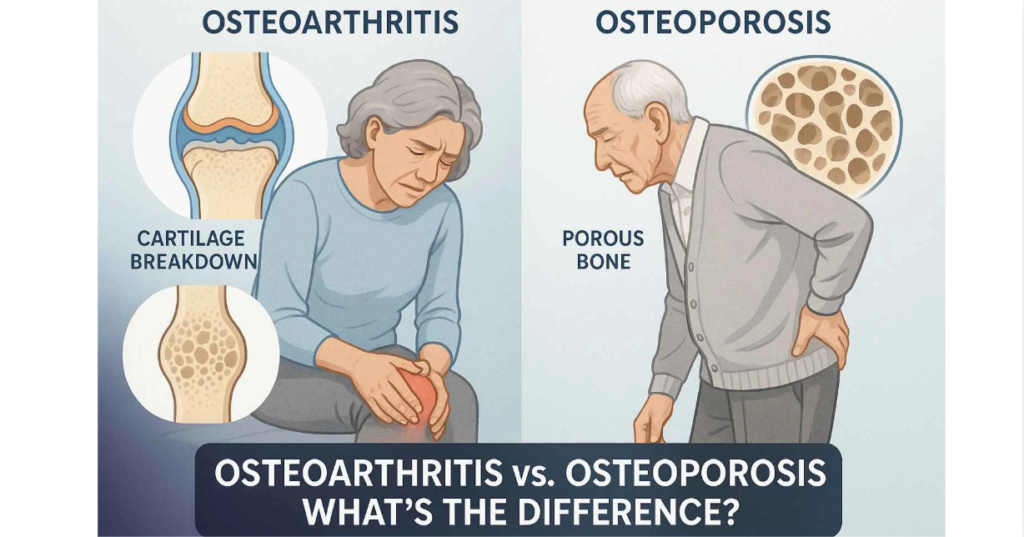
Featured Snippet: What is the difference between osteoporosis and osteoarthritis?
Osteoporosis is a condition that weakens bones and increases fracture risk, while osteoarthritis is a joint disease that causes cartilage breakdown, pain, and stiffness.
Understanding Osteoporosis
Osteoporosis affects bone strength and structure.
What happens in osteoporosis?
- Bone mass decreases
- Bone becomes porous and fragile
- Fracture risk increases
Common fracture sites
- Hip
- Spine
- Wrist
Key symptoms
Osteoporosis is often silent until a fracture occurs.
- Back pain
- Loss of height
- Stooped posture
- Fragility fractures
Featured Snippet: What are signs of osteoporosis?
Osteoporosis often has no early symptoms, but warning signs include fractures from minor trauma, loss of height, and back pain due to spinal compression.
Understanding Osteoarthritis
Osteoarthritis primarily affects joints.
What happens in osteoarthritis?
- Cartilage gradually wears down
- Joint space narrows
- Bone may rub against bone
Commonly affected joints
- Knees
- Hips
- Hands
- Spine
Key symptoms
- Joint pain worsens with movement
- Morning stiffness (short duration)
- Reduced flexibility
- Joint swelling
Featured Snippet: What are symptoms of osteoarthritis?
Osteoarthritis symptoms include joint pain, stiffness, swelling, reduced mobility, and discomfort that worsens with activity.
Key Differences Between the Two Conditions
| Feature | Osteoporosis | Osteoarthritis |
|---|---|---|
| Tissue affected | Bone | Joint cartilage |
| Main problem | Bone loss | Joint degeneration |
| Pain type | Usually silent until fracture | Chronic joint pain |
| Mobility impact | Fractures reduce mobility | Stiffness and pain reduce movement |
| Diagnosis | Bone density scan | Clinical exam + imaging |
Risk Factors
Osteoporosis risk factors
- Aging
- Low calcium/vitamin D
- Hormonal changes (especially post-menopause)
- Sedentary lifestyle
- Smoking
Osteoarthritis risk factors
- Aging
- Joint overuse or injury
- Obesity
- Genetic predisposition
- Mechanical stress
Featured Snippet: Who is at risk for osteoporosis and osteoarthritis?
Older adults, women after menopause, individuals with sedentary lifestyles, obesity, joint injuries, and poor nutrition are at higher risk of developing osteoporosis or osteoarthritis.
Diagnosis and Evaluation
Osteoporosis diagnosis
- Bone mineral density (DEXA scan)
- Fracture history assessment
Osteoarthritis diagnosis
- Physical examination
- X-rays or MRI
- Symptom evaluation
Patient-Centered Care Approach
1. Pain management
- Analgesics
- Anti-inflammatory medications
- Heat or cold therapy
2. Physical activity
Osteoporosis
- Weight-bearing exercises
- Strength training
Osteoarthritis
- Low-impact exercise (walking, swimming)
- Joint mobility exercises
3. Nutrition support
- Calcium-rich foods
- Vitamin D intake
- Balanced protein consumption
4. Weight management
Reducing excess body weight helps:
- Decrease joint pressure
- Improve mobility
- Reduce inflammation
Prevention Strategies
For bone health
- Adequate calcium and vitamin D
- Regular sunlight exposure
- Resistance training
For joint health
- Avoid repetitive joint strain
- Maintain healthy weight
- Stay physically active
Potential Complications
Osteoporosis complications
- Hip fractures
- Spinal compression fractures
- Loss of independence
Osteoarthritis complications
- Chronic pain
- Reduced mobility
- Joint deformity in advanced stages
Featured Snippet: Can osteoporosis and osteoarthritis occur together?
Yes, osteoporosis and osteoarthritis can occur together, especially in older adults, but they affect different tissues and require different management approaches.
Internal Linking Opportunities
This topic connects well with:
- Bone metabolism and calcium regulation
- Joint inflammation and cartilage health
- Aging and musculoskeletal decline
- Vitamin D and hormonal health
- Physical rehabilitation and mobility science
Conclusion
Osteoporosis and osteoarthritis are two distinct but common musculoskeletal conditions. Osteoporosis weakens bones and increases fracture risk, while osteoarthritis involves joint degeneration and chronic pain. Understanding their differences is essential for accurate diagnosis, prevention, and effective patient-centered care.
A balanced approach including nutrition, physical activity, and medical management plays a key role in maintaining bone and joint health throughout life.
Important Disclaimer: This article is for educational purposes only and should not replace professional medical advice. Individuals experiencing bone pain, fractures, or joint symptoms should consult a qualified healthcare provider.